This Wednesday we are at exactly half time through the congress! Here are some tips for today as one looks forward to a wonderful day of learning and sharing. We start between 8.30 and 11.45 CEST immersing ourselves in the world of metamorphic minerals (session GMPV 7.2– Room D2 https://meetingorganizer.copernicus.org/EGU22/session/41922#Presentations) and geodynamic processes (session GD 6. ...[Read More]
EGU GMPV ECS Campfires – 16th Edition
After a short winter break, the Geochemistry, Mineralogy, Petrology and Volcanology division’s early career scientists talks (EGU campfires) are back! The first session in 2022 (and 16th overall) will be a general format event. The talks will be held on Wednesday 16th February at 4pm CET on Zoom. Our four speakers are: Barbara Bonechi (PostDoc @ Sapienza University of Rome, Italy) – High pre ...[Read More]
GMPV for Sustainable Development – Geohazards and Volcanic Monitoring
GMPV and The Sustainable Development Goals In 2015 all United Nations Member States adopted a set of Global Goals, as a universal call to protect our planet, end poverty and ensure that all people can enjoy peace and prosperity. These are called the Sustainable Development Goals – 17 integrated goals aimed at addressing the challenges our society is currently facing considering social, economic, a ...[Read More]
Happy Birthday Mama Etna!
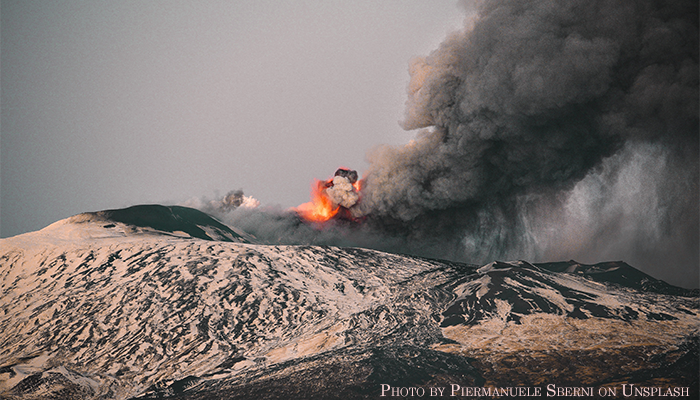
18 May 1971. This date may not mean anything to you at the moment, but it represents a very special day for the evolution of Mount Etna, leaving a deep mark in the recent eruptive activity of the volcano. Exactly 50 years ago, Mount Etna saw the birth of what, only a short time later, was to become the most active crater of the last decades: “The South-East Crater”, the fourth child of ...[Read More]
How do crystal aggregates form in magma chambers?
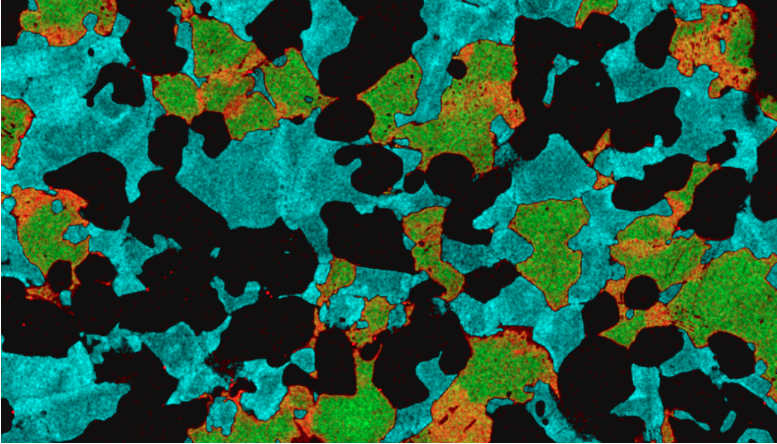
By Penny Wieser (PhD student at the University of Cambridge) Clues into the inner workings of volcanoes can be gleamed from material which is erupted at the surface, or that which solidified at depth in the crust. Just before eruption, three main phases are present: a gas phase (containing water, carbon dioxide, sulphur, chlorine etc), a liquid melt phase (the magma), and a solid phase (consisting ...[Read More]
Are mantle melts heterogeneous on a centimeter scale?
The mantle makes up the majority of the volume of the Earth, but there is still a lot about it that we don’t understand. This is because we can’t observe it directly – forget ‘Journey to the center of the Earth’ – even our deepest drill holes (about 12 km deep) are merely tickling the surface of the planet (about 6400 km to the center). Most of what we know abou ...[Read More]
Building a lava dome: one block at a time
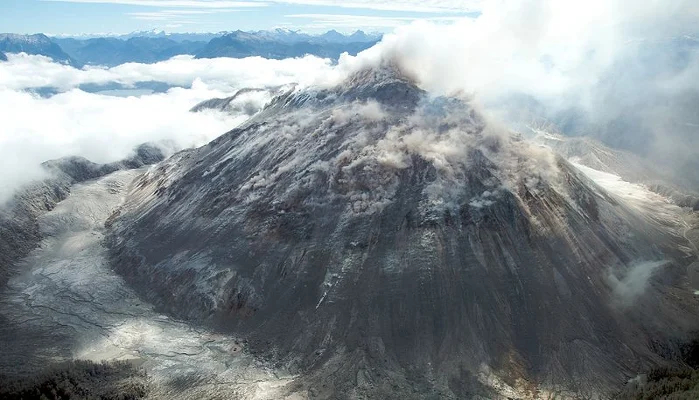
Lava domes form when lava is extruded from a volcanic vent, but is too viscous to flow far away. Think of thick treacle that does not flow as easily as runny honey, and so when it is extruded, it forms a “lava pile” around the vent. Lava domes commonly form within the crater of a larger volcano (e.g. Mt. St. Helens), but can also stand alone or form part of a “dome complex”. A lava dome can take o ...[Read More]
Living with volcanic gases
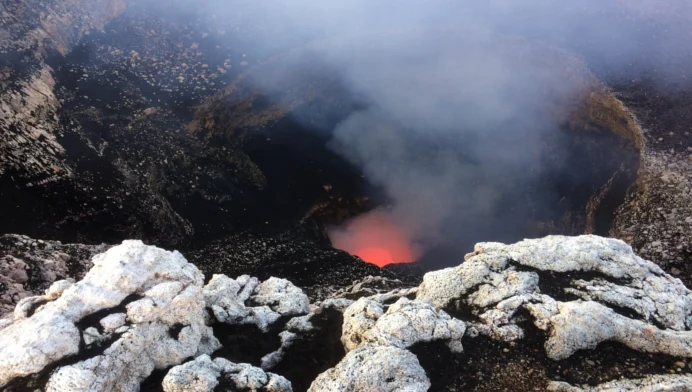
Professor Tamsin Mather, a volcanologist in Oxford’s Department of Earth Sciences reflects on her many fieldwork experiences at Masaya volcano in Nicaragua, and what she has learned about how they effect the lives of the people who live around them. Over the years, fieldwork at Masaya volcano in Nicaragua, has revealed many secrets about how volcanic plumes work and impact the environment, ...[Read More]
A little fracture can go a long way: How experiments illuminate our understanding of volcanic eruptions
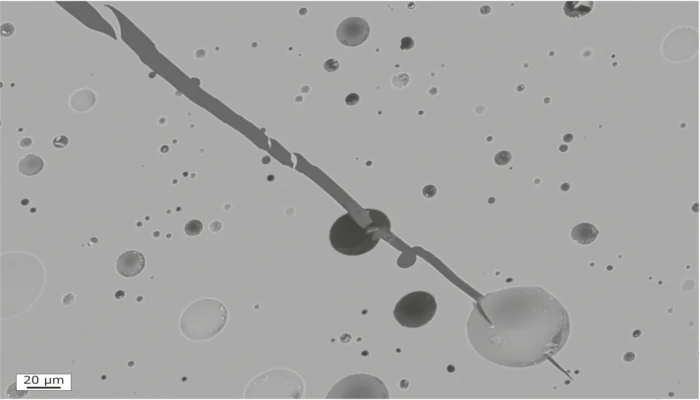
What controls how violently a volcano erupts? Stratovolcanoes like Mount St Helens (USA), Gunung Merapi (Indonesia), or Volcán de Colima (Mexico) tend to erupt in two distinct ways: effusively and/or explosively. Effusive eruptions are eruptions where lava is extruded without any major explosions. Although effusive eruptions can be dangerous, at stratovolcanoes they tend to be restricted to volcan ...[Read More]