G
Geodesy

field work

Geodesists on Tour: Circumnavigating Greenland by Helicopter
Geodesists on Tour: Circumnavigating Greenland by Helicopter

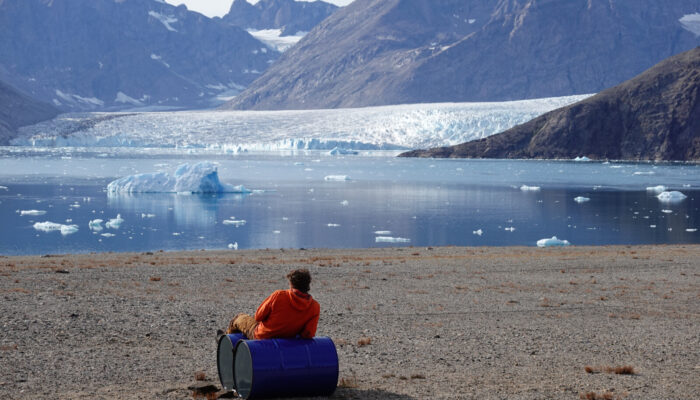
  Greenland, the world’s largest island, has one of the most challenging environments for geodetic measurements. Maintaining GNSS (Global Navigation Satellite Systems) stations here isn’t just about precision – it’s about ensuring data continuity in an area that’s constantly moving. This is the behind-the-scenes story of a 15,000 km journey around Greenland: five weeks of helicopter-bas ...[Read More]

Geodesists on Tour: Taking Greta Gravimeter to the North

Geodesists on Tour: Taking Greta Gravimeter to the North

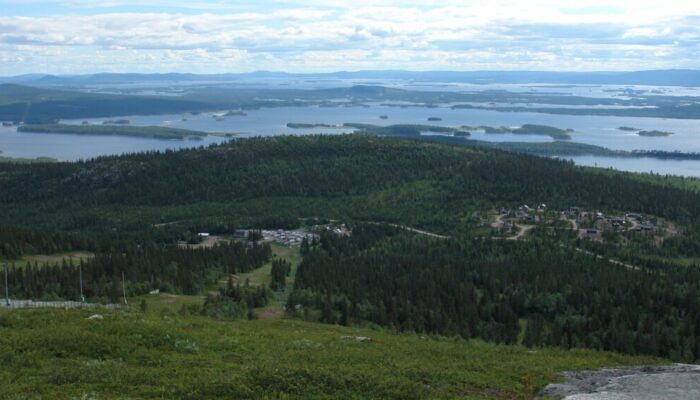
Summer is coming to an end in the northern hemisphere, and it usually signals the end of the field season – at least in northern Europe. During the field season, we mostly take our absolute gravimeter (we call her Greta) to measure gravity at various locations across Sweden. Occasionally, we even take Greta to other countries – but that’s a story for another time.   Who is G ...[Read More]

Around the world with Professor Vening Meinesz onboard the submarine K-XVIII: The Origin of Flexure Modelling

Around the world with Professor Vening Meinesz onboard the submarine K-XVIII: The Origin of Flexure Modelling

In my previous blog post, I wrote about the famous voyage of Professor Vening Meinesz aboard the submarine K-XVIII. At 30 meters underneath the surface, Vening Meinesz would observe the gravity field of Earth with a pendulum apparatus called the Golden Calf. In this post, I would like to discuss a different voyage the professor took part in. Normally the Dutch submarines took the Suez Canal to sai ...[Read More]

Geodesists on Tour: On a Campaign in the Arctic with a Giraf(f)e in the Aircraft

Geodesists on Tour: On a Campaign in the Arctic with a Giraf(f)e in the Aircraft

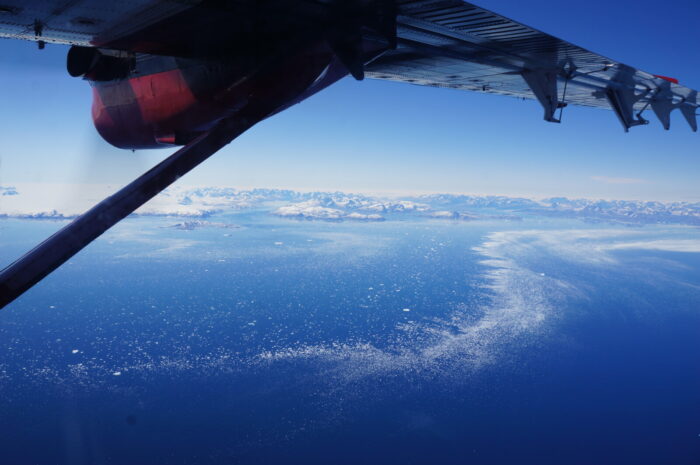
  Way too early on a Saturday morning in late June 2023 I woke up and started my travel to a small airport in Akureyri, North-East Iceland. This is the location of an Icelandic charter company called Norlandair that we used for our airborne geophysical surveys and logistic operations in the Arctic. For a few months I had been preparing a survey to test a new quantum-based technology for airbo ...[Read More]