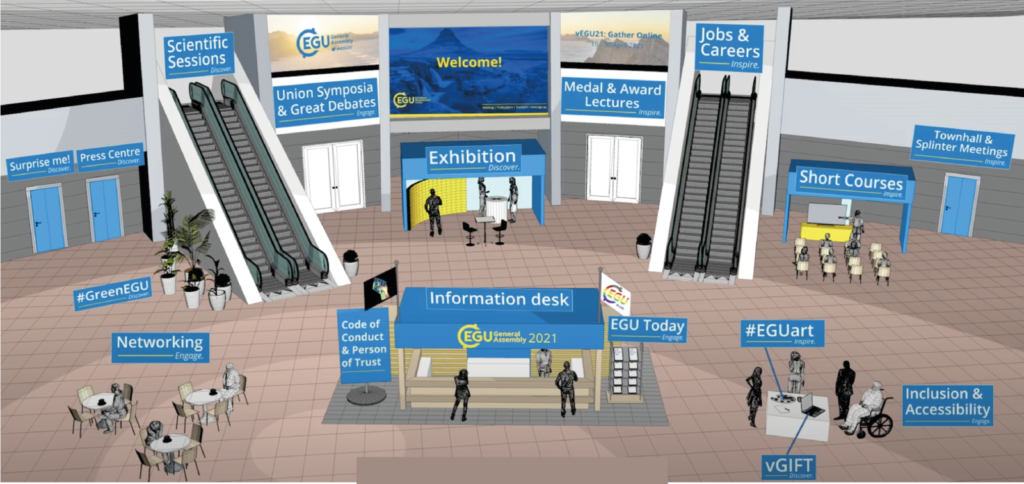
The general assembly 2021 is approaching, Annette Eicker will take over as new division president, now we also need a new, fresh early career scientist (ECS) to take over the role of the ECS-representative. But what do you have to do as an ECS-representative? And where can you sign up? Early career scientists represent a significant share of the EGU general assembly attendees. It is therefore desi ...[Read More]
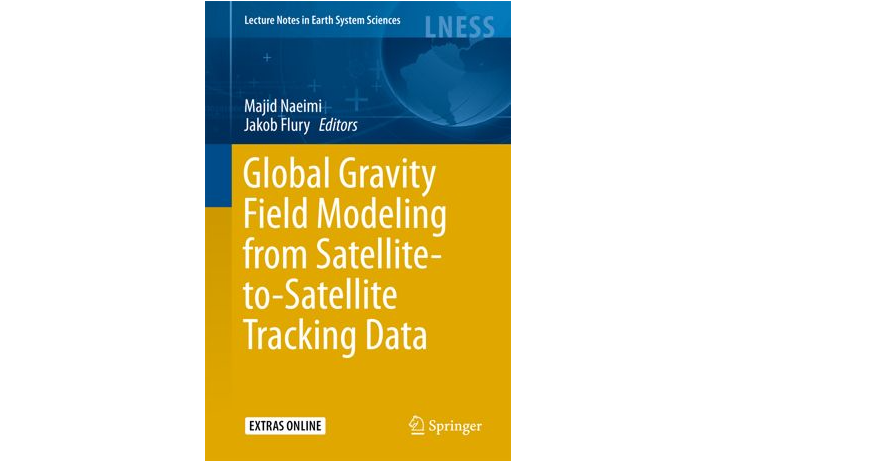
Global gravity field modeling from Satellite-to-Satellite Tracking data
With the launch of the GRACE Follow-On twin satellites in 2018, the fundamentals and details of Satellite-to-Satellite Tracking (SST) measurements between low Earth orbiters find a lot of interest these days. The low-low SST technique was very successfully pioneered by the GRACE mission (2002-2017). The pair of satellites of GRACE Follow-On, a joint NASA/GFZ mission, carries two independent and co ...[Read More]
Have a colleague who does outstanding work? – Nominate them for an EGU Award or Medal!
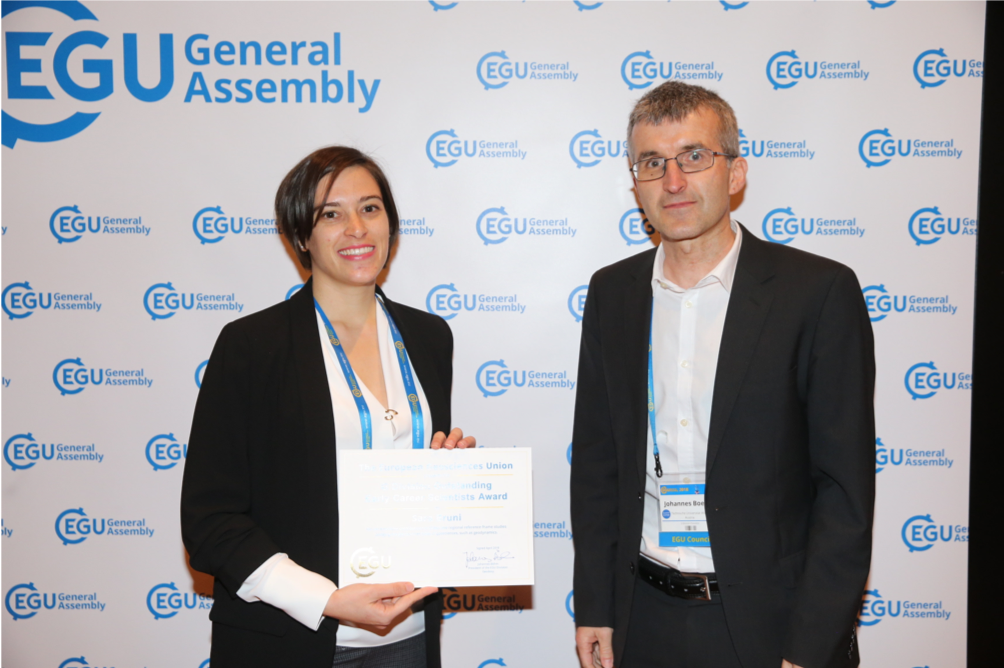
Congratulations again to Sara Bruni for receiving the Geodesy Division Outstanding Early Career Scientist Award 2018! A summary of her research on new findings in the gravity field time series from Medicina is posted below. Maybe you know an Early Career Scientist who does as outstanding work as Sara Bruni does? Nomination is the first crucial step in order to receive an award, don’t let this oppo ...[Read More]
Gravity time series still reveal new insights
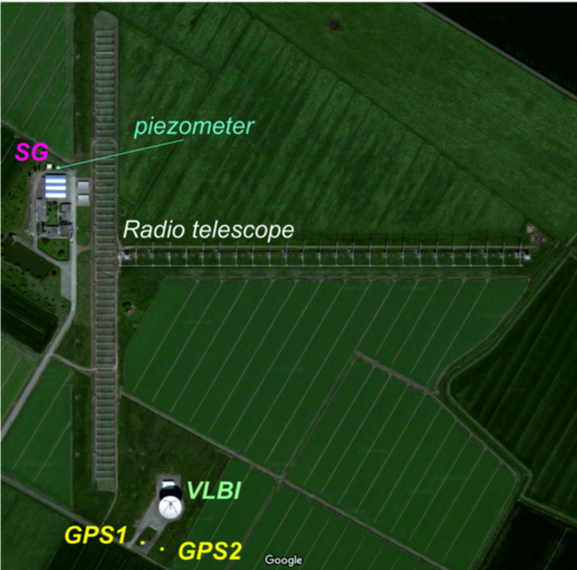
View of the Medicina observatory. The site hosts a superconducting gravimeter (SG) installed in a dedicated building next to a piezometer. Local height variations are monitored by means of two GPS stations, located at the end of the N-S segment of the “North Cross” radio telescope. The two GPS stations are about 30 m apart and are close to a VLBI antenna. ...[Read More]
EGU General Assembly – an adventure for newbies
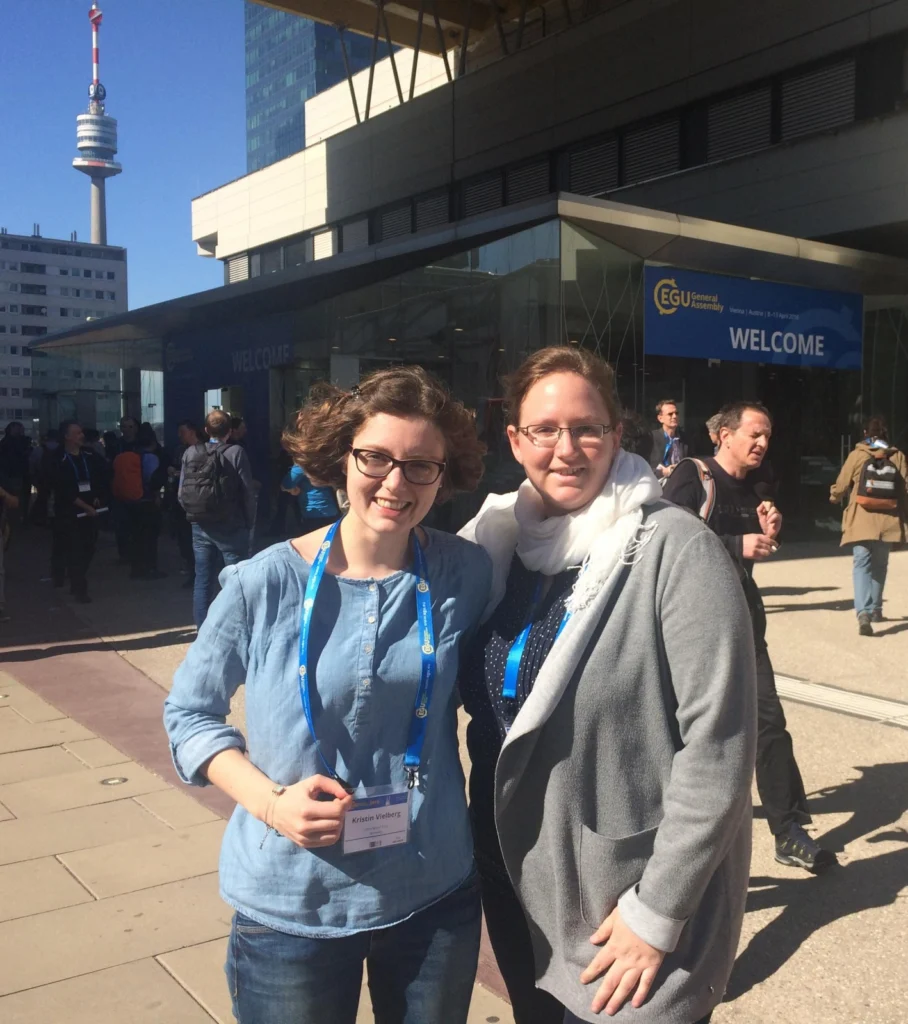
One day in January, we heard it through the grapevine that we were supposed to submit abstracts to an event called EGU. So we asked ourselves: What exactly is EGU? Our colleagues told us: ‘EGU is a huge, international conference worth going. And you will have a lot of fun.’ So we submitted our abstracts and hoped for the best. Three months later, we entered the airport with a poster box and some o ...[Read More]
Review of the General Assembly by the Division President
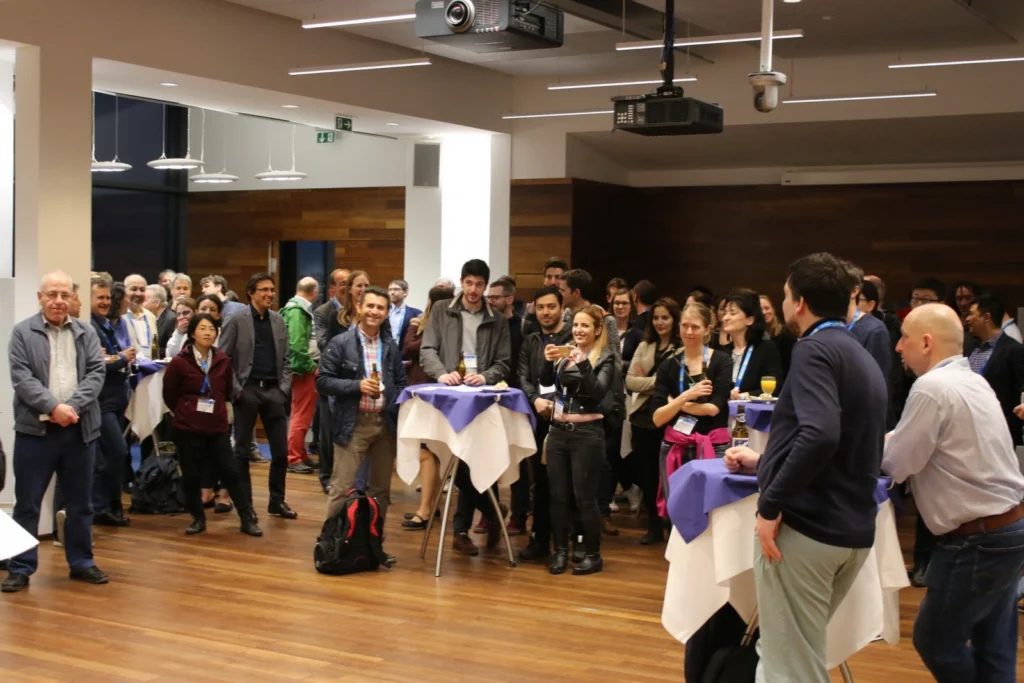
More than 15.000 participants with great presentations in 666 sessions (posters, PICOs, and orals) made the EGU General Assembly 2018 at the Austrian Convention Centre in Vienna a great success. In the geodesy-led programme, we had 428 submissions, which were distributed to 19 oral blocks, 3 PICO sessions, and a series of poster sessions. We listened to exciting talks, starting with geodetic theor ...[Read More]
So we produced this big pile of GIS data, what now?
We all know that easy access to data speeds up doing research. In this post, we will discuss how open GIS data can stimulate innovative ways of doing research in the field of geodesy and geosciences, considering first the benefits and challenges of open data. Geodesy can benefit greatly from the open data movement and from open Geographic Information System (GIS) data. The reasons for this are two ...[Read More]
EGU’s Geodesy Division needs a new early career scientist voice
In the run-up to the general assembly in 2017, The geodesy division is looking for a fresh early career scientist (ECS) to take over the role of the ECS-representative. But what comprises being an ECS-representative? And where can you sign up? Early career scientists represent a significant share of the EGU general assembly attendees. It is therefore desirable to involve this group not only as par ...[Read More]
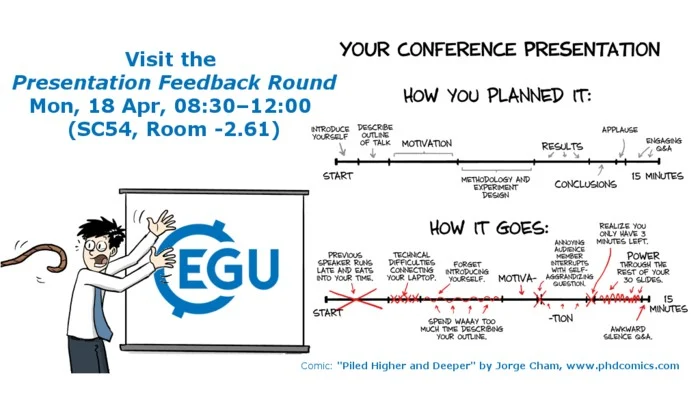
Your scientific talk: mental breakdown or conference highlight?
After last years success, we’re again organizing a short course on presentation techniques. EGU GA 2016 participants who are interested in rehearsing their talk and getting feedback can sign up of for a rehearsal here (deadline 31 March 2016). Of course we welcome and encourage contributions from all divisions. You can feel it coming, sometimes it kicks in days before your talk, at other tim ...[Read More]
EGSIEM wants to use GRACE gravity field data for operational flooding and drought management
The terrestial water cycle leaves traces in the Earth’s gravity field The current onset of el Nino is raising hope in California to replenish some of its multiyear water deficit. Due to the warm pool of water on the East side of the Pacific, more rain, and consequently also larger potential for flooding is expected. At the other side of the Pacific, the water is colder than usual leading to ...[Read More]