ERE
Energy, Resources and the Environment

ERE matters

Introduction of the ERE division

Introduction of the ERE division

Hello and welcome to the reopened blog of the Energy, Resources and the Environment Division of the EGU! We want to use this blog in the future actively to keep you updated with what is happening in our division and to highlight various ERE related topics of interest, activities and research. But today we want to first introduce ourselves. In the ERE division, people who work to better understand ...[Read More]

The Scorpion and the… Trees: Surface mining (im)practical implications

The Scorpion and the Frog. This old tale, which was first documented by the movie Mr. Arkadin by Orson Welles, reports a scorpion that wants to cross a river… and asks a frog for a ride. Embarking on a lose-lose situation, both the frog and the scorpion are doomed in the tale. Dramatic, this fable severely resembles how humans conduct their quest for resource extraction. Surface mining, a pa ...[Read More]

Take a deep breath… Or not!

We all know that pollution, of any kind, is not good news and that it may lead to health risks. Air pollution, such as smog, is something many large cities experience, especially in low- and middle-income countries. The World Health Organisation reports that “As urban air quality declines, the risk of stroke, heart disease, lung cancer, and chronic and acute respiratory diseases, including a ...[Read More]

Questions of Resource Sustainability in a World of Consumers

By Lindsey Higgins, PhD student at Stockholm University and the Bolin Centre for Climate Research *** In the Wednesday morning debate “Is global economic growth compatible with a habitable climate?” issues of sustainability in a consumptive world were tackled. The four panellists agreed that the goal set by the COP21 meeting in Paris of limiting temperature rise to 1.5°C is unrealistic. Historical ...[Read More]

Living with water: A closer look at deltas

Costal deltas often host large cities due to their prime location of where rivers meet the sea. In many cases these areas have been protected from rising sea levels and flooding rivers by engineered ‘gray’ infrastructure. However, this infrastructure appears to only protect these cities on short timescales. Engineered deltas contribute to relative sea level rise, caused by shrinking land masses in ...[Read More]

Living with water: Water management infrastructure

Keeping water out is only half of the battle. Making water available to communities is the other half of the battle. Engineered structures have the ability to do both, dams and dikes can keep flood waters out and they can also divert water to large metropolises and irrigate agricultural lands. But even countries like The Netherlands, which is known for its world class water management engineering, ...[Read More]

Are you READY for a flood event?

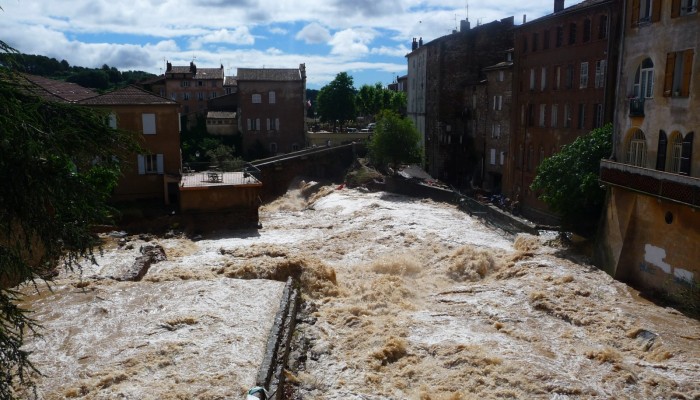
As evidenced by the EU Floods Directive (2007/60/EC), flood management strategies in Europe have undergone a shift in focus in recent years. The goal of flood prevention using structural measures has been replaced by an emphasis on the management of flood risks using non-structural measures. One implication of this is that public authorities alone not only take responsibility for flood management. ...[Read More]

Call for sessions, General Assembly 2016

The call for sessions for the General Assembly 2016 are now open. We invite you, from now until 18 Sep 2015, to take an active part in organizing the scientific programme of the conference by suggesting new sessions or getting involved with those in the skeleton programme. In particular we would like to encourage Early Career Researchers to get involved. For more details please see here http://mee ...[Read More]

Can climate data help to better predict floods?

Can climate data help to better predict floods?

Many studies report that hydrologic regimes are modulated by large-scale modes of climate variability such as the El Niño Southern Oscillation (ENSO) or the North Atlantic Oscillation (NAO). Climate-informed frequency analysis models have therefore been proposed to condition the distribution of hydrologic variables on climate indices. However, standard climate indices may be poor predictors in som ...[Read More]

Row, Row, Row Your Boat: Predicting Flood Impact with Aqueduct Global Flood Analyzer

Row, Row, Row Your Boat: Predicting Flood Impact with Aqueduct Global Flood Analyzer

The Aqueduct Global Flood Analyzer of the World Research Insitute is a web-based interactive platform which measures river flood impacts by urban damage, affected GDP, and affected population at the country, state, and river basin scale across the globe. It aims to raise the awareness about flood risks and climate change impacts by providing open access to global flood risk data free of charge. Th ...[Read More]