
For the 500 million people living along the Mediterranean coast, the sea breeze is an essential component of the regional climate. They are more than a pleasant coastal wind, as they are critical for easing summer heat stress, dispersing pollutants, and triggering convection (the rapid upward movement of warm, moist air), sometimes leading to severe storms, among many others.
But the Mediterranean basin is warming 20% to 40% faster than the globe, with the land warming faster than the ocean, driving significant shifts in its atmospheric and oceanic dynamics. As a result, the land-sea temperature difference is intensifying, being this thermal contrast the primary thermodynamic driver (the physical force powered by heat differences) triggering sea breezes everywhere.
As the Mediterranean is a well-known climate change hotspot experiencing more frequent, long-lasting, and intense extreme temperatures (e.g., both atmospheric and marine heatwaves, i.e., prolonged periods of abnormally high temperatures in the air or ocean), we wonder how the anthropogenic warming (human-caused global temperature rise) and its extreme temperatures are altering sea breezes in the region.
In our recent study1, we provide regional observational evidence that, in a warming climate, sea breezes are becoming weaker, yet more frequent in the Western Mediterranean basin, based on an unprecedented 41-year observational database covering 39 weather stations (1981–2021).
Sea breezes in change
Until now, the scarcity of multidecadal, high-resolution observations made it difficult to quantify regional sea breeze trends. By homogenizing data from multiple stations across France, Italy, Spain, and North Africa, a clear pattern emerged (Figure 1):
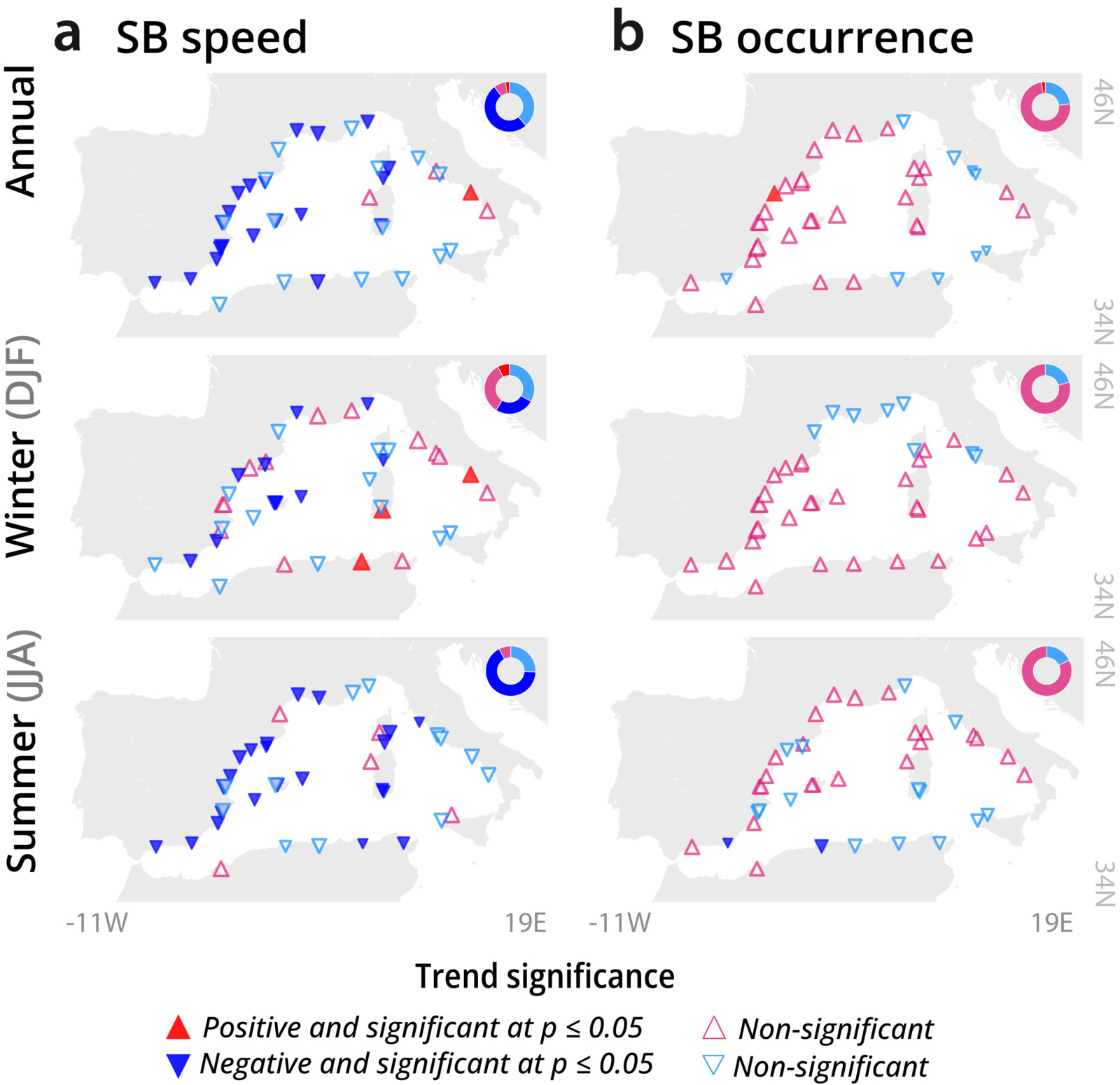
Figure 1. 41-years of sea breeze changes in their intensity and occurrence across the Mediterranean basin. Red triangles indicate upward trends while blue triangles indicate downward trends.
- A weakening in intensity: since the 1980s, sea breeze speeds (intensity) have decreased by up to 10% per decade, particularly during the spring and summer months.
- A likely change in their seasonality: Conversely, the occurrence of sea breezes has increased, most notably in the winter, rising by roughly 10% per decade.
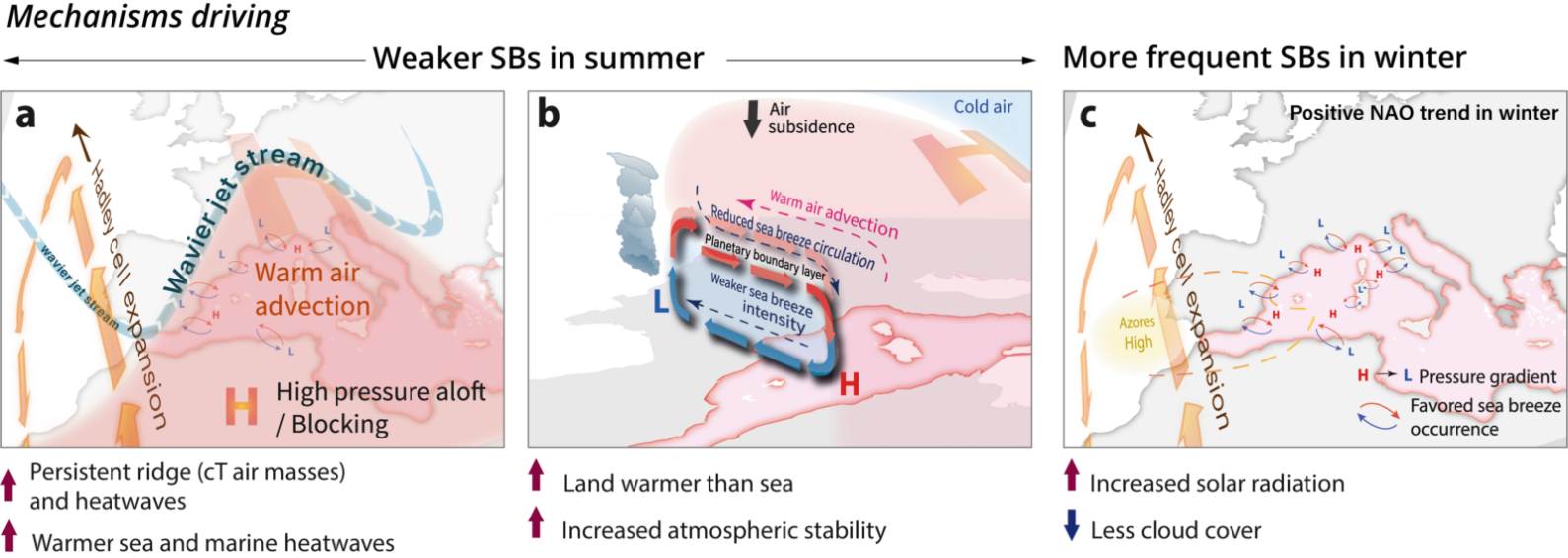
As we already mentioned: As land warms faster than the ocean, the land-sea thermal contrast intensifies. One would expect that a stronger thermal contrast should drive stronger sea breezes. So, why are they weakening? Possible answers lie not at the surface, but high above the basin: it might be the result of a complex interplay between regional warming and broader atmospheric circulation (Figure 2).
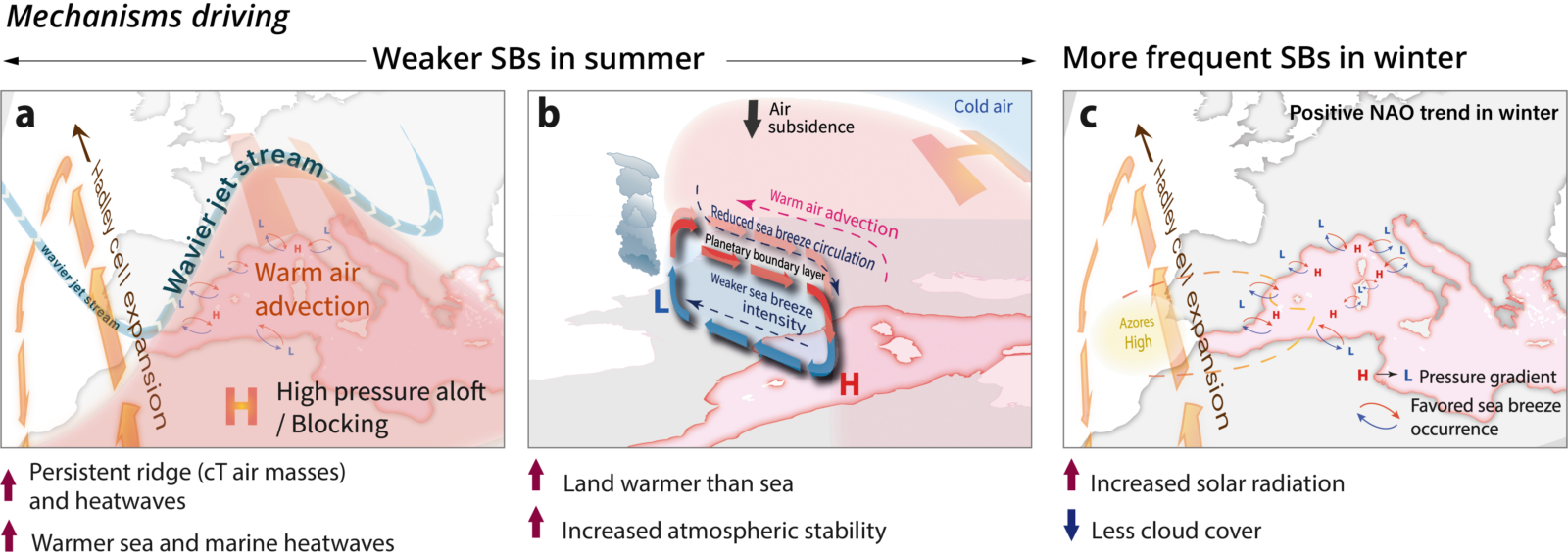
Figure 2. Schematic summary of the mechanisms driving changes in sea breezes of the Mediterranean. In summer, the subsidence (sinking) of warm air masses over the planetary boundary layer (the lowest part of the atmosphere near the ground) acts as a stable barrier that flattens and weakens the sea breeze circulation. In winter, a higher frequency of anticyclones (high-pressure systems) increases sea breeze occurrences during the colder months.
Summer weakening
Intensity loses are probably linked to the unprecedented warming that the Mediterranean region has been experiencing over the last century. Yet, the increased frequency and intensification of atmospheric heatwaves (prolonged periods of excessively hot weather) play also a key role: Regional warming and shifts in the jet stream2 (fast-flowing, high-altitude winds that steer weather systems) have led to more frequent high-pressure systems staying stationary over the Mediterranean. These systems draw warm tropical continental air masses over the region, positioning them above the planetary boundary layer. This layer of warm air creates a stable atmospheric barrier that suppresses vertical air mixing. Consequently, the sea breeze circulation cell is vertically compressed, reducing wind speeds on the ground (Figure 2b).
During atmospheric heatwaves, our observational data shows sea breeze speeds drop by an average of 8% to 10%.
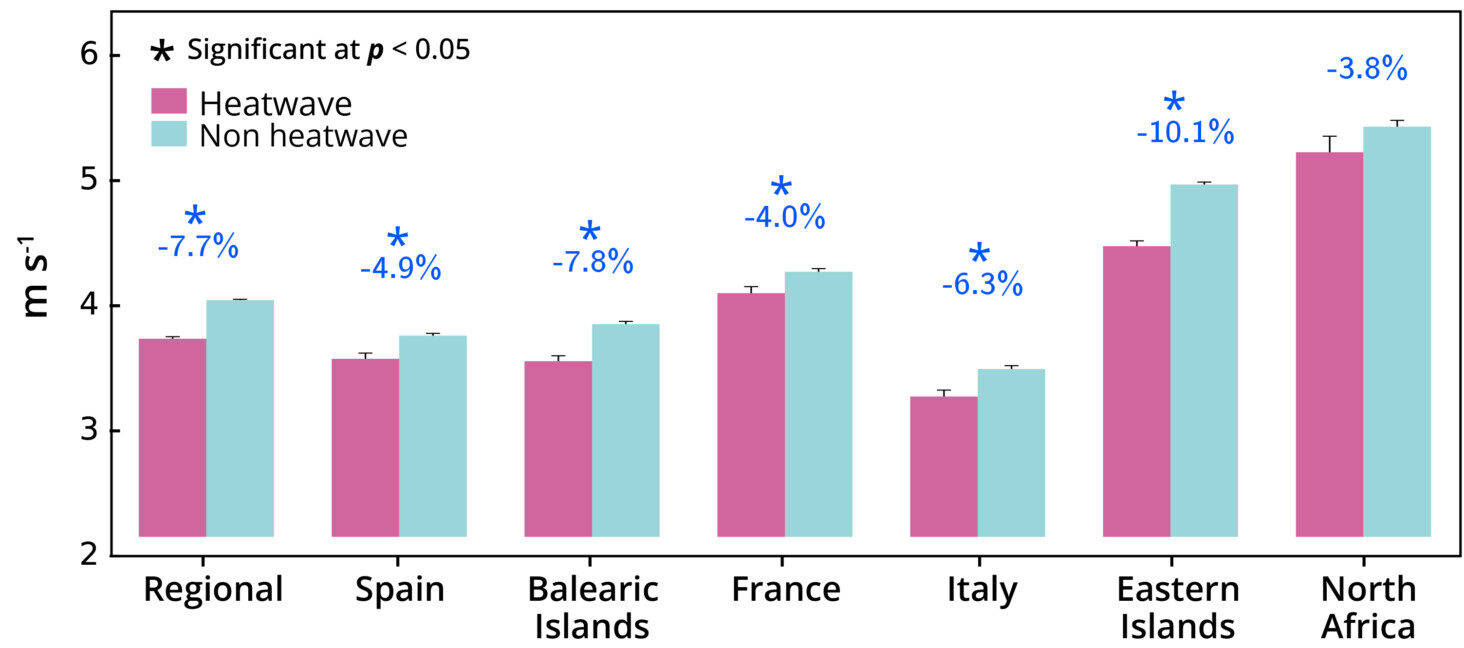
Figure 3. Summer sea breeze speeds and the heatwave weakening effect in their intensity.
Seasonal change
The increased winter frequency may be a cascading response to atmospheric dynamics, specifically the expansion of the Azores High3 (a large, persistent high-pressure system over the Atlantic Ocean) and a tendency toward positive North Atlantic Oscillation (NAO+) phases3 (an atmospheric pressure pattern that favours dry, stable weather in the Mediterranean). This has led to a higher frequency of winter anticyclones over the Western Mediterranean. The resulting clear skies and weak background winds create the adequate conditions to trigger sea breezes during the colder months. Our results also point to more sea breezes in winter, yet some locations evidence less days in summer. Consequently, a potential shift in their seasonality from the peak of summer and towards the winter may be inferred.
Why this matters?
Changes in sea breezes carry significant risks for coastal and inland environments, as well as for the societies living there:
- Heat Extremes: As summer breezes weaken, their natural cooling effect diminishes exactly when it is needed most: during severe heatwaves. This threatens to exacerbate urban heat stress4 and increase public health risks. Not only are these winds becoming too weak to reach and cool inland areas, but they might be also becoming less frequent in summer, precisely when maximum temperatures are regularly exceeding 40ºC.
- Air Quality: While stronger winds disperse atmospheric pollutants, weaker and more frequent sea breezes can trap and recirculate pollutants along coastal and inland areas for days, worsening exposure for densely populated cities.
- Hydrological Cycles: Changes in these winds may impact moisture transport, potentially influencing deep summer convection (which causes severe storms). Furthermore, other studies5 suggest that anthropogenic (human-driven) land-use changes have left sea breezes with less available water to transport inland. Consequently, weaker breezes carrying less water vapour from evapotranspiration (water released into the atmosphere by soil and plants) may fail to trigger the summer storms necessary to sustain the hydrological cycle in already dry and arid regions.
Looking Ahead
Our findings position sea breezes as a critical, yet historically underexplored, element of regional climate change. As the Mediterranean continues to warm, relying solely on large-scale global models, which often struggle to capture highly localized coastal winds, is not enough.
By analysing long-term regional observations, we can gather a more accurate picture of how local winds are shifting. This empirical understanding is necessary to properly assess climate-related risks and provide a realistic foundation for mitigation and adaptation strategies along the Mediterranean coast.
“Sea breezes may be local winds, but their response to climate change tells a much larger story: one of complex interactions between warming, atmospheric dynamics, and the lived experience of climate along our coasts.”
Read the full open-access study in Scientific Reports here.
This post has been edited by the editorial board
References:
1. Bedoya-Valestt, S., Azorin-Molina, C., Plaza-Martin, N.P. et al. Weaker and more frequent Mediterranean sea breezes in a warming climate. Sci Rep (2026). https://doi.org/10.1038/s41598-026-47025-4

2. Moon, W., Kim, B.-M., Yang, G.-H. & Wettlaufer, J. S. Proc. Natl Acad. Sci. USA 119, e2200890119 (2022). https://doi.org/10.1073/pnas.2200890119

3. Cresswell-Clay, N. et al. Twentieth-century Azores High expansion unprecedented in the past 1,200 years. Nat. Geosci. 15, 548–553 (2022). https://doi.org/10.1038/s41561- 022-00971-w

4. Di Napoli, C., Lavers, D.A., Bechtold, P. et al. Relief or Aggravation? A 31-Year study of sea-Land Breezes and Their Impacts on Coastal Heat Stress. Earth Syst Environ (2025). https://doi.org/10.1007/s41748-025-00917-3

5. Pausas, J. G. & Millán, M. M. Greening and browning in a climate change hotspot: The Mediterranean Basin. BioScience 69, 143–151 (2019). https://doi.org/10.1093/biosci/biy157