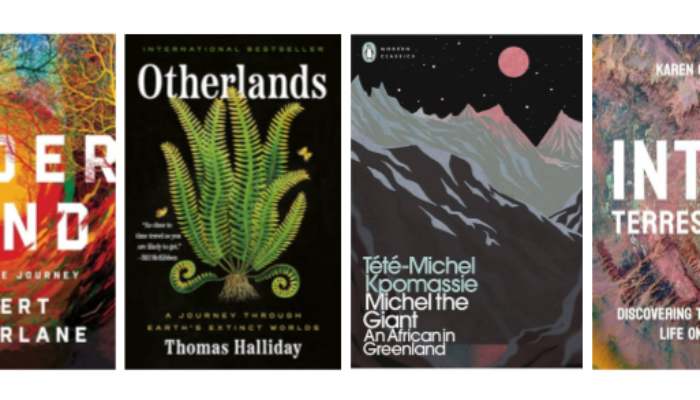
It’s been quite the year! Before we say goodbye to 2025 and send our readers into a well-deserved holiday, our 2025-2026 editorial team shares some of their favorite Biogeoscience-themed books.
Lucia S. Layritz – Editor-in-chief
recommends Otherlands by Thomas Halliday
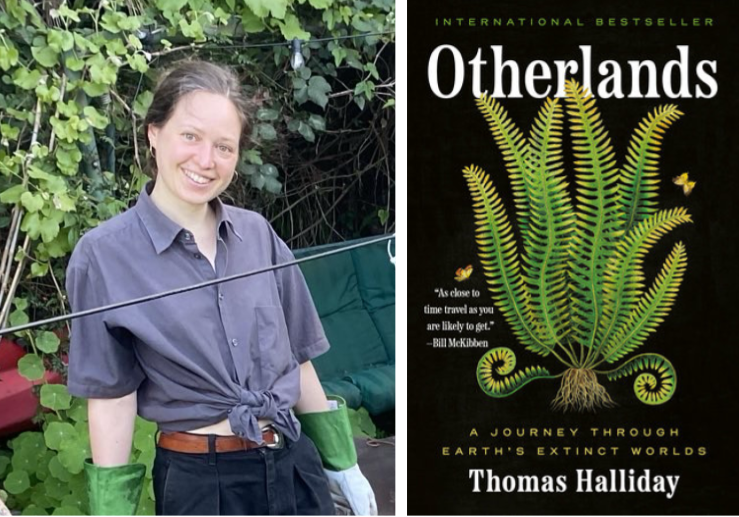
Lucia is a postdoc researching post-fire recovery at the University of California, Berkeley.
This book takes you on a journey through Earth’s ancient ecologies. Each chapter tells a story about a past geological period by providing a snapshot of a typical ecosystem, illustrating its plants, animals, landscapes, unique features and evolutionary milestones. Even as someone who did a PhD in climate science/ ecology, I felt I did learn a lot of new things about my discipline from this book, while its beautiful language makes it accessible for a broad audience. By zooming out on the geological scale it provides a lot of interesting perspectives and philosophical musings on extinction, environmental change and the many ways living creatures shape their surroundings.
Saule Akhmetkaliyeva, Editor
recommends Michel the Giant: An African in Greenland by Tété-Michel Kpomassie
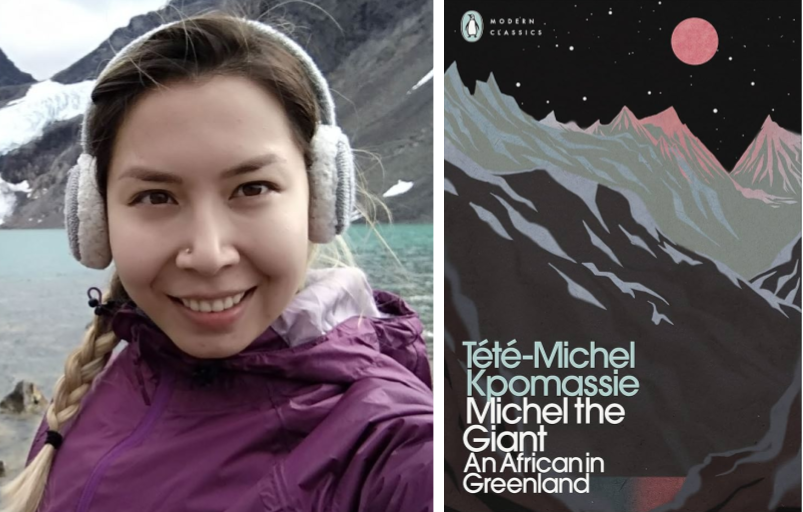
Saule is a postdoc in blue carbon ecosystems at University College Dublin, Ireland.
I recently read Michel the Giant: An African in Greenland by Tété-Michel Kpomassie for a polar book club hosted by APECS Netherlands, APECS Luxembourg, and the UK Polar Network. Kpomassie offers a refreshing view of the Arctic without the usual white-savior framing. Although the book may appeal most to those in the social sciences, I found it fascinating even as someone who did a STEM PhD in polar science. My research focused on glaciers, not people, so I realised how much I had been missing. The way Kpomassie describes Greenlandic life and society is unlike anything I’ve come across before. That perspective alone makes the book worth reading and I highly recommend it!
Nicola Krake, Editor
recommends Intraterrestrials by Karen G. Lloyd
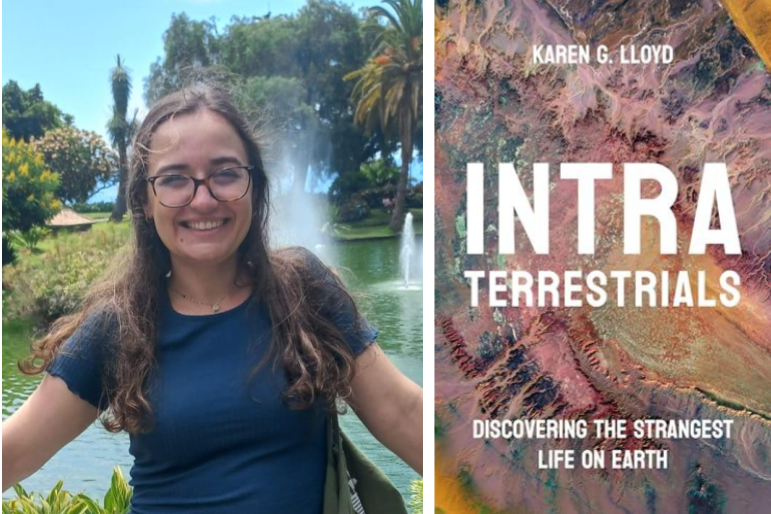
Nicola is an organic geochemist and environmental geologist and a current PhD candidate at the University of Hamburg.
As I also search for life’s signatures in extreme environments in my research, I found Intraterrestrials by Karen G. Lloyd to be a compelling exploration of life at the very edges of Earth’s biochemical possibilities. Lloyd illustrates how subsurface microbes exploit unconventional energy sources in ways that challenge our existing models of carbon cycling. Her field narratives and vivid storytelling add welcome context as well as a sense of adventure and wonder to the geochemical processes underpinning these ecosystems. The book highlights just how much we still have to learn about organic matter transformation in deep, isolated environments. For anyone interested in the intersections of microbiology and geochemistry, it’s an insightful and invigorating read.
Franziska Lechleitner, Editor
recommends Underland by Robert MacFarlane
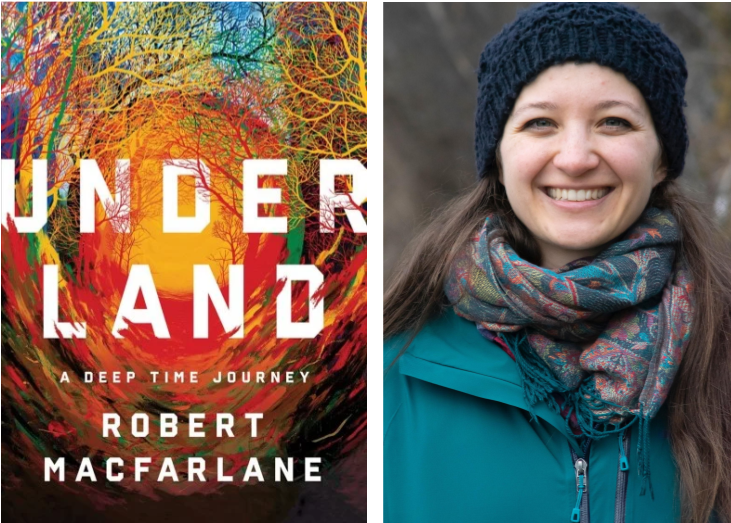
Franziska is a group leader in critical Zone dynamics at the Swiss Federal Institute for Forest, Snow and Landscape Research (WSL) in Switzerland.
As someone who works in the subsurface (caves, boreholes, soils) to learn about environmental processes and past climates, I liked this book a lot. Drawing from mythology, literature, and scientific discoveries, Mcfarlane writes about what lies beneath the surface and how these underworlds shape our thinking, imagination and collective memory.
Edited by Lucia Layritz