The genesis of the idea to explore the influence of certain papers on shaping the field of tropospheric chemistry came when editing a textbook chapter I had written a decade earlier. As I edited it I thought, what really is new; text-book worthy over the last 10 years? In some senses what is text-book worthy …[Read More]
Atmospheric Science
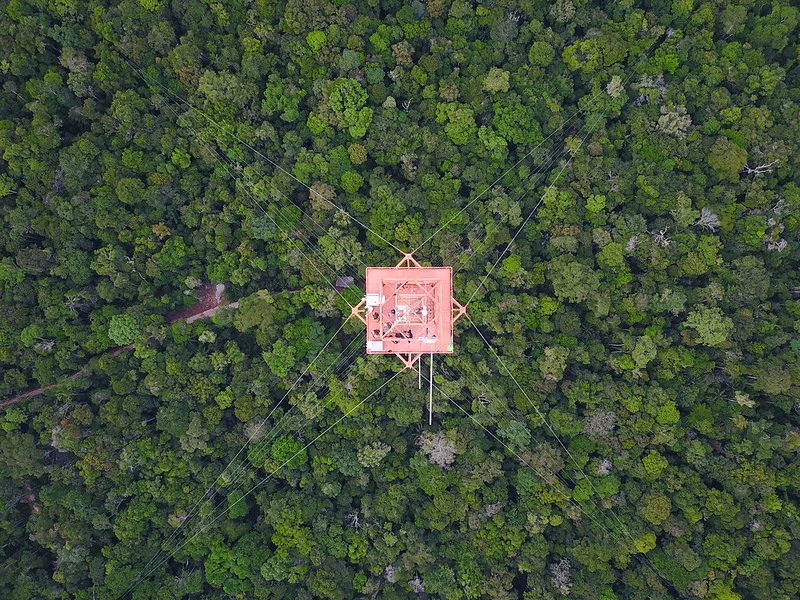
Atmospheric research in the middle of the Amazon forest: The Amazon Tall Tower Observatory celebrates its anniversary
It looks like a spike, orange against the blue sky, sticking out the green ocean of the Amazon forest: Standing 325 m tall, the Amazon Tall Tower Observatory (ATTO) is the highest construction in South America. This tower celebrates its 5th anniversary this year, while the ATTO research site, located ~150 km northeast of Manaus, …[Read More]
A simple model of convection to study the atmospheric surface layer
Since being immortalised in Hollywood film, “the butterfly effect” has become a commonplace concept, despite its obscure origins. Its name derives from an object known as the Lorenz attractor, which has the form of a pair of butterfly wings (Fig. 1). It is a portrait of chaos, the underlying principle hindering long-term weather prediction: just …[Read More]
A brighter future for the Arctic
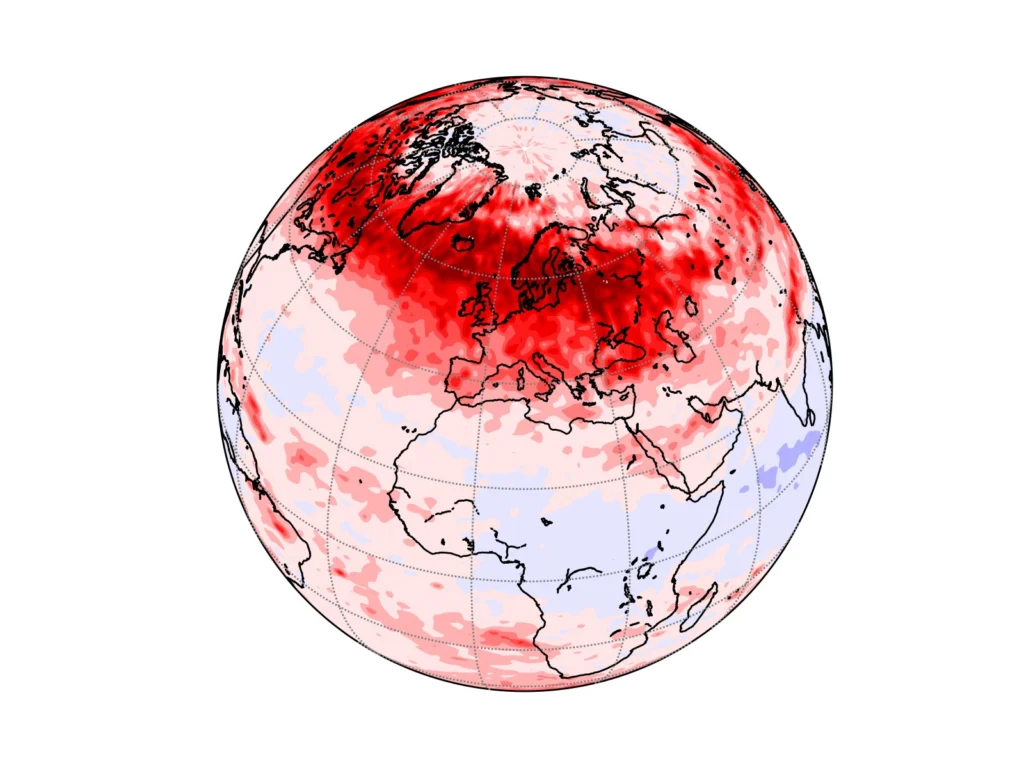
This is a follow-up from a previous publication. Recently, a new analysis of the impact of Black Carbon in the Arctic was conducted within a European Union Action. “Difficulty in evaluating, or even discerning, a particular landscape is related to the distance a culture has traveled from its own ancestral landscape. As temperate-zone people, we …[Read More]
Water vapor isotopes: a never ending story!
Water stables isotopes are commonly exploited in various types of archives for their information on past climate evolutions. Ice cores retrieved from polar ice sheets or high-altitude glaciers are probably the most famous type of climate archives. In ice cores, the message about past temperature variations is conserved in the ice, formed from the snow …[Read More]
The puzzle of high Arctic aerosols
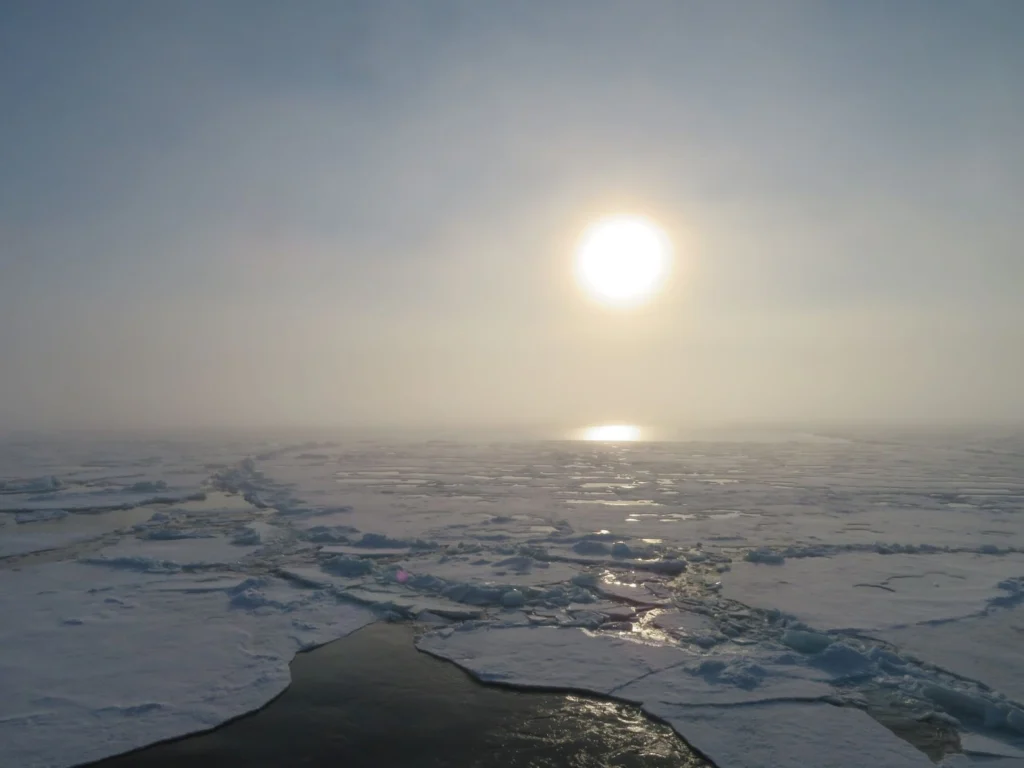
Current Position: 86°24’ N, 13°29’E (17th September 2018) The Arctic Ocean 2018 Expedition drifted for 33 days in the high Arctic and is now heading back south to Tromsø, Norway. With continuous aerosol observations, we hope to be able to add new pieces to the high Arctic aerosol puzzle to create a more complete picture …[Read More]
The perfect ice floe
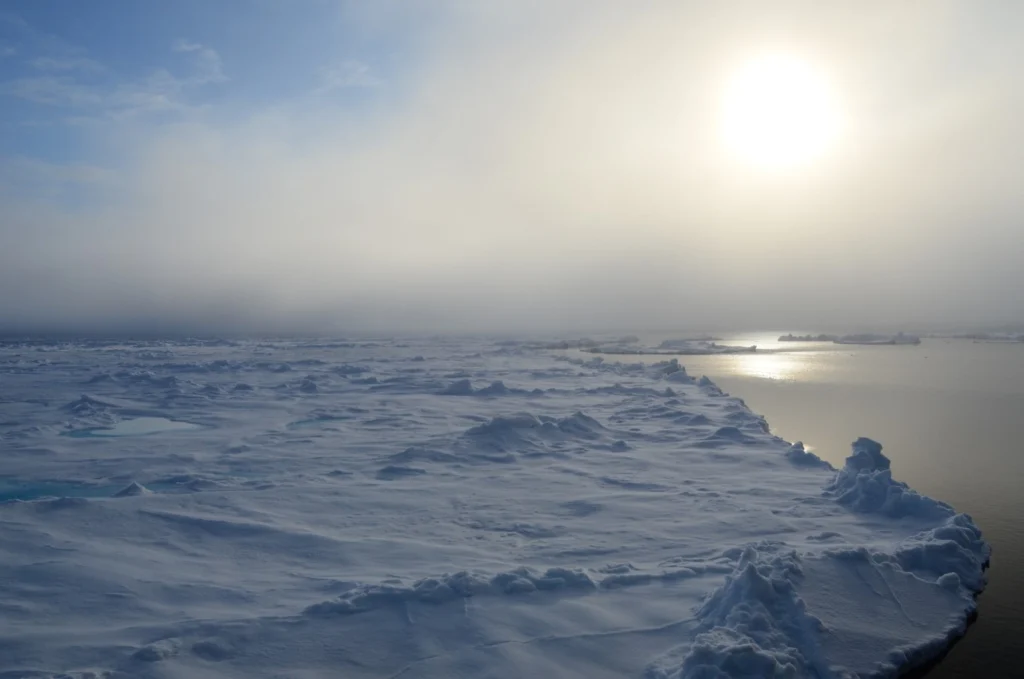
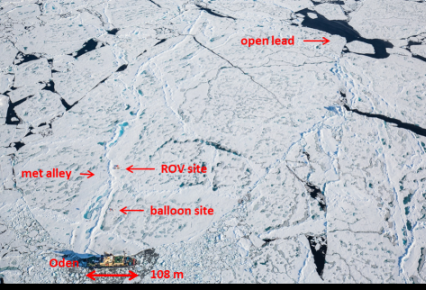
Current position: 89°31.85 N, 62°0.45 E, drifting with a multi-year ice floe (24th August 2018) With a little more than three weeks into the Arctic Ocean 2018 Expedition, the team has found the right ice floe and settled down to routine operations. Finding the perfect ice floe for an interdisciplinary science cruise is not an …[Read More]
Into the mist of studying the mystery of Arctic low level clouds
This post is the first of a “live-series of blog post” that will be written by Julia Schmale while she is participating in the Arctic Ocean 2018 expedition. Low level Arctic clouds are still a mystery to the atmospheric science community. To understand their role the present and future Arctic climate, the Arctic Ocean 2018 …[Read More]
Buckle up! Its about to get bumpy on the plane.
Clear-Air Turbulence (CAT) is a major hazard to the aviation industry. If you have ever been on a plane you have probably heard the pilots warn that clear-air turbulence could occur at any time so always wear your seatbelt. Most people will have experienced it for themselves and wanted to grip their seat. However, severe …[Read More]
Volcanic Ash Particles Hold Clues to Their History and Effects
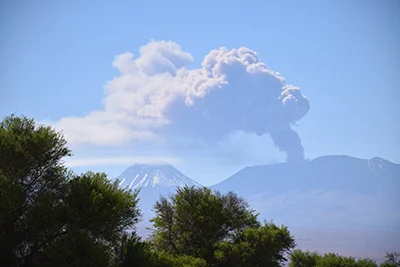
Volcanic Ash as an Active Agent in the Earth System (VA3): Combining Models and Experiments; Hamburg, Germany, 12–13 September 2016 Volcanic ash is a spectacular companion of volcanic activity that carries valuable information about the subsurface processes. It also poses a range of severe hazards to public health, infrastructure, aviation, and agriculture, and it plays …[Read More]