Radiosonde observations have been for many decades the primary source of upper-air data for numerical weather prediction models. Several hundreds of balloons, released every day from ground stations and ships, register detailed profiles of the vertical structure of the atmosphere and inform meteorologists and models about air mass stability, temperature, and moisture gradients. The number of radiosonde launches has decreased worldwide in the last few years, due to budget cuts and to the rising cost of helium. Such a reduction did not lead to noticeable drops in forecast skill so far, mainly due to the constant improvements in the assimilation of satellite data and to the use of more advanced approaches like 4D-Var. Still, punctual atmospheric soundings remain crucial in the context of field campaigns helping to provide reference observations in areas of interest and to broaden observational coverage both in space and time.
In recent years, in-situ atmospheric profiles have grown into a cornerstone of field campaigns in atmospheric dynamics. Over the ocean, research aircraft—such as those of the Center for Western Weather and Water Extremes (CW3E) Atmospheric River Reconnaissance (AR Recon) program at UC San Diego—deploy dropsondes that profile temperature, wind, and humidity through the storm before landfall. Radiosondes are extremely valuable to capture the vertical structure of atmospheric rivers as they approach the coast and bring extensive rainfall. Many of those radiosondes in the US are launched by university students organized through the Coordinated University Sounding Program (CUSP), which pairs real data collection with hands-on training for the next generation of researchers.
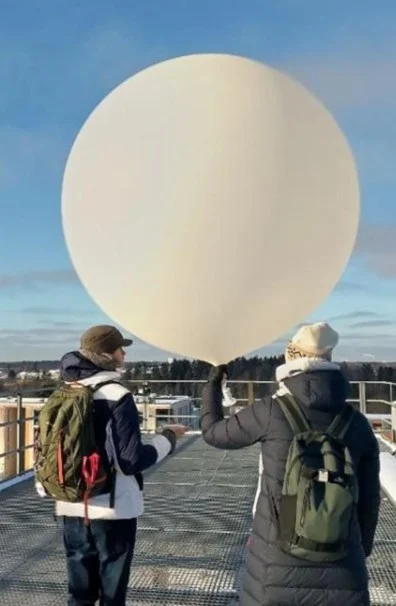
Launch of a radiosonde. Credits: University of Helsinki.
Until recently, no comparable university-based sounding effort existed on the European side of the Atlantic. That changed last winter with the launch of the European University RadiOsonde Partnership (EUROP), established in support of the North Atlantic Waveguide, Dry Intrusion, and Downstream Impact Campaign (NAWDIC). During January and February 2026, three universities and five weather services and research institutions joined forces to launch 126 radiosondes in total, sampling strong windstorms, dry-intrusion air masses, and atmospheric rivers (with many of the latter affecting the Iberian Peninsula during an exceptionally rainy winter). As a valuable addition to the EUROP efforts, ship-based radiosonde launches by the E-ASAP program filled observational gaps over the North Atlantic.
The balloon launches across Europe were centrally coordinated from NAWDIC’s campaign head quarter in Ireland, in correspondence with intensive observation periods (IOPs) of multiple research aircraft targeting atmospheric features over the North Atlantic. Students at EUROP’s partner universities were invited to join the daily campaign briefings and weather discussions virtually, giving them direct insight into the decision-making process while helping them coordinate their own launches ahead of upcoming IOPs—and delivering a genuine taste of the intensity of a full-scale field campaign.
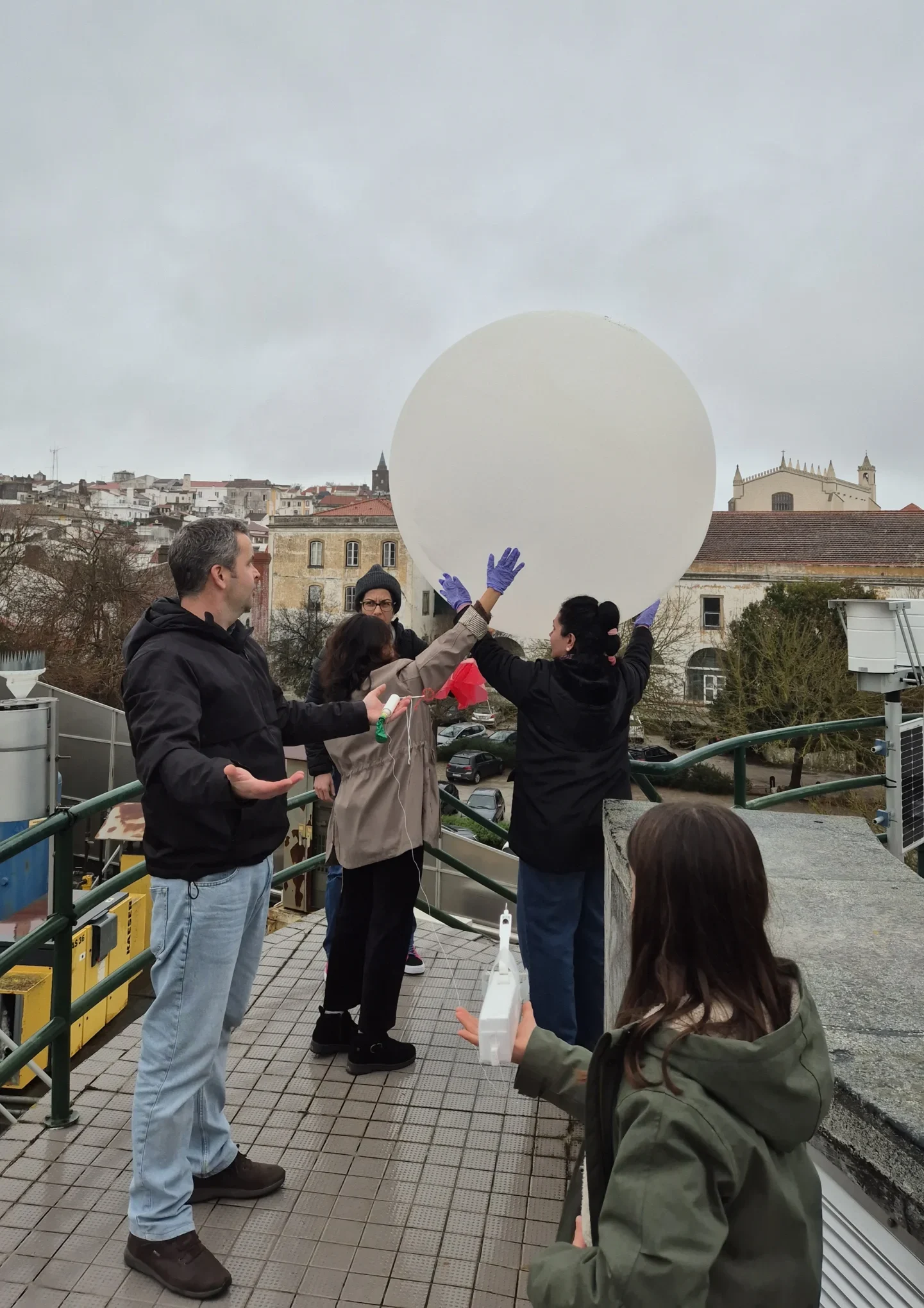
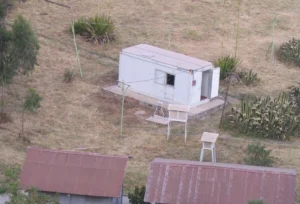
Photo credits: PhD program in Earth and Space Sciences from University of Évora, Portugal and Center for Sci-Tech Research in EArth sysTem and Energy – CREATE.
The campaign’s achievements are all the more notable given its modest resources. All expenses for sondes, balloons, and helium were self-funded by the participating institutions, and the entire effort ran without a central budget. Against that backdrop, the strong commitment of students and research staff made the campaign possible—demonstrating that meaningful contributions to major international field programs can come from relatively small, dedicated teams. The 126 soundings provided valuable vertical profiles at a critical time and location, complementing the data collected by larger observing platforms.
This winter 2026/2027, EUROP carries its efforts forward. The partnership will support the US-led field programs and NURTURE with downstream radiosonde observations, integrating its network of universities and weather services into a larger, coordinated observing effort. This marks a significant step in connecting European university soundings with the broader international community working on atmospheric dynamics.
New participants in the upcoming EUROP deployment in January and February 2027 are welcome: If you are a university interested in involving students in an active field campaign, or an institution able to contribute soundings from your region, feel free to get in touch with the EUROP coordination team. As EUROP grows from a promising first campaign into a more established entity in European atmospheric research, it also reminds the community of what dedicated students and researchers can achieve together—even on a limited budget.
The EUROP coordination team:
- Jacopo Riboldi (ETH Zürich)
- Bastian Kirsch, Alexandre M. Ramos (Karlsruhe Institute of Technology)
- Julian Quinting (University of Cologne)
- David Lavers (ECMWF Reading)
In memory of Prof. Victoria Sinclair (1983 – 2026), whose dedication, enthusiasm, and collaborative spirit made the radiosonde launches at the University of Helsinki possible and were an inspiration to all involved in the EUROP initiative.