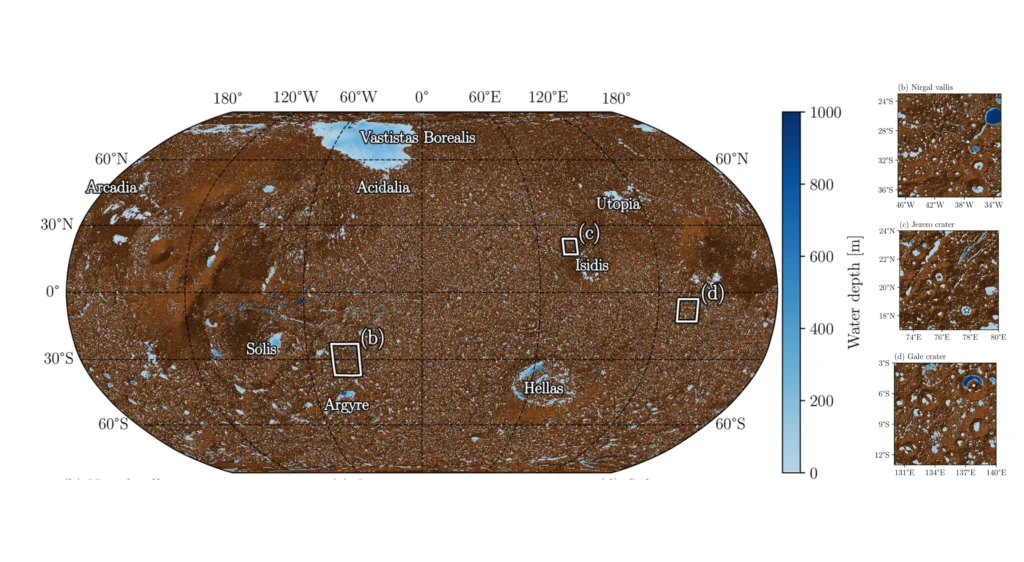
If we look at Mars today, we’ll see a cold, dusty desert, but peel back the surface geology, and the planet tells quite a different story! Networked river valleys, ancient deltaic fans, carved impact crater lakes, and potential palaeoshorelines all point to a warm and active past during the Noachian and early Hesperian epochs, circa …[Read More]
1727 search results for "network"
If you didn't find what you were looking for, try searching again.
GeoTalk: meet Michael Baidu, atmospheric data scientist and nowcasting researcher!
Hello Michael! Thankyou for agreeing to this interview. Could you briefly introduce yourself and your background? Hi, I am Michael Baidu, a Research Fellow at the University of Leeds, currently working on the Developing Capacity for storms early warnings for Ghana’s energy sector (EW4Energy) project. I have also worked as a Data Scientist at the …[Read More]
“State of the ECS”: EGU 26 and, our new members!
For this “State of the ECS”, our Seismo-team will introduce themselves and tell about their ECS experience. Happy reading! Greetings! I’m Adam and by a twist in the timestream in Vienna in 2024 I ended up as the Editor-in-Chief of a blog of the Seismology ECS division (yes, this one). If your (or your colleague’s) …[Read More]
EGU Campfire Geodesy – Share Your Research – 23rd Edition
We are excited to announce the 23rd edition of Geodesy Campfire – Share Your Research in October. The Geodesy EGU Campfire Events “Share Your Research” give (early career) researchers the chance to talk about their work. We have two exciting talks by our guest speakers, Saqib Mehdi and Laura Giaccio. Below, you can find the …[Read More]
GeoTalk: meet Luigi Bianco, geophysicist and GI Early Career Scientist representative
Hello Luigi! Thank you for agreeing to this GeoTalk interview. Could you briefly introduce yourself and your background to our readers? Hi Simon and the EGU community! I’m a postdoc researcher in applied geophysics at the University of Naples Federico II. My research focuses on developing advanced potential field modelling and inversion techniques to image …[Read More]
Genesis: One Satellite to Bring Four Geodetic Techniques Together
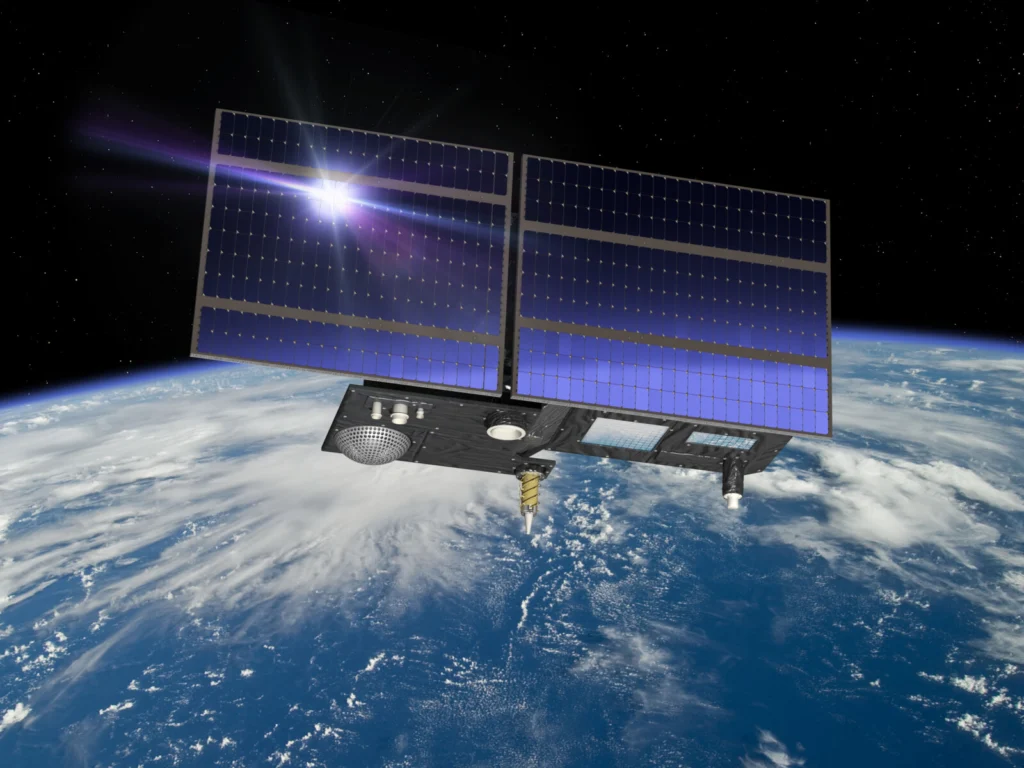
What if we brought all four major space-geodetic techniques together on a single spacecraft for the first time? ESA’s Genesis mission, expected to launch in 2028, will do just that, combining Global Navigation Satellite System (GNSS), Satellite Laser Ranging (SLR), DORIS and Very Long Baseline Interferometry (VLBI) on one carefully calibrated platform. Well before launch, …[Read More]
1st International Training School on Urban Water Management and Nature-based Solutions for Sustainable Cities
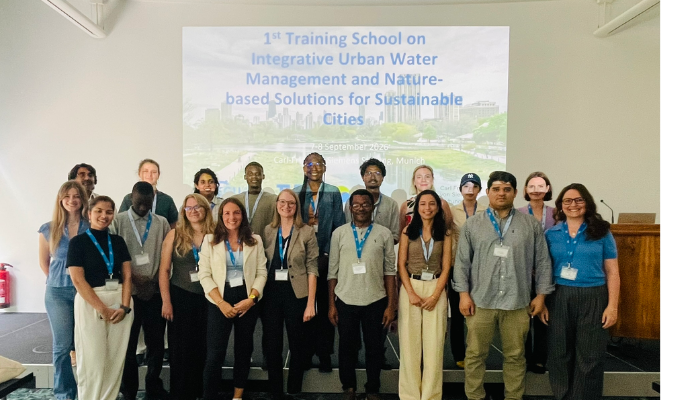
From 7-8 September 2026, the 1st International Training School on Urban Water Management and Nature-based Solutions for Sustainable Cities was held in Munich, Germany. Organised by researchers from the Technical University of Munich, the Leibniz Institute of Freshwater Ecology and Inland Fisheries (IGB), Berlin, and the University of Cagliari in collaboration with the International Association …[Read More]
Shaping the PS Division: Call for Community Engagement
Credit: Anna Kotova (distributed via imaggeo.egu.eu) [Imaggeo – Geoscience]. Dear EGU Planetary & Solar System Sciences (PS) Division, The Planetary & Solar System Sciences blog is back! In this post, we will examine how to participate in defining the PS Division, activities, procedures, and deadlines. We dedicate our comeback post to our readers, who …[Read More]
Methane in India: Why precise measurements and cutting-edge technology matter for climate action
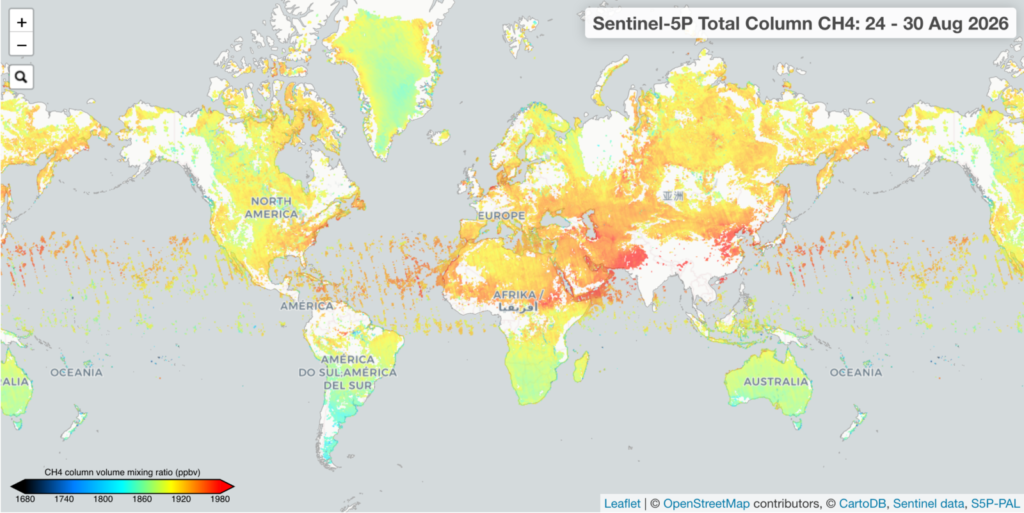
The looming El Niño is likely to hit hard this year, bringing bracing moments to the already warming world. Extreme weather events are no longer just anomalies; they have become far too common in this new reality. It’s clear that our environment is under unprecedented stress. Experts warn of the costs of inaction: between 1995 …[Read More]
eDNA4Hydrology
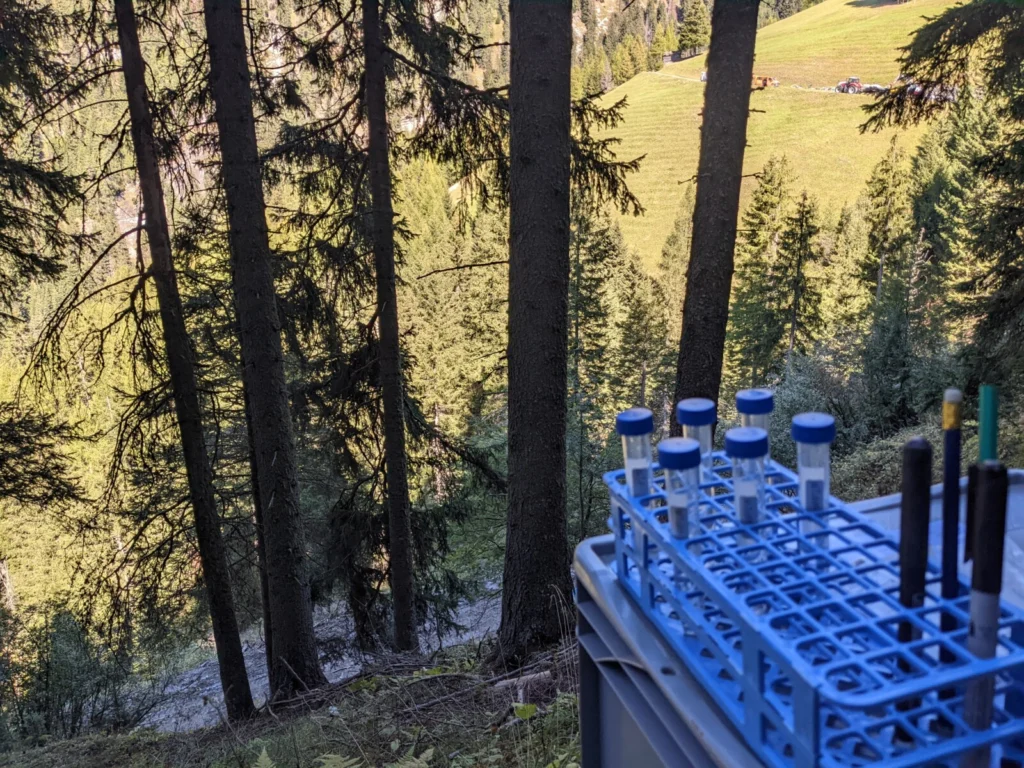
What flows around comes around For centuries, hydrologists have studied the flow of water through landscapes near and far. We measured flow rates, mapped aquifers and followed invisible paths of raindrops through soil and bedrock. Hydrology is a meticulous, beautiful science that has taught us much over the years. From the water cycle, surface water …[Read More]