
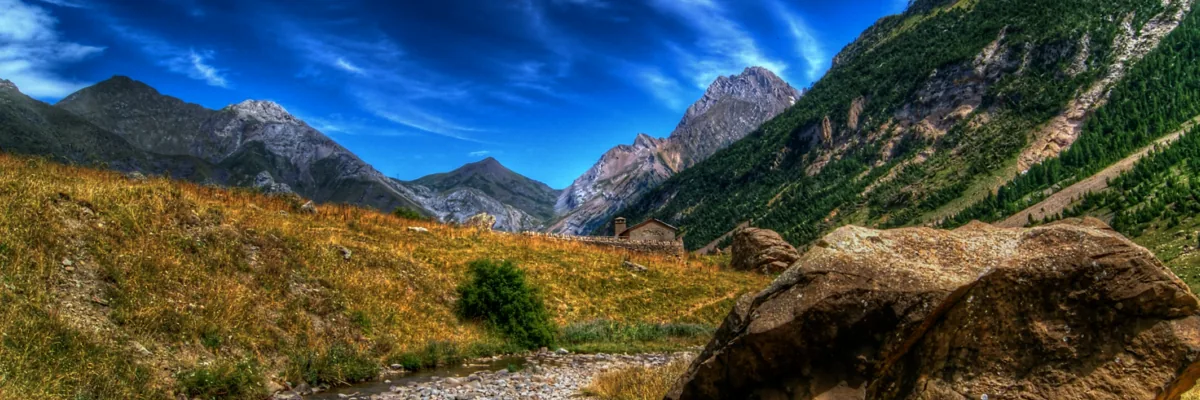
Interested in working in geoscience education and outreach? We have just the opportunity for you… EGU Fellowships offer young scientists the opportunity to gain experience in science management and communication at the EGU Executive Office in Munich, Germany. Fellows are strategically deployed to develop new initiatives and capabilities for long-term use by the EGU. The …[Read More]
6015 search results for "6"
If you didn't find what you were looking for, try searching again.
Using social networks to respond to earthquakes
Effective responses to natural disasters require the rapid acquisition of information about where has been affected, how many people are in the affected areas and what the magnitude of the damage is. This information is critical in both disaster and emergency rescue management. Indeed, the first three days after the onset of a disaster has …[Read More]
GfGD in the IUGS-GEM Newsletter
An article about Geology for Global Development written by GfGD Director, Joel Gill, appears in this year’s IUGS-GEM newsletter. The international union of geological sciences (IUGS) has a commission on Geoscience for Environmental Management (GEM). GEM comprises working groups covering dust, gold and mercury, land subsidence and groundwater, man made strata and geopollution, drinking water …[Read More]
Science bloggers – join the 2013 General Assembly blogroll!
Will you be blogging at the 2013 General Assembly? If so, sign up here and we’ll add you to our official blogroll. We will be compiling a list (blogroll) of blogs that feature posts about the EGU General Assembly and making it available on our blog. We’d ask you to write posts directly related to the Assembly …[Read More]
Geology Photo of the Week #22
I have been posting a lot lately about the Yukon. So for a change of pace the photo for this week comes from Australia…about as far from the Yukon as it is possible to get. This is a photo looking down on a mat of stromatolites. They are the round shapes poking up through the …[Read More]
It’s just a flesh wound!
Fossils, as we typically think about them, tell us about the death of an animal. The teeth, bones, shells, fragmented pseudopods and other weird and wonderful bits of carcass all only ever reflect one thing: a permanent geological limbo. These types of fossil are known as body fossils. The other major group of fossils, that …[Read More]
GfGD Placement Report: Ellie Murtagh’s work with CAFOD
In September 2012 Eleanor Murtagh completed a short Geology for Global Development (GfGD) placement with the international humanitarian and relief organisation CAFOD. At CAFOD, Ellie worked with Dr Kate Crowley (Disaster Risk Reduction Advisor) for a week. Here she reports on the activities she was involved in and the lessons she learnt from this experience. …[Read More]
Imaggeo on Mondays: Wonderings and weathering
After studying ‘Applied Environmental Sciences’ I decided to go with a friend for six months to New Zealand for the southern hemisphere winter. Leaving as soon as my diploma thesis (on epiphytic lichens) was written, we set off into the distance to work and travel. We chose New Zealand as our dream destination because these …[Read More]
Fun with PHREEQ at Red Creek
Most freshwater on earth is not that highly saturated with dissolved metals or minerals. However, there are exceptions to be found all over the world from natural acid rock drainage to the alkali springs of Jordan. If the concentrations of dissolved metals are high enough the water can be toxic. For example, water draining from …[Read More]
GeoTalk: Jane Robb
GeoTalk, featuring short interviews with geoscientists about their research, continues this month with a Q&A with Jane Robb from University College London (UCL), who tells us about the excitement of geo-outreach and importance of conserving heritage collections. First, could you introduce yourself and let us know a bit about your current work at UCL? Hi, …[Read More]