
Here is an insight into what the GfGD team got up to on day two of #EGU2013! c Geoethics and Natural Hazards This morning saw sessions on ‘Geoethics and Natural Hazards’ that contained plenty of enthusiastic discussion on the L’Aquila case. Joel Gill, GfGD’s Director was there bright and early and covered the session on …[Read More]
443 search results for "black in science"
If you didn't find what you were looking for, try searching again.
Photo finalists! Do you have a favourite?
The selection committee received close to 200 photos for this year’s EGU Photo Competition, covering fields across the geosciences. The stunning finalist photos are below and they are being exhibited in Hall X (basement, Blue Level) of the Austria Center Vienna, where you will also find voting terminals. Do you have a favourite? Vote for …[Read More]
Guest Post: Solar Storms and the Earth’s Protective Shield – Laura Roberts Artal
I am a PhD student at the University of Liverpool Geomagnetism Laboratory. My current research project is the palaeomagentic study of 3.5-3.2 billion year old rocks from South Africa. The aim of my research is to improve our understanding of the long term evolution of the Earth and the surface conditions under which the first …[Read More]
Imaggeo on Mondays: Metamorphosis
This fold is part of the metamorphic core of the Pyrenees. The shear zone is almost vertical, producing a small parasitic fold (a smaller fold within a larger one), which looks almost as if it continues into the sky. The metamorphic sediments are about 500 million years old and have been deformed several times, most …[Read More]
The Truth about Radon
There are few things on Earth that evoke more fear than radioactivity. Most people’s response to radioactivity is one of immediate fear and confusion and I can’t say I blame them. There is something very frightening about a substance that shoots off invisible rays that can kill you if you’re exposed to enough of them. …[Read More]
Imaggeo on Mondays: Rainbow in stone
Nothing better characterises the wild US West than endless landscapes of red hoodoos, spires of rock protruding from the bottom of an arid drainage basin or badland. Found mainly in desert and dry, hot areas, hoodoos are distinctive from similarly-shaped formations, such as spires or pinnacles, because their profiles vary in thickness throughout their length. …[Read More]
Guest Lecture – Dr. Tim Lowenstein
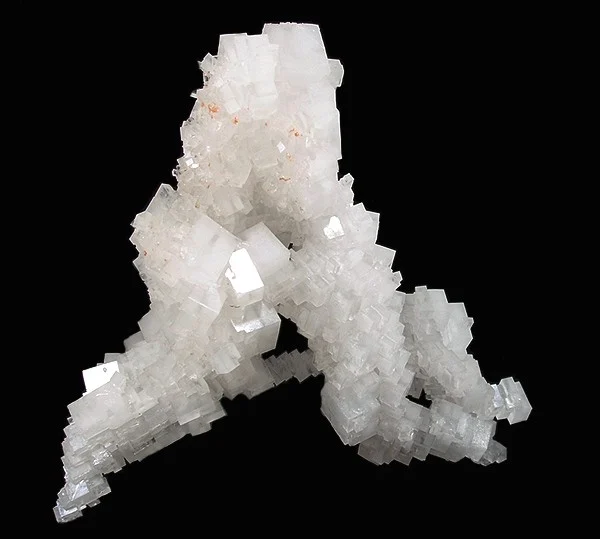
Our department was recently lucky enough to have Dr. Tim Lowenstein from SUNY Binghamton come give a guest lecture on the changes in the chemistry of seawater throughout geologic time. Originally, we thought that the major ion chemistry in the past was more or less the same as it is today. However, over the last …[Read More]
Imaggeo on Mondays: Ephemeral winter wonderland
Today’s text is brought to you by the author of this impressive picture, Patrick Klenk (Heidelberg University, Germany). This photograph is part of a series of images which I took in Death Valley National Park on a brisk December morning in 2011. In this case, we were close to Aguereberry Point, a mountain viewpoint located …[Read More]
A GeoPoetry Anthology – Accretionary Wedge #51 Compilation
Firstly, I would like to thank everyone that participated in this edition of the Accretionary Wedge. There were a few comments that the topic was somewhat out of people’s comfort zone so I am glad that there was still fantastic participation and people willing to try poetry writing out even if it was a different sort of medium. As you know …[Read More]
If Only We Had Been Taller: The Mars Curiosity mission
Today we feature a guest post by Mona Behl, a Visiting Fellow at the American Meteorological Society. Mona provides a review of the current Mars mission, including an overview of the revolutionary instruments featured aboard the Curiosity rover. “The fence we walked between the years did balance us serene. It was a place half in the …[Read More]