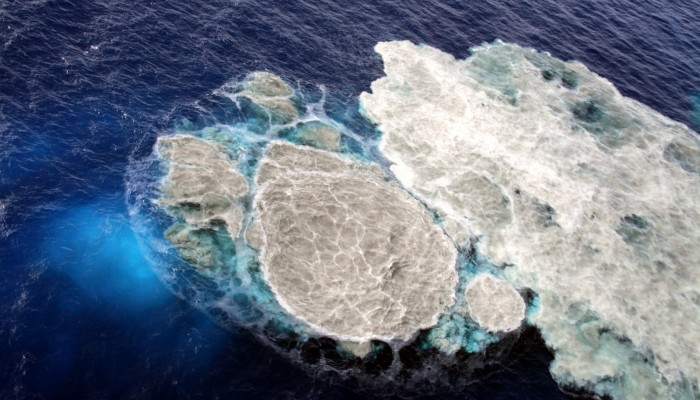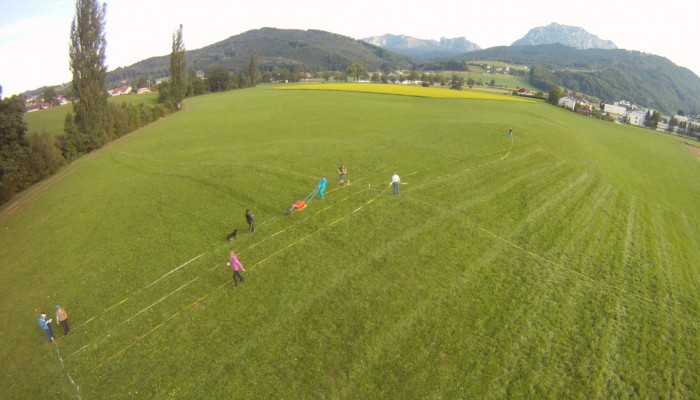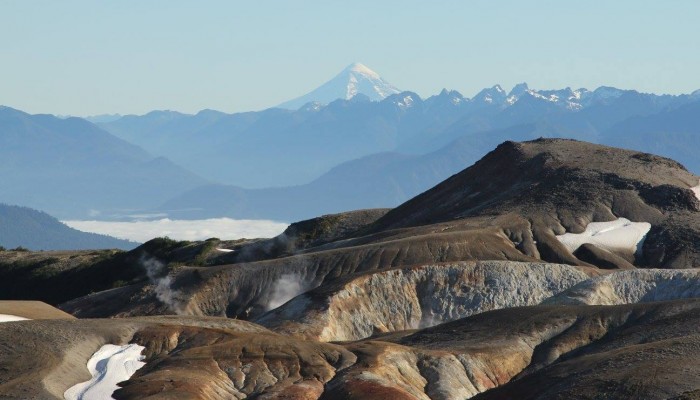
Aerosol particles typically have short life spans in the atmosphere (days to weeks) but they can travel far and wide in that time. They can be lifted up to new horizons, higher and higher in the atmosphere. This is important for their impact on our climate, for example, at least 20% of the uncertainty in the climate impact of black carbon aerosol is due to differences in its vertical distribution. ...[Read More]
If you didn't find what you was looking for try searching again.
WaterUnderground
A social media dashboard for researchers – taming the digital anarchy for nerds
Is anyone else overwhelmed by updating their many webpages, blogs, streams etc? Jason Priem described the shift from a paper-native academia to a web-native academia, in an excellent article last year in Nature, a shift well beyond the traditional peer-reviewed journal to more diverse outlets of information, interaction and discussion. I am part of the first generation of researchers who are excit ...[Read More]
Green Tea and Velociraptors
The origin of a second wave of supreme-swimming crocodiles
Millions of years ago, crocodiles were far more diverse (and weird) than the ones we still have around today. They ranged from armoured, tank-like forms living on land and feeding on plants, to 9 metre long fully-fledged swimmers out in the open oceans. In the Jurassic period, most of the crocs we know of were of this second kind, the whole marine forms. These comprised a group known as thalattosu ...[Read More]
GeoLog
Imaggeo on Mondays: Iceberg at midnight
Standing on the vast expanse of gleaming white sea ice of the Atka Bay, Michael Bock took this stunning picture of an Antarctic iceberg. The days, during the Antarctic summer, are never ending. Despite capturing the image at midnight, Michael was treated to hazy sunlight. “Clearly visible [in the iceberg] are the annual snow accumulation layers which illustrate how the ice archive works.; as you l ...[Read More]
Cryospheric Sciences
4 Reasons Why You Should Get Involved as an Early Career Scientist (& a caveat) – Allen Pope
You’re an early career scientist (ECS), or maybe you mentor one. So you know that we ECS are busy people, with responsibilities ranging from coursework to teaching, research to outreach, and labwork to fieldwork. And now there is this listicle (no, I’m not embarrassed about choosing this format) telling you to make time in your already packed day to volunteer some of your time to a(n early career) ...[Read More]
Energy, Resources and the Environment
The EGU Submission Deadline is coming!
Hello fellow scientists! We hope you had a good start of the new year: may it be filled with plenty of exciting new research :) As a quick reminder, the EGU abstract submission deadline is this week: on Wednesday the 7th of January at 13.00 CET. Don’t forget to submit your abstract to one of our ERE sessions and share your interesting work with us! You can submit your abstract via the EGU we ...[Read More]
Between a Rock and a Hard Place
The year ahead – twenty fift-green?
Firstly, happy New Year from all those at BaR! The start of January always seems to herald a surfeit of navel-gazing blog posts. Therefore, I thought I would attempt to broaden my horizons and consider whether, with only five years to go to meet the 20-20-20 EU climate targets, will 2015 be the greenest year yet?
Green Tea and Velociraptors
Twitter logos for conference talks
Recently, there was a pretty massive discussion about the practice of live-tweeting at conference talk hosted on this blog. While the discussion is by no means over, or particularly conclusive, one idea to emerge was having an icon of some sort on slides during talks to indicate whether or not they could be live-tweeted. Sarah Werning has been kind enough to create and share some logos following t ...[Read More]
GeoLog
The best of Imaggeo in 2014: in pictures.
From the rifting of the African continent, to mighty waterfalls in Slovenia, through to a bird’s eye view of the Glarus Thurst in the Alps, images from Imaggeo, the EGU’s open access geosciences image repository, they have given us some stunning views of the geoscience of Planet Earth and beyond. In this post we have curated some of our favourites, including header images from across our social me ...[Read More]
GeoLog
Imaggeo on Mondays: Lusi from the sky with drones
The picture shows a spectacular aerial view of a sunset over the Lusi mud eruption in East Java, Indonesia. Here thousands of cubic meters of mud, are spewed out every day from a 100 m sized central crater. Since the initial eruption of the volcano in 2006, following a 6.3 M earthquake, a surface of about 7 km2 has been covered by boiling mud, which has buried more than 12 villages and resulted in ...[Read More]