EGU Blogs

2054 search results for "researcher"

CR
Cryospheric Sciences

Image of The Week – Ice Flows!

Image of The Week – Ice Flows!

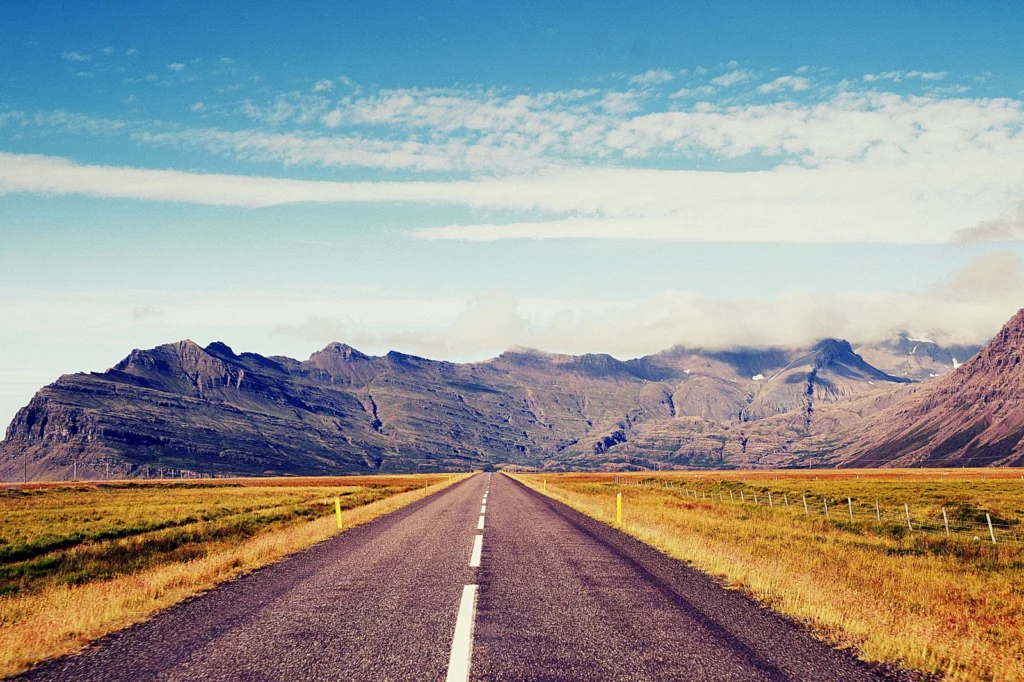
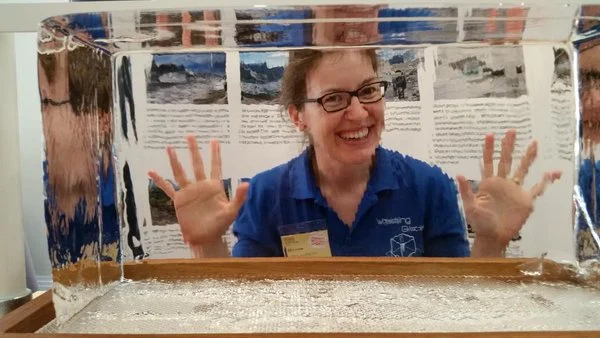
Portraying ice sheets and shelves to the general public can be tricky. They are in remote locations, meaning the majority of people will never have seen them. They also change over timescales that are often hard to represent without showing dramatic images of more unusual events such as the collapse of the Larsen B Ice Shelf.  However, an app launched in the summer at the SCAR (Scientific Committe ...[Read More]

CR
Cryospheric Sciences

Quantarctica: Mapping Antarctica has never been so easy!

Quantarctica: Mapping Antarctica has never been so easy!

One of the most time-consuming and stressful parts of any Antarctic research project is simply making a map. Whether it’s plotting your own data points, lines, or images; making the perfect “Figure 1” for your next paper, or replying to a collaborator who says “Just show me a map!,” it seems that quick and effective map-making is a skill that we take for granted. However, finding good map data and ...[Read More]

WaterUnderground

What is a hydrogeologist?

What is a hydrogeologist?

Hydrogeologists are a diverse group, in part because we come to this discipline from so many different paths.  We come from different academic programs in engineering, geological sciences and environmental sciences.  These differences in backgrounds create a diversity of perspectives, which enriches hydrogeology and allows for dynamic collaborations.  Engineers and geophysicists are known for brin ...[Read More]

GeoLog

Geosciences Column: How El Niño triggered Indonesia corals die-off

Geosciences Column: How El Niño triggered Indonesia corals die-off

In the glistening waters of Indonesia, shallow corals – the rain forests of the sea – teem with life.  Or at least they did once. Towards the end of 2015 the corals started to die, leaving a bleak landscape behind. An international team of researchers investigated the causes of the die-off. Their findings, published recently in the EGU’s open access journal, Biogeosciences, are rather ...[Read More]

GeoLog

February GeoRoundUp: the best of the Earth sciences from around the web

Comparing the TRAPPIST-1 planets

Drawing inspiration from popular stories on our social media channels, as well as  unique and quirky research news, this monthly column aims to bring you the best of the Earth and planetary sciences from around the web. Major story Undoubtedly the story of the month is the discovery of a star system of seven Earth-sized planets just 40 light-years away from our own. What makes the finding so excit ...[Read More]

GM
Geomorphology

11th Intern. Young Geomorphologists’ Workshop 2017, 19.-21. May 2017, Ammersee, Germany

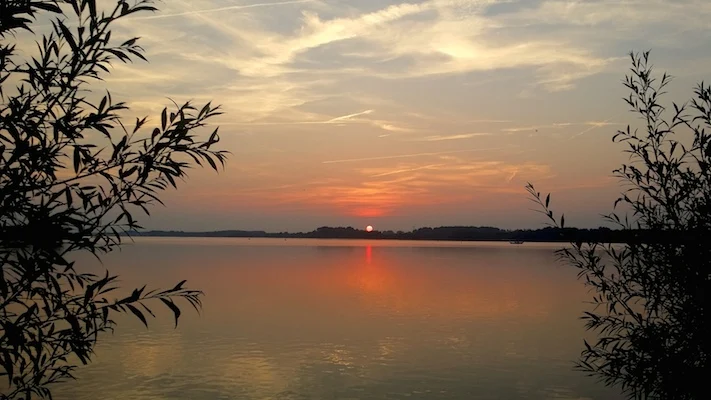
This year, the Young Geomorphologists from Germany invite all interested young researchers / students in geomorphology and related fields to join the 11th international Young Geomorphologists’ workshop at Ammersee, Germany, held from 19th-21st May 2017. The venue is located at a lake ca. 1 hour southwest of Munich. In a mixture of oral presentations, posters, a keynote and a short fieldtrip, ...[Read More]

GeoLog

Get involved: become an early career scientist representative

Get involved: become an early career scientist representative

Early career scientists (ECS) make up a significant proportion of the EGU membership and it’s important to us that your voices get heard. To make sure that happens, each division appoints an early career scientists representative: the vital link between the Union and the ECS membership. After tenure of two or four years, a few of the current ECS Representatives are stepping down from their post at ...[Read More]

GeoLog

Imaggeo on Mondays: America’s dead sea

Imaggeo on Mondays: America’s dead sea

On the blog today, Jennifer Ziesch, a researcher at the Leibniz Institute for Applied Geophysics, takes us on a tour of the Great Salt Lake, located in the north of Salt Lake City (Utah). Did you know it is one of the largest salt water lakes in the world? The large salt lake and Salt Lake City, named after the lake, lie on a flat plain about 1300 m above sea level. The salt lake is bordered to th ...[Read More]

GeoLog

GeoPolicy: Making a case for science at the United Nations

GeoPolicy: Making a case for science at the United Nations

This month’s GeoPolicy is a guest post by the International Council for Science (ICSU). Based in Paris, the organisation works at the science-policy interface on the international scale. Here, Heide Hackmann, Executive Director at ICSU, highlights key initiatives ensuring science is present within the United Nations (UN) and explains how ICSU and the scientific community can support these pr ...[Read More]

GeoLog

Geosciences Column: Africa’s vulnerability to climate change

Climate change is set to hit the nations of the Global South the hardest.

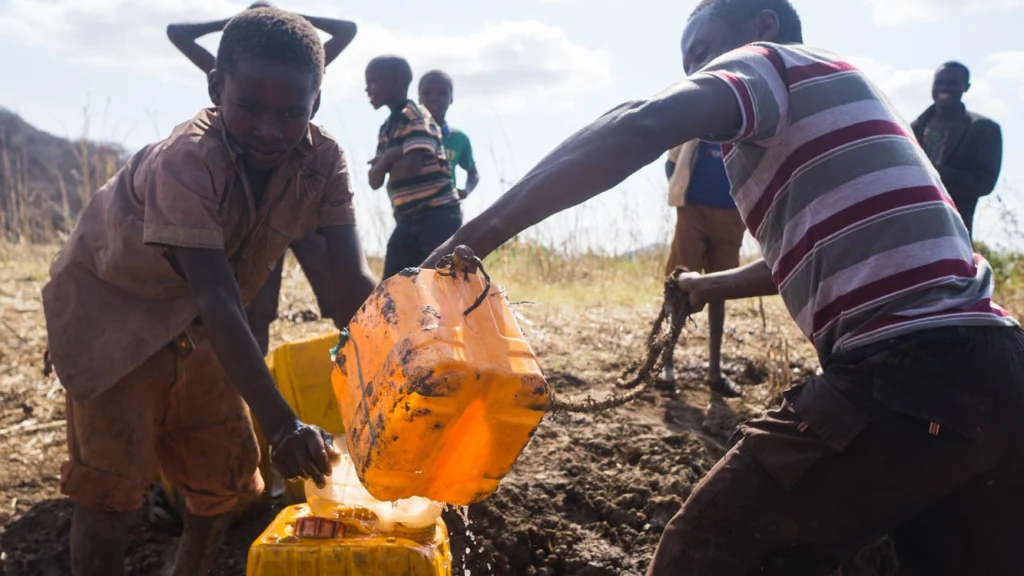
Ravaged by armed conflicts, a deep struggle with poverty, poor governance and horizontal inequality, some parts of Africa and other Global South regions are arguably the most vulnerable to the impacts of climate change. Largely reliant on natural resources for sustenance, current and future changes in temperatures, precipitation and the intensity of some natural hazards threaten the food security, ...[Read More]