Welcome back, Ocean Sciences community! We have been quiet for a while, but we are happy to say we’re back! We have missed sharing the latest research, insights, stories, ideas and we are eager to present fresh content and exciting initiatives starting in September. In the following months, we have a range of exciting content lined up for the blog. We will be sharing interesting new research in oc ...[Read More]
GeoLog
Which pixel represents my gauging station? Tackling an essential issue in gridded hydrology
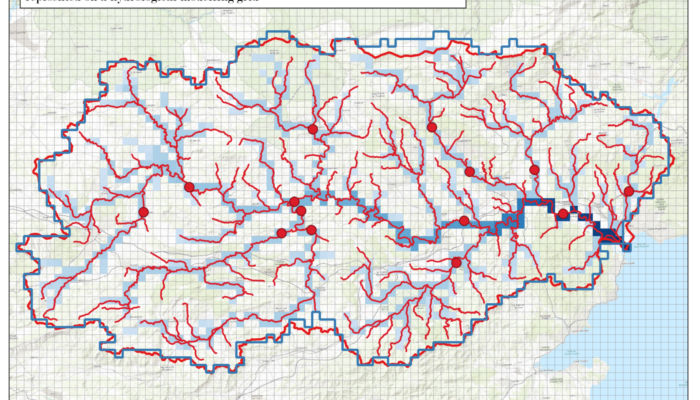
Do you know how scientists predict and analyse river flows using computer models? In this blog, Juliette Godet explores the tricky task of matching real-world river measurement points to grid cells in these models. Picture a giant digital map of a river basin, divided into grid squares, and a real-life gauge that measures river flow at a specific point. The job is to figure out which grid cell bes ...[Read More]
Hydrological Sciences
Shaping the HS-programme of EGU25: Session Review, Merging, and Co-Organization Updates
September has arrived. The Hydrological Sciences (HS) community has been very active, as usual, submitting 152 sessions during the open session call, which is more than 10% of all sessions that are proposed for the entire EGU (overall 1,273 sessions were submitted, slightly more than at EGU24). This is amazing and I would like to thank all the conveners for their excellent ideas and nice work so f ...[Read More]
Geodynamics
Creativity and geology
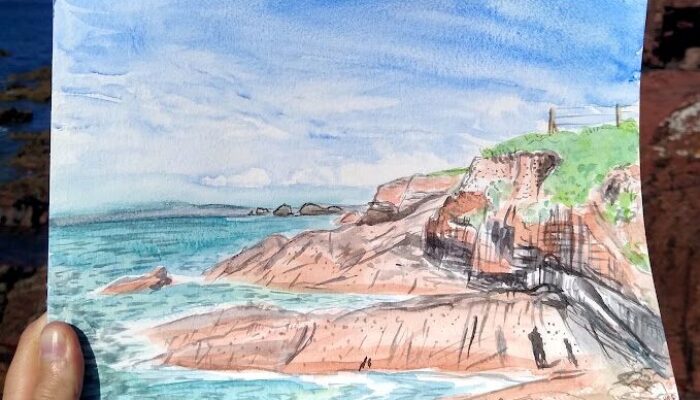
Phoebe Sleath, a PhD student at the University of Aberdeen, guides us through the intersection of art and geology. She shares how she got into watercolour field sketching, how it became a valuable companion during her PhD journey, and how it serves as a powerful tool for communicating science Why do you like doing geoscience? Throughout my undergrad degree, I would have said: because I like mounta ...[Read More]
GeoLog
Ozone 101: What you need to know as the Montreal Protocol turns 35
As the world commemorates the 35th anniversary of the Montreal Protocol, it’s worth taking a moment to appreciate this landmark agreement’s monumental impact on our planet. Officially known as the “Montreal Protocol on Substances That Deplete the Ozone Layer,” this treaty stands as one of the most successful environmental accords in history, showcasing what humanity can achieve when it comes ...[Read More]
Natural Hazards
Taking the risk personally: how perceived flood experience relates to risk perception, sensed coping appraisal, and protective behaviour
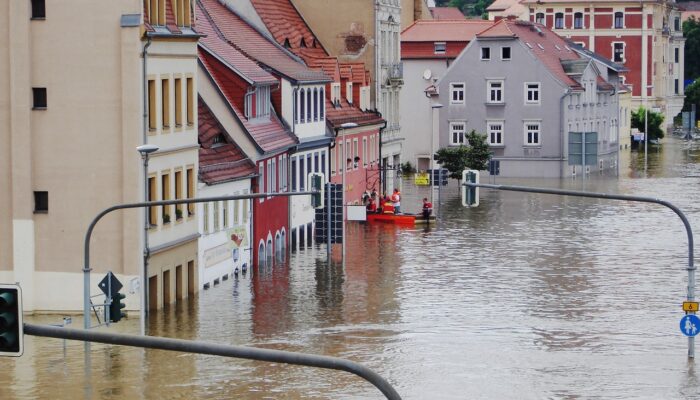
The frequency and severity of extreme weather events, such as heavy rainfall, droughts, and storms, are increasing globally, putting societies and infrastructures worldwide at risk [1]. These developments demand effective adaptation measures and ways to enhance societal resilience. Consequently, it is necessary to understand how people perceive and respond to natural hazards. Knowing that the occu ...[Read More]
Cryospheric Sciences
Friday the 13th – an unlucky day for sea ice?
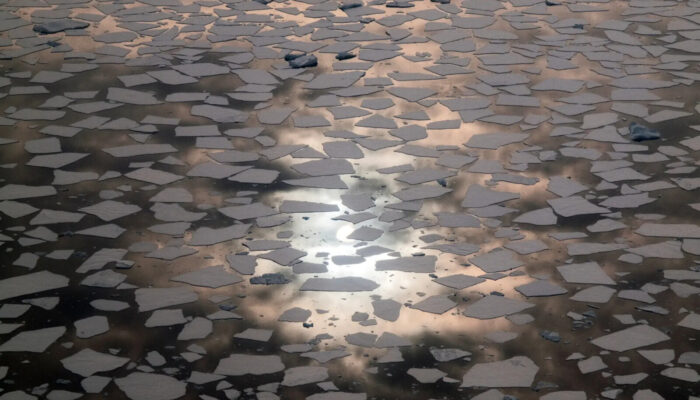
On this September 13th, coinciding to be a “Friday 13th”, we wanted to scan the cryo-history for expeditions started, sunken ships that day, and mountain myths. And we did find that. But as autumn approaches in the Northern hemisphere, the spookiest story of all was this one: the unlucky timing of the Arctic sea ice in September. TGIF – but not for sea ice Although the median min ...[Read More]
Geochemistry, Mineralogy, Petrology & Volcanology
La Soufrière de Guadeloupe: Past Eruptions and Ongoing Activity
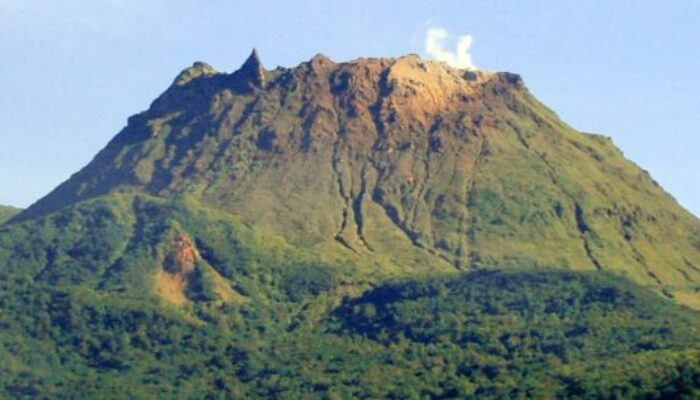
La Soufrière de Guadeloupe is an andesitic stratovolcano located in the southern part of Basse-Terre, within the Guadeloupe archipelago (Eastern Caribbean). It towers over the towns of Sainte-Claude and Basse-Terre. Nearly 50 years ago, this region faced severe consequences from a phreatomagmatic eruption, forcing the evacuation of 80,000 people. Since then, the volcano has been regularly monitore ...[Read More]
Geomorphology
Highlighting Grace Guryan: How do rocks shape rivers?
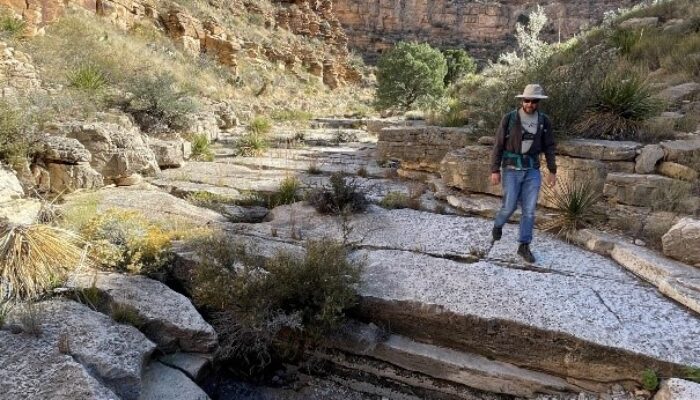
This blog post is part of our series: “Highlights” for which we’re accepting contributions! Please contact one of the GM blog editors, Emily (emily.bamber@utexas.edu) or Emma (elodes@asu.edu), if you’d like to contribute on this topic or others. by Grace Guryan, Doctoral Researcher, University of Texas at Austin, USA Email: gguryan@utexas.edu About Me My name is Grace Guryan, and I’m a fifth year ...[Read More]
GeoLog
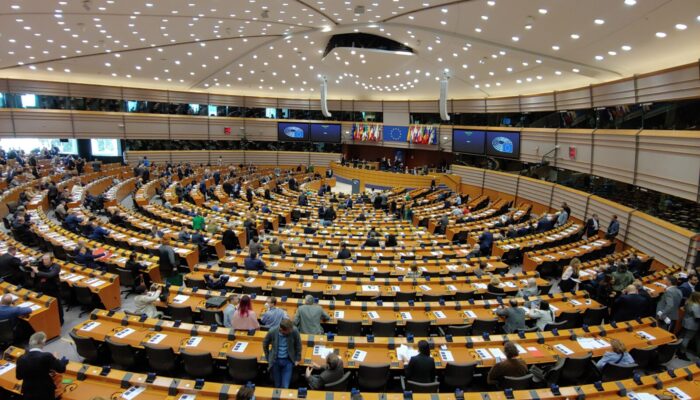
GeoPolicy: Exploring the European Parliament with last year’s Science-Policy Pairing Scheme candidates
Each year, the EGU’s Science-Policy Pairing Scheme offers selected EGU members the opportunity to experience life inside the European Parliament. This Pairing Scheme aims to promote evidence-informed policymaking, provide the scientists involved with insights about how Members of the Parliament (MEPs) use research in their decision-making, and encourage stronger science-policy partnerships! For th ...[Read More]