
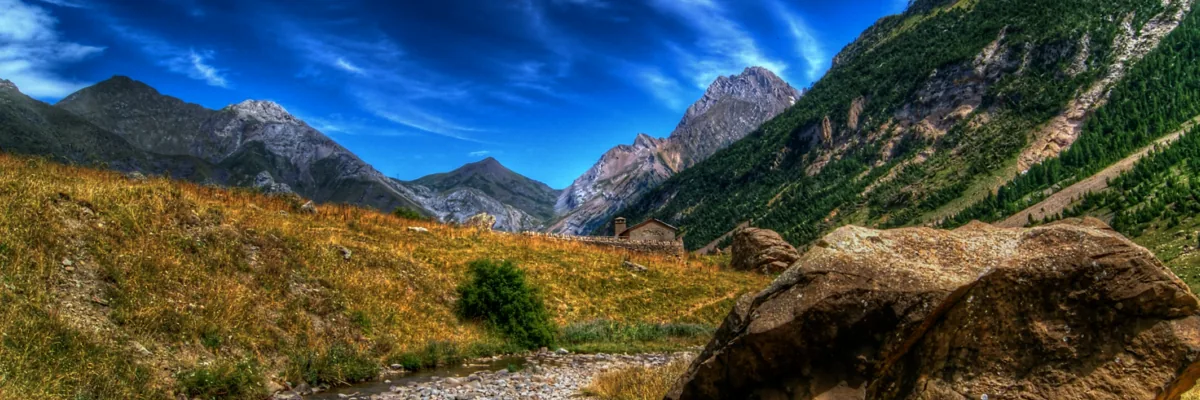
Suwanosejima, which lies within the Ryukyu Islands, is one of Japan’s most active volcanoes, erupting almost continuously between the 1950s and mid 1990s. It has two active craters, the central Otake crater and the Bunka crater, to the southwest. While the frequency of these eruptions has declined, the volcano remains active, with strombolian and vulcanian …[Read More]
Latest posts
The early evolution of dinosaurs
Dinosaurs. What springs to mind when they’re mentioned? Colossal, towering sauropods? Packs of feisty feathered fiends? Or huge herds of hadrosaurs, chomping their way across the plains of long-lost worlds? Most, including myself, will automatically default to any one of these images when dinosaurs come up in conversation (what, you mean it’s not that frequent …[Read More]
Some Comments on Recent Earthquakes in Iran
In this article, Joel Gill and Faith Taylor write about the importance of reducing individual and community vulnerability in Iran. This post is written in response to the recent earthquakes in April 2013, and an article posted in the Guardian in 2010. In addition to their GfGD responsibilities, Joel and Faith are undertaking PhD research at King’s College …[Read More]
Earth Day – Thin Ice and the inside story of Climate Science
Earth Day, April 22nd, has been chosen as the day for the global launch of a new film on the science behind global environmental change ‘Thin Ice: the Inside Story of Climate Science‘. This is an exciting project, as the filmmakers include Simon Lamb, who has had a successful career as an academic geologist at …[Read More]
Upload your General Assembly Presentation!
This year it is once again possible to upload your oral presentations and posters from EGU 2013 for online publication alongside your abstract, giving all participants a chance to revisit your contribution – hurrah for open science! Files can be in either PowerPoint or PDF format. Note that presentations will be distributed under the Creative Commons Attribution 3.0 Licence. …[Read More]
GeoTalk: Alexis Rouillard
GeoTalk is a regular feature highlighting early career researchers and their work. Following the EGU General Assembly, we spoke to Alexis Rouillard, an Arne Richter Outstanding Young Scientist awardee and a brilliant space scientist. First, could you introduce yourself and let us know a bit about your current work at the French National Centre for Scientific Research? …[Read More]
Friday Photo (75): GfGD-CAFOD Placement
Sam Marshall (University of Southampton) and Dr Kate Crowley (Disaster Risk Reduction Adviser, CAFOD), at the CAFOD headquarters in central London. Sam has been undertaking a GfGD placement with CAFOD this week, learning more about how geoscience can be applied in the development sector. (c) Geology for Global Development 2013
Why and how Master’s students should publish their research
This is an updated post from one I published a while back on my old blog at: http://wp.me/p22pR3-2F – as I’ve developed as a scientist, I thought it would be good to share these thoughts in the emergence of new information and experiences. The comments on the older post are worth a quick read. In the UK, …[Read More]
Geology Photo of the Week #30
The photo for this week was taken in Quebec near the town of Thetford. These are a really beautiful example of pillow basalts. Pillow basalts form during underwater volcanic eruptions and have the unusual quality of appearing bulbous and rounded. The ones pictured below have had their tops shorn off and are therefore visible in …[Read More]
GfGD at #EGU2013: A Guide to Getting the Most out of a Conference
International conferences such as the European Geosciences Union General Assembly are attended by thousands of geoscientists. As a young geoscientists attending for the first time, you can feel a bit lost, and given the size of the conference centres, actually BE lost! For people with experience, conferences have a lot to offer. GfGD has pulled …[Read More]