
Every year, the EGU Committee on Education organises a workshop that spreads first-hand scientific information to teachers. The theme of this year’s Geosciences Information For Teachers (GIFT) workshop is Our Changing Planet and it will be taking place on April 27–30 2014 at the EGU General Assembly in Vienna, Austria. The workshop will explore some of the …[Read More]
Latest posts
The Long Life of Ruzi Mohammed
Ruzi Mohammed thinks that he is around 110 years old. He keeps track of the years using the changing seasons, and there is no missing them in Turtuk, where winters reach -20˚C, and summers are warm and pleasant. Too high for mosquitos, and low enough for a good harvest, Turtuk is a paradise in the …[Read More]
Geology beyond science
This was originally posted at: http://www.nature.com/scitable/blog/earthbound/geology_beyond_science So people who read this blog (*one person cheers off in the distance*) may have noticed that my partner-in-crime, Jane Robb, recently abandoned me to the fusty claws of Nature. *sniff* Fear not though! Jane is pursuing awesome things now with the European Geosciences Union, the other organisation I also happen …[Read More]
Back to Basics on Groundwater
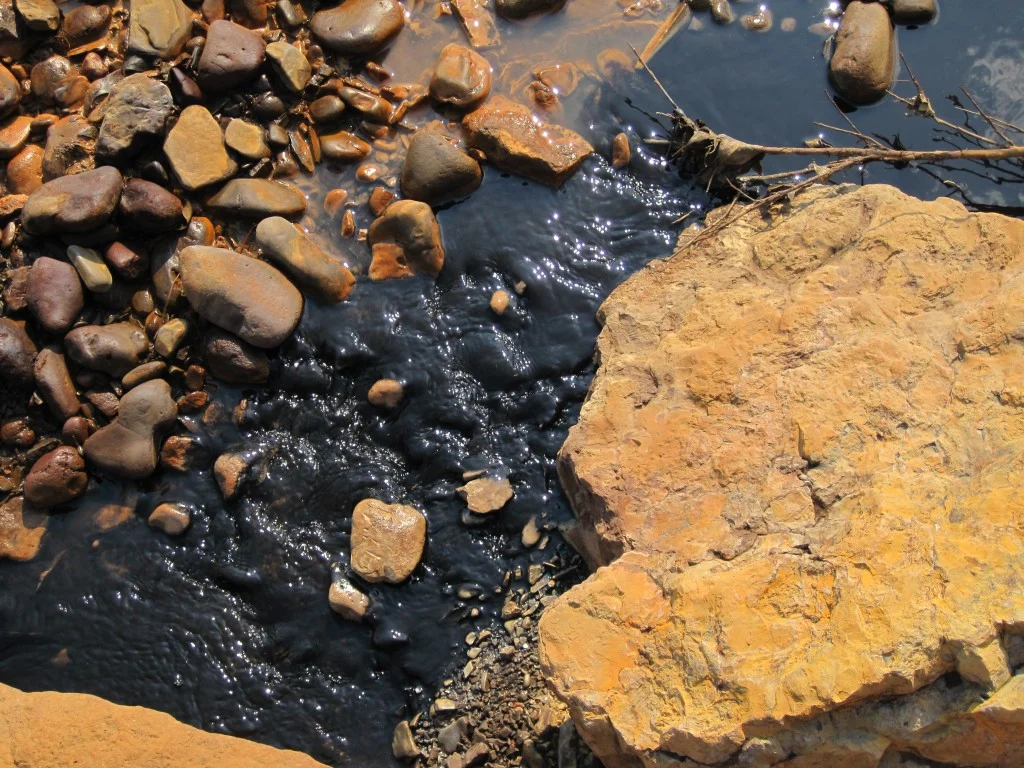
When many people hear the word groundwater they imagine a raging underground torrent of water flowing along a pathway called an aquifer. Well, sorry to disappoint you, but you could not be more wrong about how groundwater exists and flows. In this post we will discuss the very basics of groundwater science (hydrogeology) and flow. What is …[Read More]
Soils at Imaggeo: when a soil is born
Artemi Cerdà, University of Valencia, Valencia – Spain Soil development is based on the weathering of rocks and the deposition and decomposition of litter and roots, which are the main source or soil organic matter. Mosses are one of the key actors on those processes, as they are present at the initial stages of pedogenesis. …[Read More]
Imaggeo on Mondays: Surface spirals
This week’s Imaggeo on Mondays is no ordinary image; it’s a snapshot of surface ocean speeds and the extent of ice cover in the North Atlantic. It was produced using a high resolution model of ocean eddies – high resolution here means that details are simplified into grids 3 km across, or one 20th of …[Read More]
Blog Competition (1st Prize) – Robin Wylie: Hydro in India, a Dark Side to the Green Solution
For our Blog Competition 2013, we asked for people to submit articles addressing one of two topics. Robin’s article on the recent floods in Utttarakhand State, India, won first prize in its category. Robin Wylie studied geophysics at the University of Edinburgh, and then spent some time working at a volcanic observatory in Hawaii before …[Read More]
Abbreviated science
KFC, MTV, BP, BBC, NASA, NHS, UNICEF, FIFA…combinations of letters that are known the world over. These famous examples demonstrate the power of the acronym, a word formed from the initial components of a series of other words. You may have noticed that acronyms in science seem to be everywhere. No grant proposal, research group …[Read More]
So you want to be a palaeontologist..?
Well, according to Sesame Street, all you need to do is sing the palaeontologist theme song! So forget studying, research, and years of training. Actually, it is pretty cool – it does show this; all you need to do to become a palaeontologist is have a fascination for the natural world, and get …[Read More]
New Educational Fellow at the EGU Office
Hello, I am Jane, the new Education Officer at the EGU. My role here is to help develop and implement the EGU’s educational strategy and initiatives for formal and informal education as well as working on exciting new education-related collaborations for the EGU. I earned my BSc (Hons) Geology from the University of Edinburgh then …[Read More]