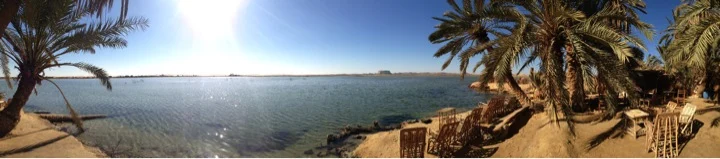
Flo takes us on a photoblog-trip to Siwa Oasis in Egypt where epic sand seas meet freshwater springs, saline lakes and sulphurous hot pools! The blog’s going on holiday this week! I spent a week in Egypt on holiday last month and braved the 10 hour overnight bus journey from the capital city Cairo to …[Read More]
Latest posts
Imaggeo on Mondays: Exploring the East African Rift
This week’s Imaggeo on Mondays is brought to you by Alexis Merlaud, an atmospheric scientist from the Belgian Institute for Space Aeronomy. While the wonders of the African atmosphere feature in his photography, the East African Rift has a much bigger tale to tell. Drawing from all aspects of geoscience Alexis shares its story… This …[Read More]
A bibliography of seismic events
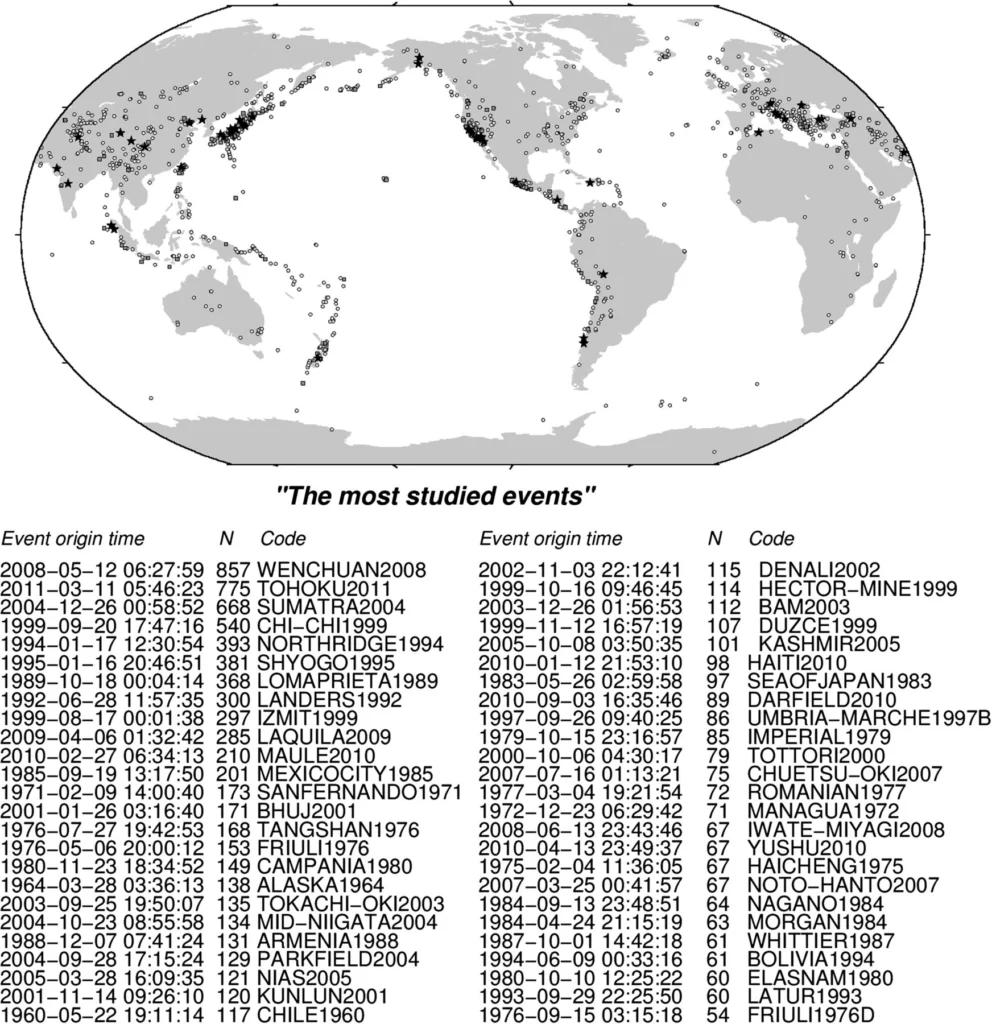
Search for previous scientific work is never an easy task. Thanks to the internet and good search engines such as Google Scholar this process has been made a bit more easier. (It makes young scientists wonder how searching was done in the pre-internet days!). Although searching nowadays seems to be a simple tasks, it still requires …[Read More]
Field Research in Guatemala (4) – Reflections from Fuego
Joel Gill (GfGD Founding Director) continues his live reporting from Guatemala, discussing his interdisciplinary field research relating to natural hazard interactions and disaster risk reduction. This fieldwork forms part of a NERC/ESRC funded PhD, supervised by staff in the Department of Geography at King’s College London. Over the past few weeks I’ve had the opportunity to see some …[Read More]
Monday paper: Paleosols in the Transantarctic Mountains: indicators of environmental change
Bockheim, J. G. 2013. Paleosols in the Transantarctic Mountains: indicators of environmental change. Solid Earth 4, 451-459. DOI: 10.5194/se-4-451-2013 Abstract The Transantarctic Mountains (TAMs), a 3500 km long chain that subdivides East Antarctica from West Antarctica, are important for reconstructing the tectonic, glacial, and climatic history of Antarctica. With an ice-free area of 24 200 km2 (50% of …[Read More]
Beyond a rock…
It’s not often on BaR that we feature a personal blog, but I can’t live a lie any longer. I am officially Beyond a Rock.
Friday Photo (118) – 2nd March 2014 Lava Flows (Pacaya, Guatemala)
Basaltic ‘Aa’ Lava Flows From the 2nd March 2014 Eruption of Pacaya, Guatemala (Credit: Joel Gill, 2nd March 2014)
Earthquake lights (2)
The phenomena of earthquake lights, mysterious lights in the sky during seismic activity, is still not clearly understood (check out the previous post about Earthquake Lights). Now, new research reveals interesting discoveries that might give a better scientific explanation about the phenomena. A presented research at the Bulletin of the American Physical Society, APS March Meeting in Denver, Colorado demonstrates that high voltage signals …[Read More]
New dinosaur competes to be Europe’s largest ever land predator
This was originally posted at: https://theconversation.com/new-dinosaur-competes-to-be-europes-largest-land-predator-23997 Say hello to Torvosaurus gurneyi, the newly discovered theropod dinosaur that lived in Europe around 157-145 million years ago. It is potentially the largest land predator discovered in Europe and one of the largest carnivorous dinosaurs from the late Jurassic period. The identification of this new species plays an important role in developing …[Read More]
Science Snap #21: Nash Point, Vale of Glamorgan, Wales
Sorcha McMahon is a third year PhD student in the School of Earth Sciences at the University of Bristol. Sorcha is investigating how strange igneous rocks called carbonatites may have formed, using both natural samples and high-pressure experiments. Nash Point is a picturesque headland along the coastline of the Vale of Glamorgan, consisting of near-vertical …[Read More]