
John Quinton, UK This post was also published simultaneously in G-Soil.
Latest posts
Great groundwater video!
Display "Groundwater Animation" from YouTube Click here to display content from YouTube. Please enable JavaScript in your browser to load this content. Always display content from YouTube Open "Groundwater Animation" directly Clear graphics, good message and an awesome sing-along. what more could one ask for? the only message that I would add is the importance …[Read More]
The importance of groundwater for climate models
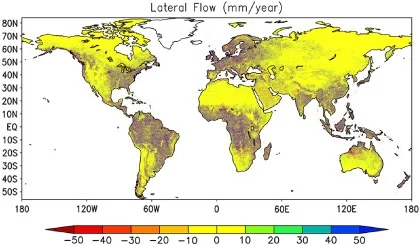
Contributed by Nir Krakauer nkrakauer@ccny.cuny.edu Does water fall if no one hears it? It does. Invisible water flows slowly under the ground, in soil and rock, downhill or from wet to dry areas. This groundwater eventually surfaces at rivers, springs, swamps, and other water features. As rivers and lakes get tapped out or polluted, more …[Read More]
#AESRC2014 Highlights
Well, AESRC is done for another year and with it my role as co-chair of the organizing committee! Thank goodness for that! Hopefully, I can finally get some actual thesis related work done in the coming months…and maybe get back to blogging a bit as well. However, as grateful as I am that AESRC is …[Read More]
European Geosciences Union – General Assembly 2014
Once again Geology for Global Development will have a strong presence at the European Geosciences Union’s General Assembly, in Vienna (27 April – 2 May 2014). This is one of the largest gatherings of geoscientists in the world – with a particularly large group of natural hazard scientists, and groups from hydrology and climate. —- As usual, …[Read More]
Imaggeo on Mondays: Volcanic rope
On Hawaii, lava fields fall into two camps – pahoehoe and a’a. This week’s Imageo on Mondays puts the two into perspective… Pahoehoe fields are created when the lava is well insulated at the surface. The cooled rock on top prevents a lot of heat escaping and lets the lava flow beneath a tough skin …[Read More]
Macroecology – scaling the time barrier
If there was ever an overdue discussion in palaeontology, it was how we reconcile the differences in time scales when looking at different periods in our history. This is becoming increasingly more important as scientific research is being asked to have demonstrably greater ‘impact’ in terms of some social, economic, or environmental relevance, and for …[Read More]
Monday paper: Soil carbon stocks and their variability across the forests, shrublands and grasslands of peninsular Spain
Doblas-Miranda, E., Rovira, P., Brotons, L., Martínez-Vilalta, J., Retana, J., Pla, M., and Vayreda, J. 2013. Soil carbon stocks and their variability across the forests, shrublands and grasslands of peninsular Spain. Biogeosciences, 10, 8353-8361. DOI: 10.5194/bg-10-8353-2013. Abstract Accurate estimates of C stocks and fluxes of soil organic carbon (SOC) are needed to assess the impact of …[Read More]
Union-wide events at EGU 2014
Wondering what to expect at our General Assembly this year? Here are some of the highlights: Great Debates (GDB) This year we’re holding two Great Debates: Metals in our backyard: to mine or not to mine (GDB1; #EGU14mine) and Geoengineering the climate: the way forward? (GDB2; #EGU14geng), both of which bring topical and controversial issues …[Read More]
Soils at Imaggeo: flying over the Saharan Cauldron
Carolina Cavazos-Guerra, Germany The Saharan desert has one of the most extreme climates on Earth. The dust loading and thermodynamics over this region are unique, and have major impacts on the climate of North Africa, Europe and the Atlantic. Fennec is a large-scale programme designed to tackle one of the world’s key climate regions by delivering …[Read More]