
This year the EGU embarked on a new journey into Africa to deliver its renowned Geosciences Information for Teachers (GIFT) programme to teachers in South Africa and neighbouring countries in collaboration with UNESCO and the European Space Agency (ESA). The topic: Climate Change and Human Adaptation. Jane Robb reports on the week’s events… Set in ‘the windy city’ …[Read More]
Latest posts
Molding seismic surface waves
Following each major earthquake that occurs close to nearby cities many people wonder what scientist and engineers can do to minimise the seismic hazard on society. Whilst scientist try to understand the mechanism of each fault system on the globe, engineers try to find solutions for buildings to be more safe. One interesting experiment I …[Read More]
Middle-Earth gets a geological makeover
As if J. R. R. Tolkien wasn’t brilliant enough with his creation of Middle-Earth, it appears that using his numerous maps and illustrations provided, supplemented by observations from within the texts themselves, a geological reconstruction can be achieved! I recently came across this old article from the Proceedings of the J. R. R. Tolkien Centenary …[Read More]
Soils at Imaggeo: gully erosion in Swaziland
John Quinton, UK This post was also published simultaneously in G-Soil.
Great groundwater video!
Display "Groundwater Animation" from YouTube Click here to display content from YouTube. Please enable JavaScript in your browser to load this content. Always display content from YouTube Open "Groundwater Animation" directly Clear graphics, good message and an awesome sing-along. what more could one ask for? the only message that I would add is the importance …[Read More]
The importance of groundwater for climate models
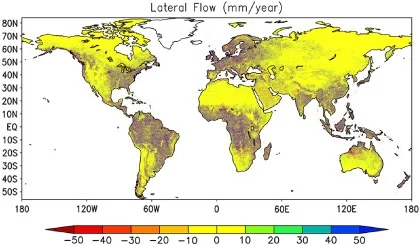
Contributed by Nir Krakauer nkrakauer@ccny.cuny.edu Does water fall if no one hears it? It does. Invisible water flows slowly under the ground, in soil and rock, downhill or from wet to dry areas. This groundwater eventually surfaces at rivers, springs, swamps, and other water features. As rivers and lakes get tapped out or polluted, more …[Read More]
#AESRC2014 Highlights
Well, AESRC is done for another year and with it my role as co-chair of the organizing committee! Thank goodness for that! Hopefully, I can finally get some actual thesis related work done in the coming months…and maybe get back to blogging a bit as well. However, as grateful as I am that AESRC is …[Read More]
European Geosciences Union – General Assembly 2014
Once again Geology for Global Development will have a strong presence at the European Geosciences Union’s General Assembly, in Vienna (27 April – 2 May 2014). This is one of the largest gatherings of geoscientists in the world – with a particularly large group of natural hazard scientists, and groups from hydrology and climate. —- As usual, …[Read More]
Imaggeo on Mondays: Volcanic rope
On Hawaii, lava fields fall into two camps – pahoehoe and a’a. This week’s Imageo on Mondays puts the two into perspective… Pahoehoe fields are created when the lava is well insulated at the surface. The cooled rock on top prevents a lot of heat escaping and lets the lava flow beneath a tough skin …[Read More]
Macroecology – scaling the time barrier
If there was ever an overdue discussion in palaeontology, it was how we reconcile the differences in time scales when looking at different periods in our history. This is becoming increasingly more important as scientific research is being asked to have demonstrably greater ‘impact’ in terms of some social, economic, or environmental relevance, and for …[Read More]