
Meet the newest member of EGU’s communications team, Laura Roberts Artal! Laura will manage GeoLog and the EGU blog network, run our social media channels, and continue developing EGU’s networking activities for young scientists. It is a warm and relatively sunny day in Munich and I’ve just started as the new Communications Officer at the …[Read More]
Latest posts
Imaggeo on Mondays: Beneath a star-studded sky
Marco Matteucci captured this image of the night sky on the slopes of Mount Rosa, the second tallest peak in Alps. Mount Rosa straddles the border between southern Switzerland and Italy the pink mountain’s name comes from the Franco-Provençal word rouése, meaning glacier. Much off the Swiss side of the mountain is enveloped in the …[Read More]
GeoEd: Working together
When a geoscientist steps into a classroom, set to share their wonders of the Earth with a host of eager young minds, they are heading straight into unknown waters. Which students will rock the boat? What works well for this class and what should you steer well clear of? Not knowing the answers can turn …[Read More]
EGU journals now display the most recent Impact Factors
EGU journals now display the most recent Thomson Reuters Impact Factors (IFs), which were published on 29 July in Journal Citation Reports. Earth System Dynamics received its first impact factor (IF 2.771), while publications such as Geoscientific Model Development (IF 6.086), The Cryosphere (IF 4.374) and Solid Earth (IF 2.155), significantly improved its impact in …[Read More]
GfGD in Tanzania (2) – Monitoring Water Projects
In our post yesterday I discussed the upcoming YES Congress and 25th Colloquium of African Geology in Dar es Salaam (1 – on the map), and introduced the way in which GfGD will be contributing. Following these conferences I will be travelling the 1000+ km distance to Mwanza – a key Tanzanian town on the edge …[Read More]
GfGD in Tanzania (1) – Earth Sciences for Improving Livelihoods
The East African country of Tanzania is a remarkable place, home to Kilimanjaro, the Serengeti, the Ngorongoro Crater and (for the volcanologists reading this) Ol Doinyo Lengai. It was also visits to communities in the Kagera region of Tanzania in 2009 and 2010 that resulted in GfGD getting off the ground soon afterwards. Since then, Tanzania has …[Read More]
Imaggeo on Mondays: Spectacular splatter – the marvels of a mud volcano
Mud volcanoes, unlike many others, do not extrude lava. Instead, they release glutinous bubbling brown slurry of mineral-rich water and sediment. They range in size from several kilometres across, to less than a metre – the little ones are known as mud pots, reflecting their diminutive nature. The world’s largest, though, is Lusi: a mud volcano …[Read More]
1200 words to make sense of chaos: The Selker Scheme
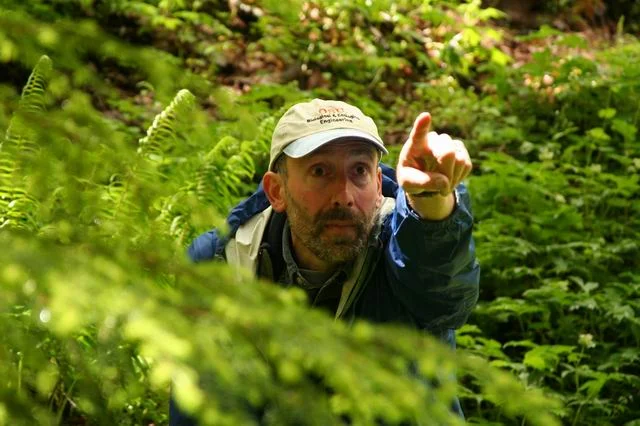
This is an inspiring article by John Selker (Oregon State University) that was first published in the latest AGU Hydrology Section Newsletter (July 2014). John graciously offered to re-post it here… make sure you make it to his rules and a secret at the bottom. Being elected a fellow of the AGU was an amazing honor, …[Read More]
Geosciences Column: The Toba eruption probably did have a global effect after all
Almost everyone has heard of the Toba super-eruption, which took place on the island of Sumatra roughly 74,000 years ago, but the only evidence of tephra or tuff (volcanic fragments) from the eruption is in Asia, with nothing definite further afield. It has sometimes been thought that this huge eruption may have led to a …[Read More]
10 Minute Interview – The new Science of Geocognition
We are back! After a few weeks without posting, we thought it was about time we blogged! I have a HUGE backlog of 10 minute interviews that I have to transcribe from EGU 2014. The General Assembly was a great place to meet lots of young scientists doing all sorts of diverse and extremely interesting …[Read More]