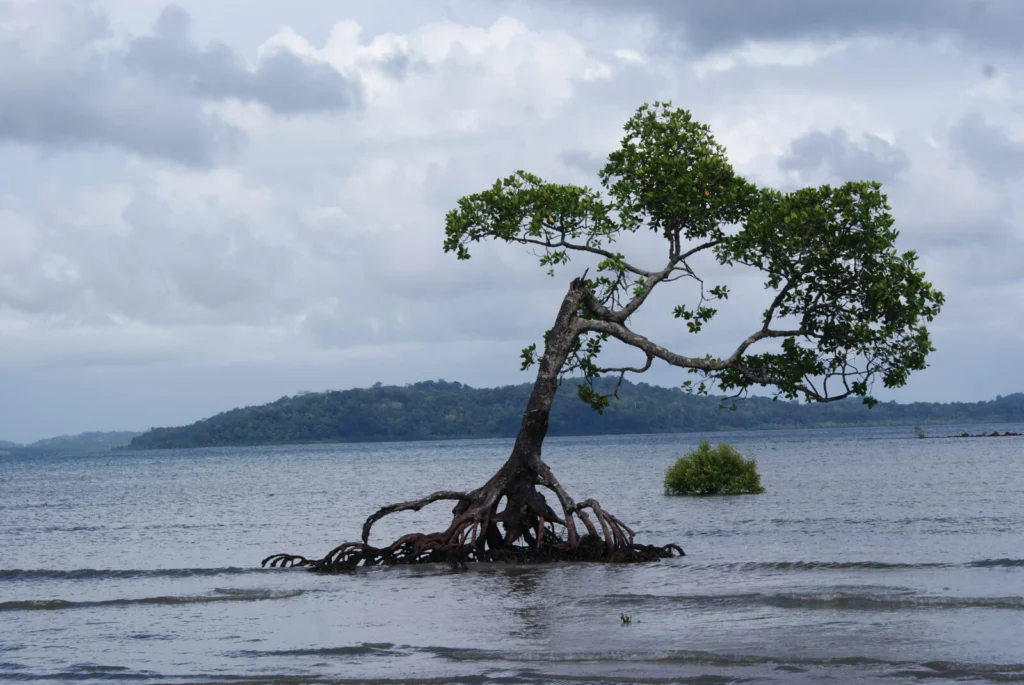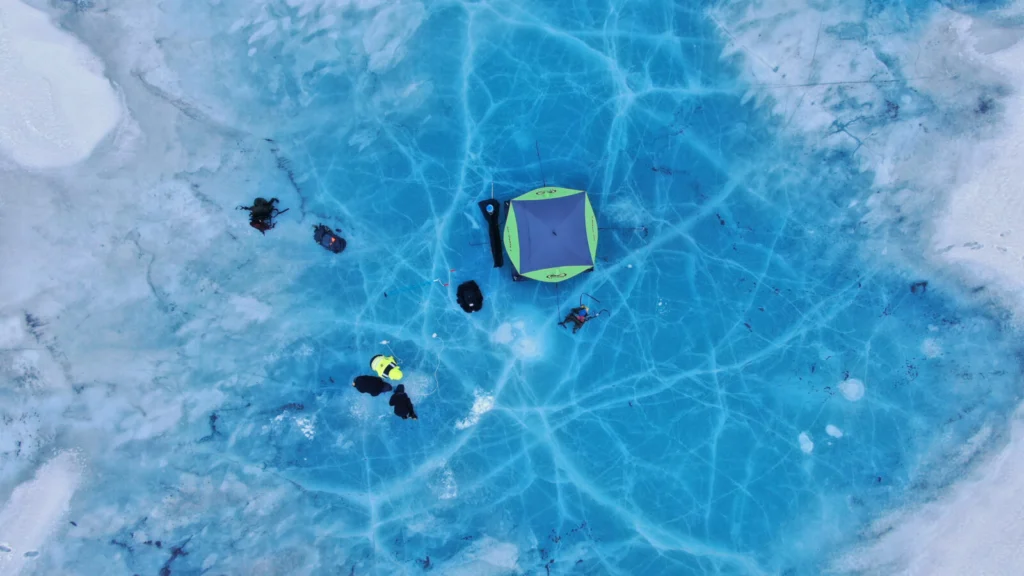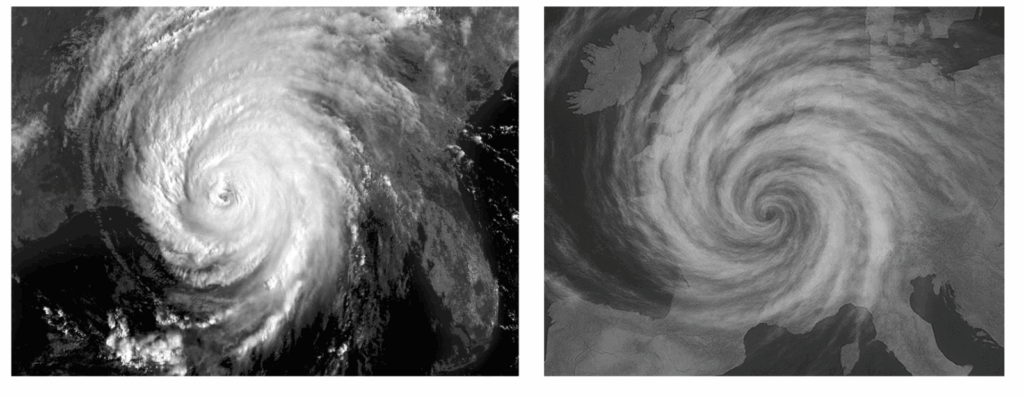
Some humans are racing to map the moon, Mars, and the stars, yet the very ground beneath our oceans remains largely unknown. What does it say about us, that we can chart the craters of distant planets before we bother to understand the seafloor that feeds us, cools us, and regulates our climate? In an age of climate breakdown, ecological collapse, and blue economy buzzwords, the seabed has become ...[Read More]
Geochemistry, Mineralogy, Petrology & Volcanology
EGU GMPV ECS Campfires – Thursday 26th June @ 4 pm CEST
We’re excited to invite you to the fifth edition of the Geochemistry, Mineralogy, Petrology and Volcanology Campfires of the 2024/2025 season! Join us on Thursday, June 26th at 4 pm CEST on Zoom for a Scientific Campfire, during which three Early Career Scientists will present their research to the community. Our speakers for this edition are: Karoline Bruckel, PostDoc @ Laboratoire ...[Read More]
Nonlinear Processes in Geosciences
EGU NP Paper of the Month “Finite-size local dimension as a tool for extracting geometrical properties of attractors of dynamical systems”
The original goal of this study was to understand how the local dimension of the attractor of a dynamical system could be used to estimate the predictability of the future state of the system, and apply this in the case of radar images of rain. The local dimension using Extreme Value Theory (EVT) has been introduced and used in Faranda et al. (2017) to infer the current predictability of different ...[Read More]
Hydrological Sciences
How to include AI methods in your next proposal
For all those of us who write research funding proposals, the massive avenue of powerful AI methods poses a serious challenge: how can we appropriately include such methods in our next research project? Is it mandatory, or can we happily focus on our field, lab or numerical methods that we used to always work with? For proposal evaluators, on the other hand, there is this feeling that many proposa ...[Read More]
Seismology
What Distributed Acoustic Sensing (DAS) can find in the Atlantic Ocean
The contribution from David Schlaphorst, the member of ECS SM division team. David is a PostDoc in Dom Luiz Institute (IDL), University of Lisbon, where he does seismology research. Introduction Distributed Acoustic Sensing (DAS) has been used exponentially over the last decade.If you are eager to learn the basics but in song form try this link. In this blog post, we want to dive into one example ...[Read More]
GeoLog
Surf’s up and so are marine heatwaves! How AI is forewarning the Mediterranean’s ocean sizzle
Imagine you’re standing on a rocky Mediterranean shore, early morning sun warming the air, the sea is calm and glassy. But away from sight and beneath that serene surface, there is a silent storm brewing. Marine heatwaves are sweeping across the basin, warming the water in ways that disrupt ecosystems, hit fisheries, and threaten everything from coral reefs to coastal livelihoods. That’s whe ...[Read More]
Geodynamics
What drives the extensional deformation in the central Apennines (Italy)?
The central Mediterranean is a geodynamically complex region shaped by the interaction of multiple active subduction zones. In Italy, the central Apennines display a distinctive pattern of surface deformation that is proposed to be linked to a slab break-off beneath the area. In this week’s blog post, Maaike, a PhD student at ISTerre in Grenoble, France, explores the key processes driving surface ...[Read More]
Hydrological Sciences
Hydrotalk Episode 3 with Daren Gooddy
HydroTalks: Prof. Daren Gooddy talking about groundwater nutrients, contaminants and tracers Welcome to HydroTalks, the EGU HS division’s podcast series where we discuss advancements, challenges, and opportunities in hydrology. In this episode, we chatted to Prof. Daren Gooddy (Daren Gooddy|LinkedIn). Prof. Gooddy is a hydro-geochemist with over 30 years of experience as a groundwater proce ...[Read More]
GeoLog
Queer Quarterly: LGBTQIA+ Inclusion during fieldwork
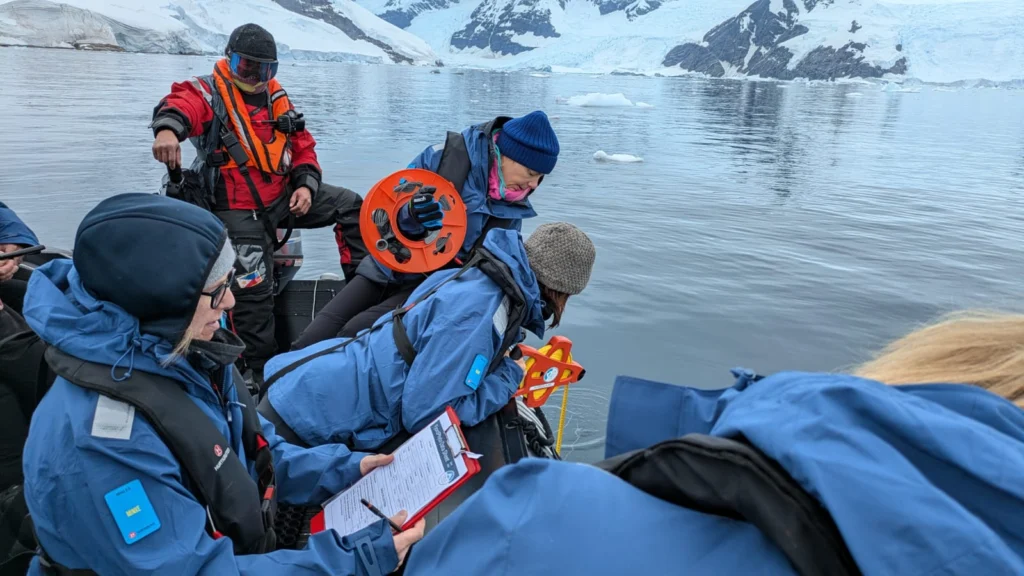
It’s pride month and we are delighted to feature a post on queer inclusion in fieldwork written by members of EGU’s pride group. Queer Quarterly is the blog series of the EGU pride group, an LGBTQIA+ team of geoscientists engaged to uphold and improve the rights of the community at EGU. This quarterly post is based on the EGU Webinar Uneven Ground 2 on improving fieldwork accessibility ...[Read More]
Cryospheric Sciences
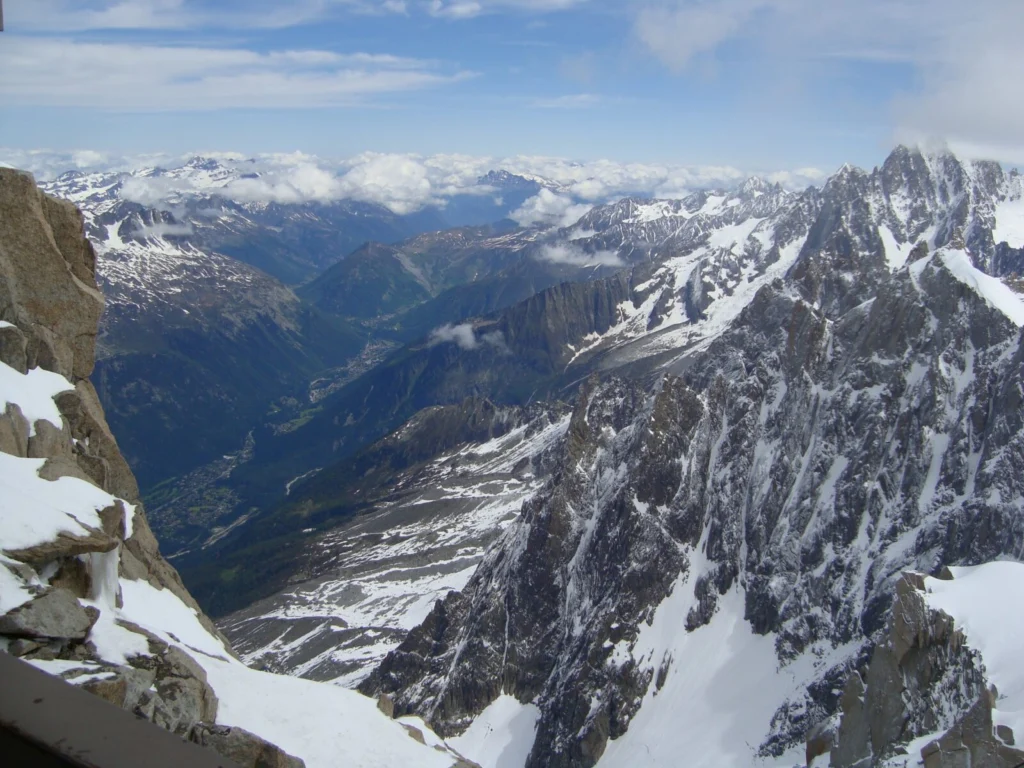
Tracking the Footprints of a Vanishing Glaciers in the Greater Caucasus
In this week’s blog, Levan Tielidze tells us about his recent glacier study from the Greater Caucasus. By combining geomorphology, remote sensing, and historical cartography, the team reconstructed nearly 200 years of glacier and climate change across one of the world’s most dynamic cryospheric frontiers. Glaciers’ transformation provides a high-resolution archive of post-Little Ice Age climate dy ...[Read More]