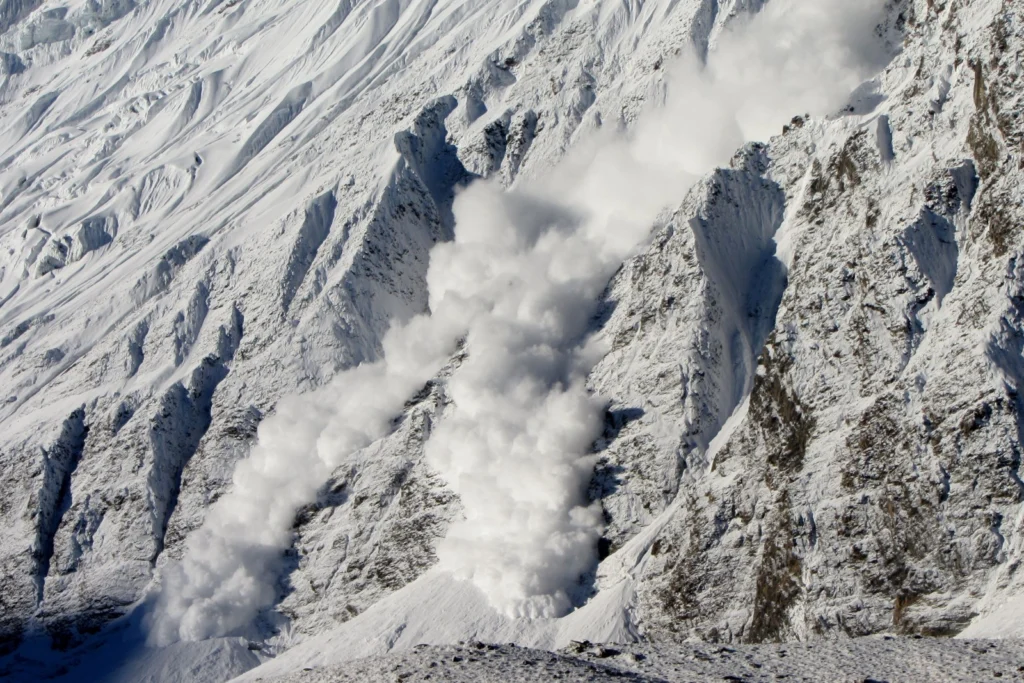
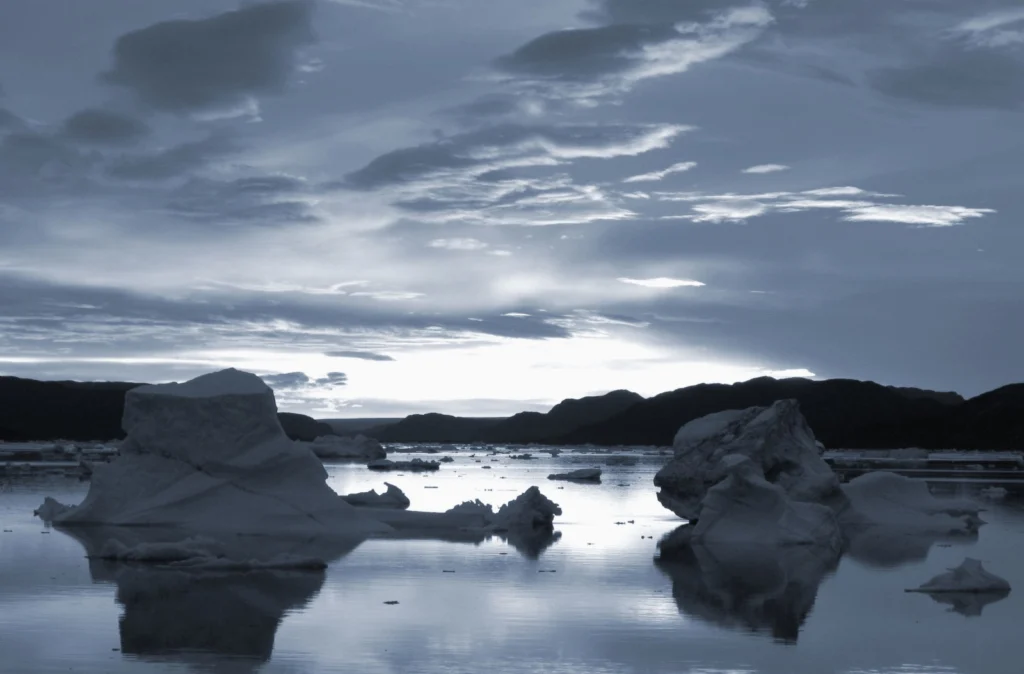
The Annapurna massif is located in an imposing 55 km long collection of peaks in the Himalayas, which behave as a single structural block. Composed of one peak (Annapurna I Main) in excess of 8000 m, a further thirteen peaks over 7000 m and sixteen more of over 6000 m, the massif forms a striking …[Read More]
Latest posts
GeoTalk: Anastasia Tezari – understanding space weather
Weather – it dictates the clothes we wear, is engrained in our culture, shapes our seasons and plays an important role in our daily lives. Not only that, its long term forecast and understanding of its variability, is the focus of much research as it holds one of the keys to understanding the Earth’s past …[Read More]
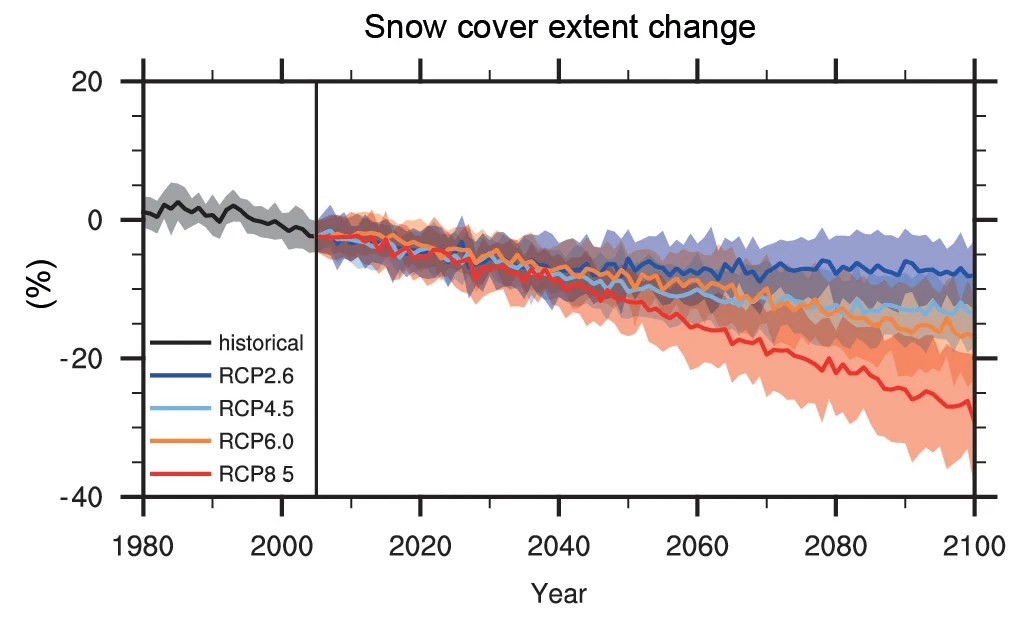
Image of the Week: Changes in Snow Cover
Who is dreaming of a white spring? In daily life we might be more interested in the chances of a white Christmas, but the amount of snow-covered ground in the spring is a very good indicator of climate change. The figure above shows the projected change in snow cover extent in the Northern hemisphere in March-April …[Read More]
MantlePlumes.org website progress
The website www.mantleplumes.org focuses on the debate about whether plumes exist or not, and what other mechanisms could cause melting anomalies inside Earth. MantlePlumes.org was born in March 2003 following a series of observations conflicting with the plume hypothesis, or unexpectedly failing to confirm it. An update about www.mantleplumes.org website progress was sent to us by Gillian R. Foulger Recent …[Read More]
GeoPolicy: An expert discussion on ozone – working at the science-policy interface
Erika von Schneidemesser is our first guest blogger for the newly established EGUPolicy column. Erika is a Research Scientist at the Institute for Advanced Sustainability Studies based in Potsdam, Germany. Her post gives an insight into working at the science-policy interface by describing a recent project she has been involved in. As scientists and researchers …[Read More]
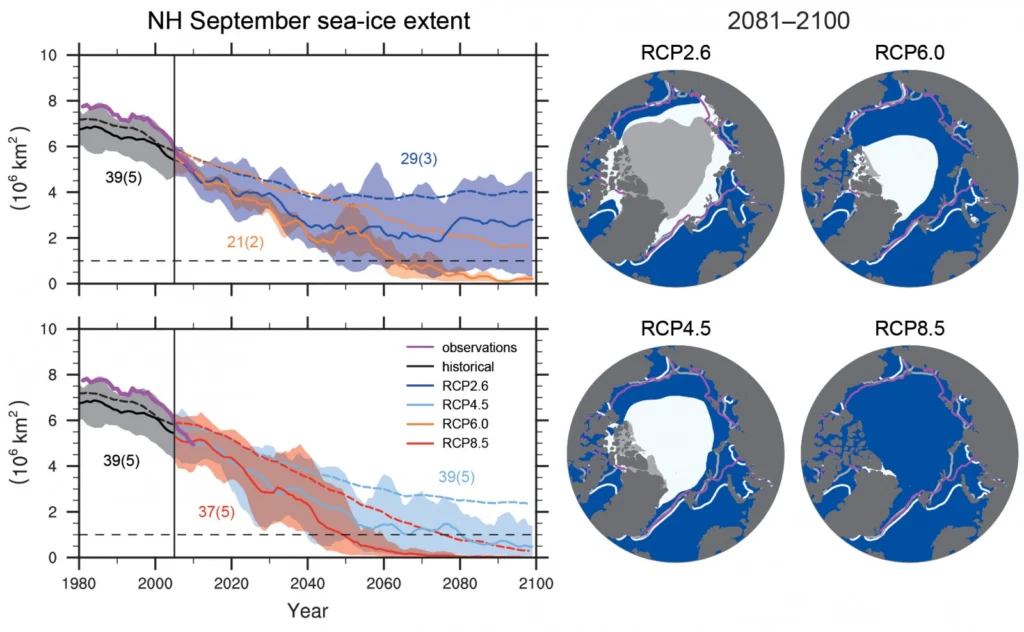
Image of the Week — Future Decline of sea-ice extent in the Arctic (from IPCC)
The Arctic sea-ice extent has declined in the past 20 years and its future is uncertain. In the end, greenhouse gas emissions will determine the impact on the sea-ice from man-made climate change through radiative forcing (i.e. Representative Concentration Pathways or RCPs). The COP21 can determine the path we will follow and which course we will take to …[Read More]
Communicate Your Science Video Competition is now open!
Want to communicate your research to a wider audience and try your hand at video production? Now’s your chance! The competition is open to early career scientists (ECS) who intend to register for the EGU General Assembly. The aim is to produce a video up-to-three-minutes long to share your research with the general public. The …[Read More]
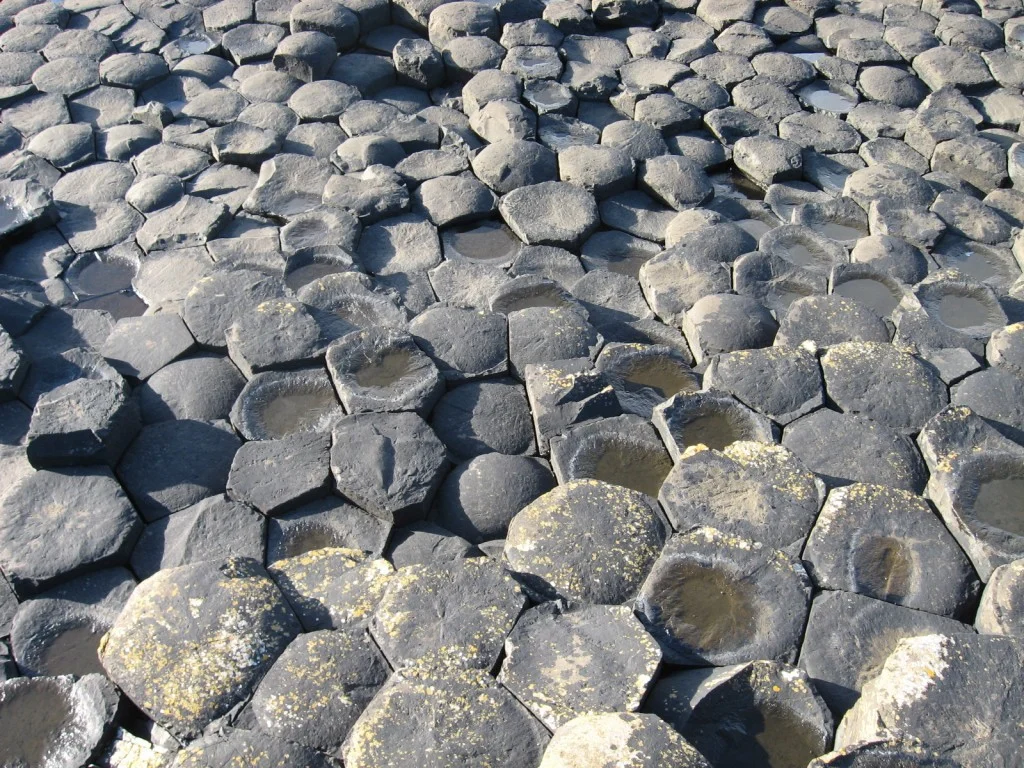
Imaggeo on Mondays: Giants Causeway
Since its discovery back in the late 1600s the origin of the spectacular polygonal columns of the Giants Causeway, located on a headland along the northern coast of Ireland, has been heavily debated. Early theories for its origin ranged from being sculpted by men with picks and chisels, to the action of giants, through to …[Read More]
Financial support for Early Career Scientists
As an Early Career Scientist you are eligible to apply for financial support to travel to the EGU General Assembly 2016. Financial support includes a registration fee waiver and a refund of the Abstract Processing Charge (APC) related to the abstract for which support was requested. Additionally, financial assistance towards travel expenditures may be provided …[Read More]
GeoEd: How do we make climate predictions – An idea for an outreach activity
This month’s GeoEd post is brought to you by Dr. Mirjam S. Glessmer. Mirjam is a physical oceanographer, who during her PhD at GEOMAR Kiel, Germany, became more and more interested in understanding how people learn and hence did a Masters of Higher Education in parallel to her PhD. During her PostDoc at the University …[Read More]