EGU Blogs

Latest posts

GeoLog

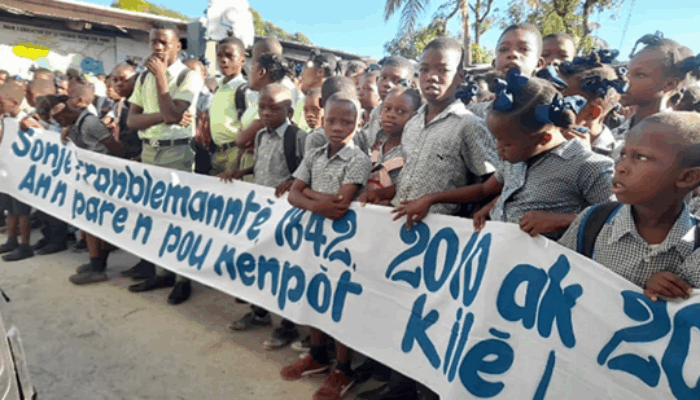
Is the climate crisis also a literacy crisis? Time to move from data dumping to co-creating knowledge with communities

Is the climate crisis also a literacy crisis? Time to move from data dumping to co-creating knowledge with communities

Today, September 8th, marks International Literacy Day with the theme “Promoting literacy in the digital era”, so it’s a moment to pause and consider the multifaceted nature of literacy. Beyond the foundational ability to read and write, literacy encompasses the capacity to comprehend, evaluate, and apply information within various contexts. It is this broader understanding of literacy ...[Read More]

GeoLog

The existential modelling crisis – and how to overcome it

The existential modelling crisis – and how to overcome it

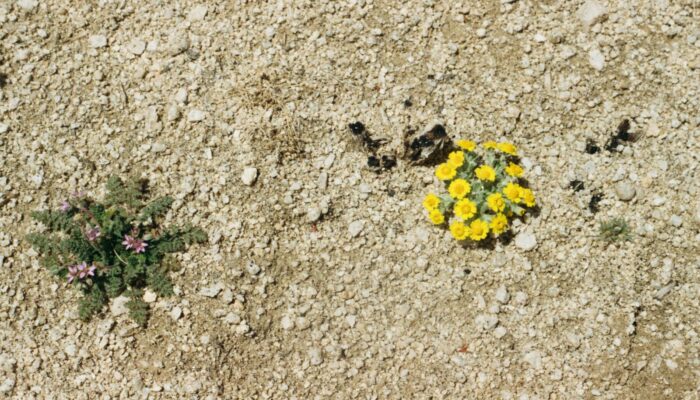
Recently, we had a big name in fire ecology visiting our institute. He had come, among other things, to look for records of a certain fire-adapted shrub in my university’s herbarium. While myself and a colleague helped him go through the stacks of pressed and archived specimens, I asked him why there were so little contributions to the herbarium in recent years. His response was: “People sto ...[Read More]

HS
Hydrological Sciences

A quick update on the paper submission process for EGU journals

A quick update on the paper submission process for EGU journals

The EGU preprint server on EGUsphere was launched in 2022. It constitutes the (to-date) last step in a fully transparent and interactive peer-review and publication process. In its early days, authors could actively choose to submit their preprints to the new server or to submit them as preprints directly to a selected EGU Journal (see our blog post from March 2023). This option is now passé: all ...[Read More]

TS
Tectonics and Structural Geology

TS Must-Read – Fossen and Cavalcante (2017): Shear zones – A review

TS Must-Read – Fossen and Cavalcante (2017): Shear zones – A review

Haakon Fossen and Geane Carolina G. Cavalcante published their seminal review on the topic of shear zones in 2017 in the journal Earth-Science Reviews. The work summarizes the scientific findings on the development and quantification of ductile shear zones sincefrom the the 1960s up to recently. It describes the fundamental aspects of the initiation and growth of shear zones across scales. First, ...[Read More]

GD
Geodynamics

How do rocks fail and flow: A beginners guide to rock rheology

How do rocks fail and flow: A beginners guide to rock rheology

The field of rock rheology may seem a bit ‘odd’ at first glance to those geoscientists who are vaguely familiarized with the topic of geodynamics. Often, rocks are considered massive and competent geomaterials that display a sudden (and sometimes violent) brittle failure (earthquake alert!). However, when considering the high temperatures and large timescale characteristics of most geo ...[Read More]

NH
Natural Hazards

No Resilience Without Trust – An interview with Janise Rodgers and Mary Antonette Beroya-Eitner from GeoHazards International

No Resilience Without Trust – An interview with Janise Rodgers and Mary Antonette Beroya-Eitner from GeoHazards International

This summer, we participated in a Service-Learning course titled “Breaking the Cycle of Disaster, Response, Recover, and Repeat”. The course was developed by Solmaz Mohadjer and offered as part of the Transdisciplinary Course Program at the University of Tübingen, Germany. We were brought together from different disciplines to explore key factors that contribute to effective disaster risk reductio ...[Read More]

TS
Tectonics and Structural Geology

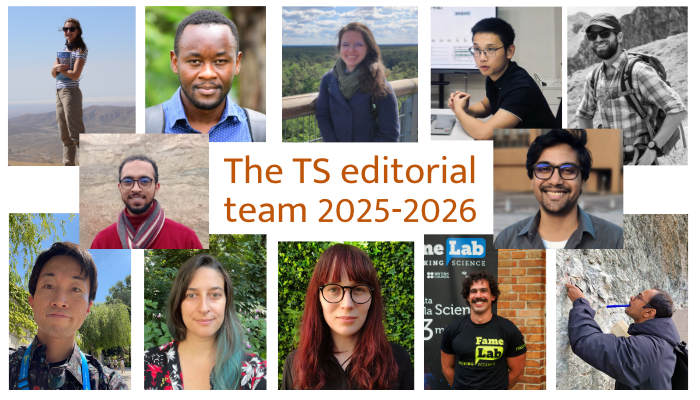
Introducing the blog team 2025-2026

Pictures portraits of the 12 editors of the TS blog

For many of you September means back to school, for us September means the return of the blog. Behind the scene this summer, the bright new editorial team prepared fresh blog posts to share with the community. We are very excited to welcome the new editors, happy to start their blog adventure. The 2025-2026 team is a group of early career scientists editors from diverse backgrounds, continents and ...[Read More]

G
Geodesy

Geodesy Cartoon Competition – Turn Science into Smiles

Geodesy Cartoon Competition – Turn Science into Smiles

Geodesy is the science of measuring the Earth’s shape, gravity field, and rotation. What if we could make it exciting, fun, and easy for everyone to understand? That’s exactly why the International Association of Geodesy (IAG) and its Global Geodetic Observing System (GGOS) launched the Geodesy Cartoons initiative: to bring geodesy closer to the public through visually engaging and humorous illust ...[Read More]

BG
Biogeosciences

Microbial Adventures in the Mont Blanc Massif

Microbial Adventures in the Mont Blanc Massif

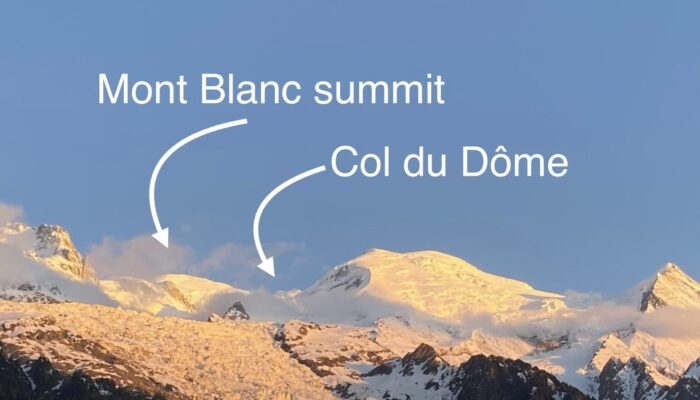
As we passed the town of Saint-Gervais-Les-Bains on the French highway, en route to a sampling campaign, Mont Blanc’s glaciated terrain suddenly emerged above the spring foliage. Breaking the silent awe, Patrick remarked that indeed, “Mont Blanc is still there.” The humor won’t be lost on anyone familiar with the massif. Its unquestionable, human-minimizing presence colours the regions’ cultural a ...[Read More]

NP
Nonlinear Processes in Geosciences

From Theory to Impacts: Nonlinear Perspectives on Weather Extremes at UNDERPIN#2

From Theory to Impacts: Nonlinear Perspectives on Weather Extremes at UNDERPIN#2

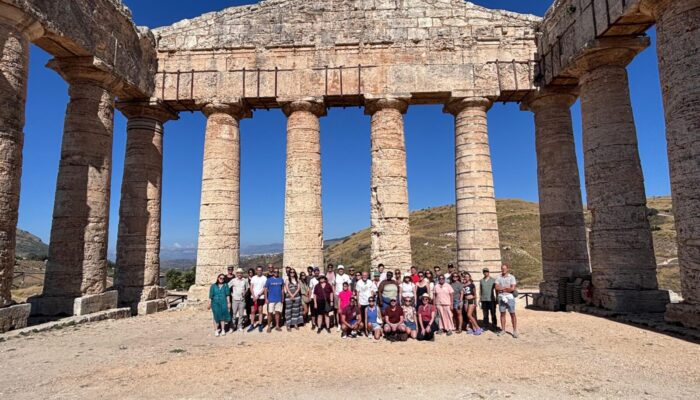
From 1–5 August 2025, the medieval hilltop town of Erice, Sicily, hosted the second UNDERPIN workshop, a meeting organised within the Nonlinear Processes in Geosciences community and dedicated to advancing the science of weather extremes. The event brought together a truly diverse group of researchers, spanning climate dynamics, attribution science, socio-economic impacts, statistical physics, and ...[Read More]