EGU Blogs

Division blogs

CR
Cryospheric Sciences

What Lies Beneath an Ice Shelf

an orange, rugged large tent is in an arctic landscape. researchers in cold-eather gear gather at the mouth of the tent.

Beneath Antarctica’s largest ice shelf lies a hidden ocean—dark, cold, and almost impossible to reach. Scientists drilled through hundreds of metres of ice to access it, revealing a world that plays a crucial role in how ice shelves melt. Years later, we had the chance to explore this unseen environment—not in the field, but through the data that the expedition left behind. Antarctica’s ice shelf ...[Read More]

HS
Hydrological Sciences

Regarding Flowing Waters – The Science and Art of Hydrology

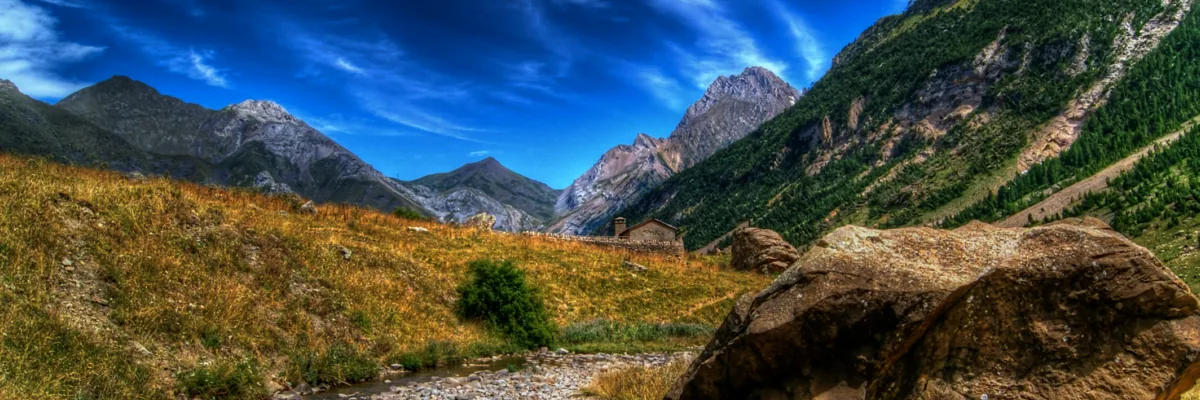
Regarding Flowing Waters – The Science and Art of Hydrology

About a decade ago, I formally retired from Lancaster University (albeit retaining an emeritus position and still producing the occasional paper).   In that time, I have been able to pursue my interests in the history of hydrology but also devote more time to my other passion which is landscape photography, especially images of water. As a hydrologist, I do understand that to spend my spare time p ...[Read More]

NP
Nonlinear Processes in Geosciences

Observational constraints help narrowing down uncertainty on the future of the AMOC

The Atlantic Meridional Overturning Circulation — the AMOC — has become one of the most discussed elements of the climate system. It is often portrayed as a looming tipping point, a potential disruptor of European climate, and a symbol of the uncertainties that still surround climate projections. We spoke with Didier Swingedouw, a leading researcher in ocean–climate interactions from the CNRS and ...[Read More]

GD
Geodynamics

“You belong here”: reflections on gender inequality in Academia

“You belong here”: reflections on gender inequality in Academia

Academia is often imagined as a space driven by merit, curiosity, and scientific collaboration. Still behind publications, conferences, and research achievements, many women in STEM continue to navigate environments shaped by subtle exclusion, normalized inequalities, and power imbalances that are not always openly discussed. In Earth Sciences, where collaboration and field-based research are fund ...[Read More]

GM
Geomorphology

Save the date: TopoToolbox Workshop, June 2-3

Save the date: TopoToolbox Workshop, June 2-3

Save the dates for our upcoming webinar series on TopoToolbox, organized by the GM ECS Team and convened by Wolfgang Schwanghart, Dirk Scherler, William Kearney, Boris Gailleton, and Bastien Mathieux. The webinar will take place on June 2 and 3, from 16:00 to 18:00 CEST, in a Zoom meetings format. The webinar will be a two-part event introducing TopoToolbox 3, its MATLAB and Python interfaces, and ...[Read More]

G
Geodesy

A Brief Recap of EGU GA26

A Brief Recap of EGU GA26

Thank you all for an amazing EGU General Assembly (GA) this year! If you missed EGU26 or some of the events we organised, here’s a recap so you can stop wondering how it went and get an idea of what to expect next year and connect with us through our channels to stay updated. As in the past years, we started our GA with the online division meeting before the general assembly to present the G-Divis ...[Read More]

CL
Climate: Past, Present & Future

What can Greenland ice cores tell us about winter extreme events over Europe?

What can Greenland ice cores tell us about winter extreme events over Europe?

Introduction Human-caused climate change is increasing the frequency of extreme weather events around the world, and Europe is no exception. These events typically last from a few days to several weeks or even months. Using climate models and reanalysis products, scientists are studying how extreme weather events will evolve and where they are likely to become more frequent and intense in a warmin ...[Read More]

CR
Cryospheric Sciences

Dialogues between glaciers and humans

against a blue, muted sky a saxophone layer in a beanie plays a song

At the edge of the world, a voice tries to make itself heard, a whisper slipping between the threads of an unstable reality. In the remote lands of Svalbard, a few hundred miles from the North Pole, lie millennia-old entities, relics of a disappearing species. They murmur in a language that humans today no longer know how to decipher. And yet, it is in this deafness to the voices around them that ...[Read More]

HS
Hydrological Sciences

HydroTalks: Prof. Laura Richards and Ajmal Roshan on groundwater quality, arsenic, and citizen science

HydroTalks: Prof. Laura Richards and Ajmal Roshan on groundwater quality, arsenic, and citizen science

For this month’s episode of HydroTalks, we’re thrilled to welcome Prof. Laura Richards and Ajmal Roshan. Laura is a UKRI Future Leaders Fellow and Professor of Water Resources and Environmental Geochemistry at the University of Manchester. Laura is also the project lead of the AQUAROAD Programme on groundwater quality in the Global South. Ajmal is a Cookson Awardee PhD scholar, and he’s work ...[Read More]

GD
Geodynamics

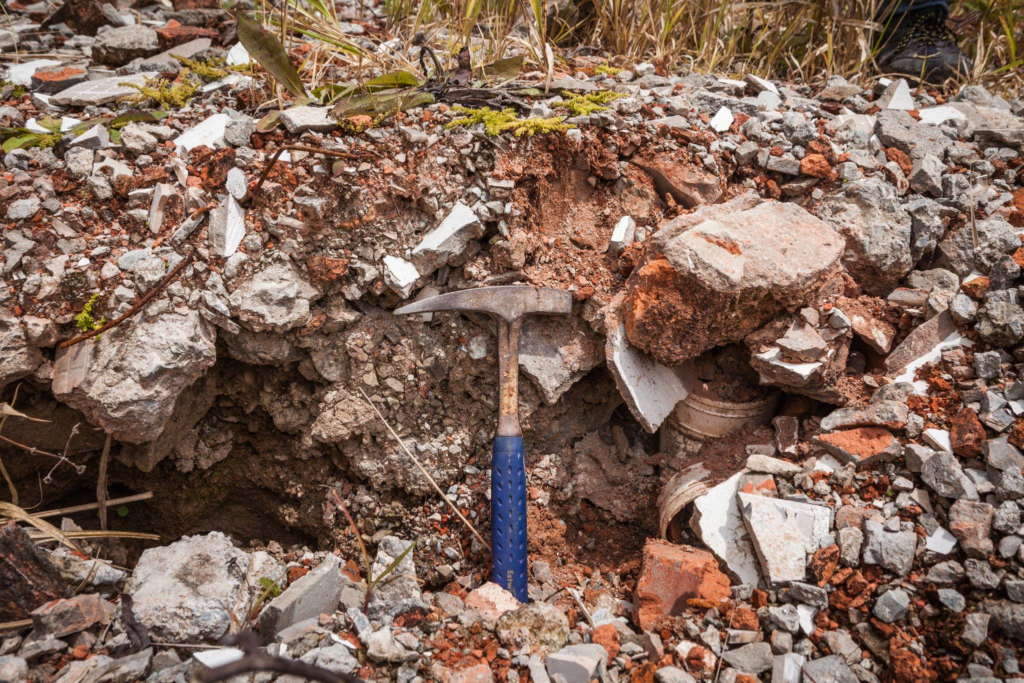
Destruction of North China Craton: through the chronotunnel of time

Destruction of North China Craton: through the chronotunnel of time

The Asian continent has fascinated the world for at least 3,000 years with its music, food, and discoveries, as well as its breathtaking landscapes. Most of these incredible landscapes are formed by mountains that can be considered geologically “recent” (such as the Cenozoic formation of the Himalayas). However, there are also ancient terrains, pre-dating the Mesozoic, that pose intrig ...[Read More]