EGU Blogs

Division blogs

GM
Geomorphology

Highlighting: Puerto Rico, Part 2!

Highlighting: Puerto Rico, Part 2!

This blog post is part of our series: “Highlights” for which we’re accepting contributions! Please contact Emma Lodes (GM blog editor, elodes@asu.edu), if you’d like to contribute on this topic or others.  Interview with Kate Drobnich, PhD student, Department of Geosciences, Colorado State University. Email: kate.drobnich@colostate.edu. Questions by Emma Lodes. Can you briefly describe the main ob ...[Read More]

AS
Atmospheric Sciences

Have you ever seen a weather forecast map that looked like it was wearing a striped sweater?

Have you ever seen a weather forecast map that looked like it was wearing a striped sweater?

This isn’t a new fashion trend in meteorology. For model developers, these unexpected stripes are a sign that something has gone wrong in the complex digital engine that powers our forecasts. Recently, our team at CMA Earth System Modeling and Prediction Centre (CEMC) encountered these very stripes in wind forecasts produced by an operational global model. We played the role of scientific de ...[Read More]

GM
Geomorphology

Highlighting: Puerto Rico, Part 1!

Highlighting: Puerto Rico, Part 1!

This blog post is part of our series: “Highlights” for which we’re accepting contributions! Please contact Emma Lodes (GM blog editor, elodes@asu.edu), if you’d like to contribute on this topic or others.  Interview with Angus Moore, Researcher at the Czech Academy of Sciences, Prague, Czechia. Email: angus.moore@uclouvain.be Questions by Emma Lodes. Can you briefly describe the main objective of ...[Read More]

GI
Geosciences Instrumentation and Data Systems

Google Earth Engine, a pionner tool for enviromental solutions

Google Earth Engine, a pionner tool for enviromental solutions

Since 2018, Google Earth Engine (GEE) has granted free access to various institutions for academic and non-profit scientific use. The goal of this initiative is to process large amounts of satellite imagery exclusively over the internet (cloud). This innovative option enabled thousands of users from around the world to investigate environmental phenomena at varying resolutions, including over time ...[Read More]

G
Geodesy

Taking time off in the academic world – Why it’s hard and how to do It

Taking time off in the academic world – Why it’s hard and how to do It

Several major holiday periods are coming up in the next months, and for many people this means taking some time off. But for academics, stepping away from work can be very difficult. At EGU25, we explored this challenge in a short course organized by the EGU “Life-Career Wellness” working group, where scientists shared their experiences (and strategies). In this post, we summarize the main points ...[Read More]

SSP
Stratigraphy, Sedimentology and Palaeontology

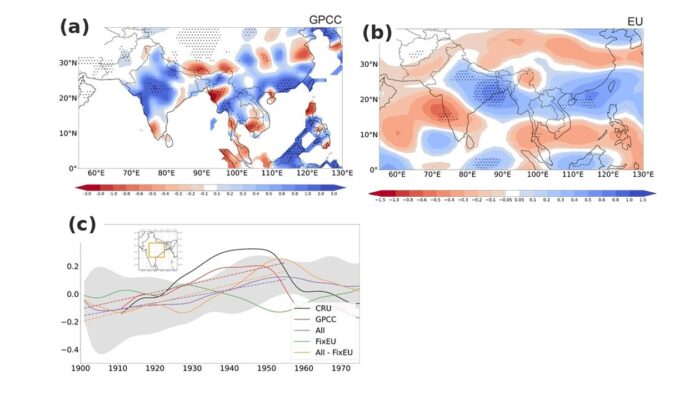
Insight into paleo-environmental and -climatic conditions during the Pleistocene period in Kashmir – An understudied and poorly understood puzzle-piece in the interaction-sphere of the Indian Monsoon and Westerly climate-systems

Insight into paleo-environmental and -climatic conditions during the Pleistocene period in Kashmir – An understudied and poorly understood puzzle-piece in the interaction-sphere of the Indian Monsoon and Westerly climate-systems

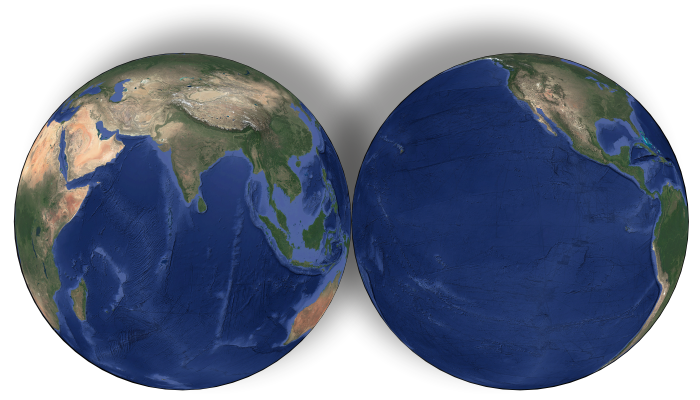
The Indian subcontinent is situated in Southern Asia, where it projects southwards from the Himalayas into the Indian Ocean. Along the northern border of this subcontinent, the Himalayas – home to the earth’s highest mountains on land – stretch with a length of ~2500 km and a width of 300 km. The stunning mountain ranges of the Himalayas provide a considerable physical barrier for air masses from/ ...[Read More]

OS
Ocean Sciences

Meet Arianna, the New Voice as ECS OS Representative!

Meet Arianna, the New Voice as ECS OS Representative!

Meet the new Early Career Scientist (ECS) Representative for the Ocean Sciences (OS) division: Arianna Olivelli! In this role, she is dedicated to connecting, supporting, and advocating for early career ocean researchers across Europe and beyond. We sat down with Arianna to hear about her journey, her vision for the OS ECS community, and how she is empowering the next generation of ocean scientist ...[Read More]

TS
Tectonics and Structural Geology

Berlin – the city of unusual geology

Berlin – the city of unusual geology

“There is no geology here – just dirt!” or “It’s only a large sandbox.” are two common narratives told about the geology of the Berlin region. But is that true? Is there really nothing interesting to find and see for a geologist in the German capital? Let’s start digging! The hard rock One narrative is definitely true, Brandenburg, the state surrounding Berlin, like entire northern Germany, is a l ...[Read More]

GD
Geodynamics

Cratons: building blocks of continents and their economic importance

Cratons: building blocks of continents and their economic importance

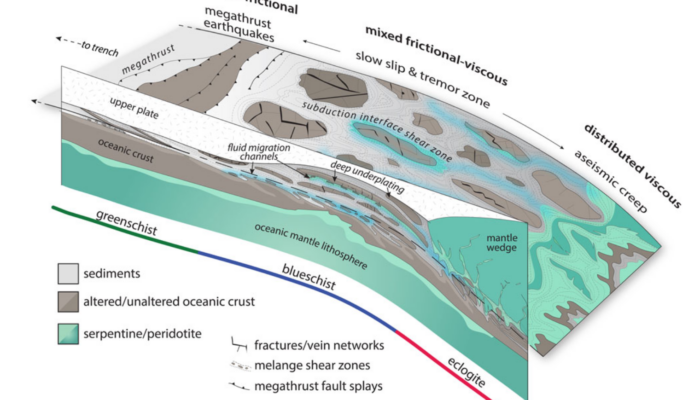
The 4.5 billion years of geologic evolution has shaped the tectonic processes in Earth we see today. Over the span of time, Earth has changed from being a magma ocean to a tectonically active planet, by transitioning through different tectonic regimes.  A silent witness of this journey have been cratons which have survived for billions of years. Therefore cratons preserve clues of past tectonic pr ...[Read More]

CR
Cryospheric Sciences

Speaking Up for the Cryosphere at COP30

Speaking Up for the Cryosphere at COP30

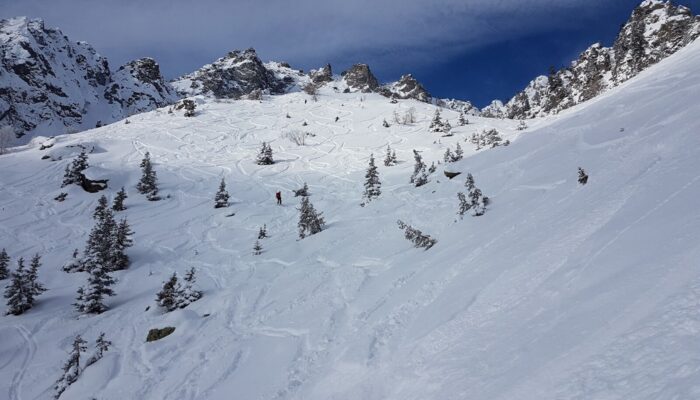
During the climate negotiations at COP30, the global importance of a warming cryosphere was stressed in various formats. The UNFCCC Conference of Parties (this year’s COP30) marks the yearly global climate negotiations which formed the aim to limit global warming to well below 2 °C (the 1.5 °C target) with the Paris Agreement at COP21 in 2015. These huge conferences of ten thousands of people feel ...[Read More]