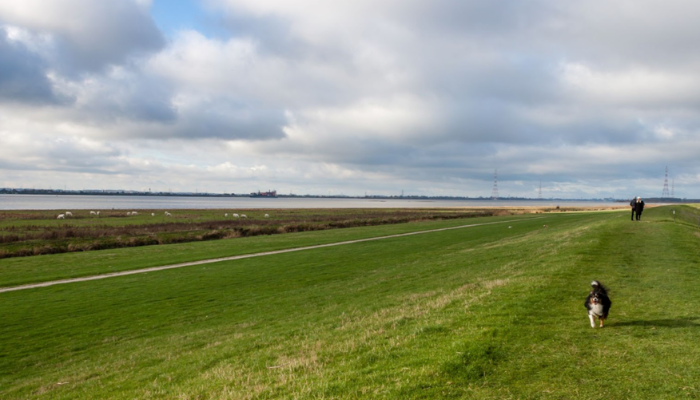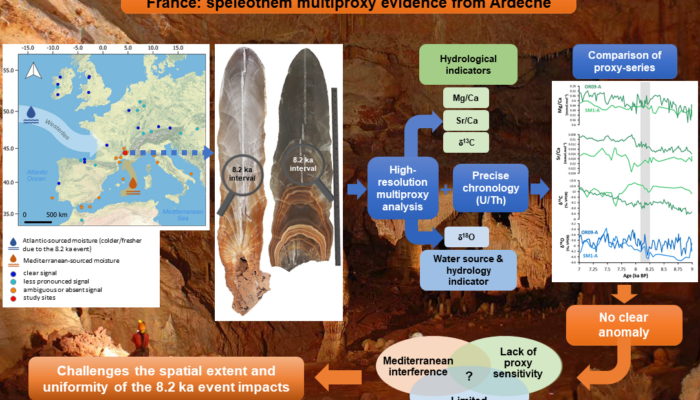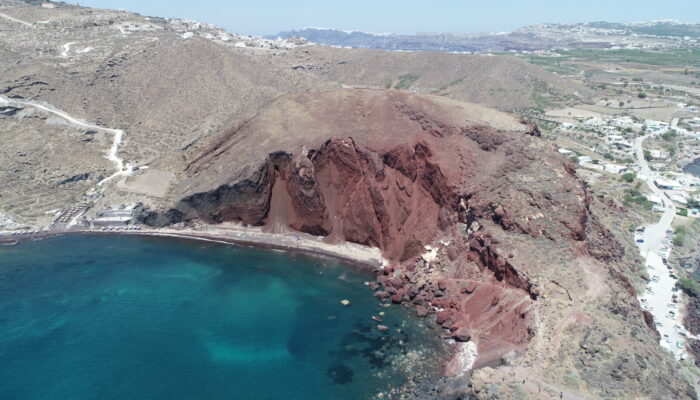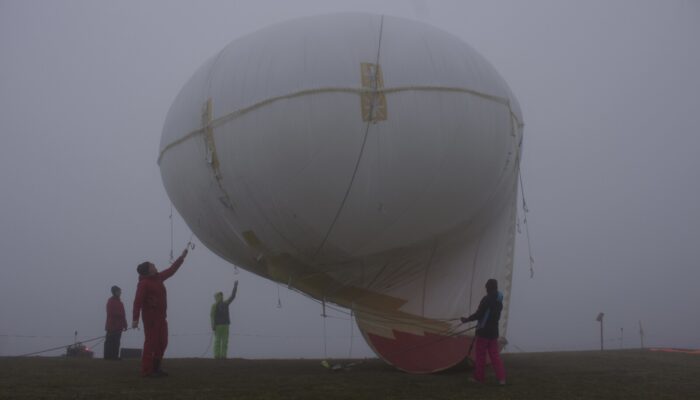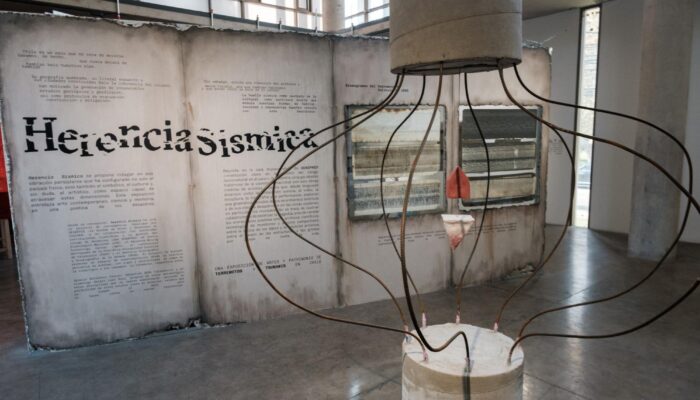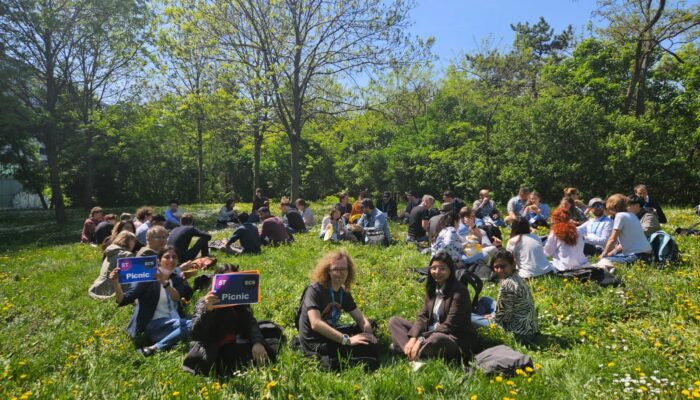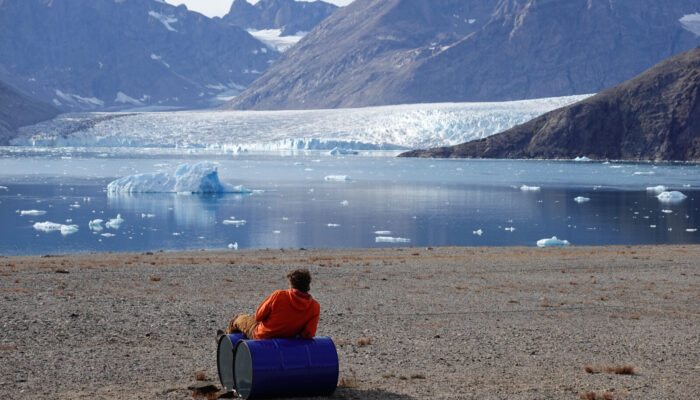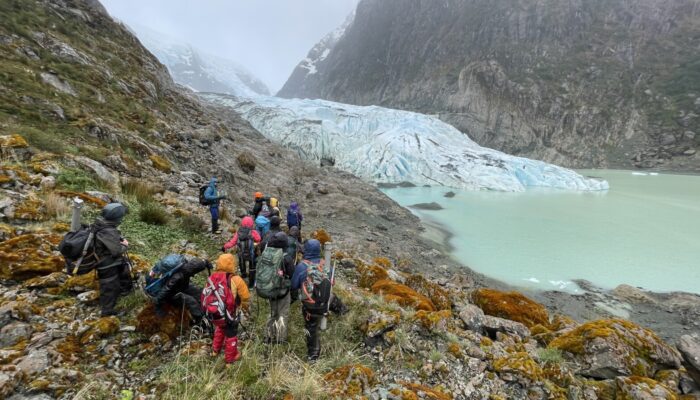
Geological teaching and education is fast-changing in the 21st century. While fieldwork has long been considered to be the bedrock of geological instruction, over time an increased acceptance has developed for the need to make geological education and training more accessible, especially with regard to fieldwork as this can often involve days and weeks of arduous treks over inhospitable terrain, t ...[Read More]
Hydrological Sciences
Can Machine Learning Help Us Monitor Streams?
Picture this: you’re hiking through a dry landscape when suddenly you hear it—the serene sound of a babbling brook. You round a corner and discover a small waterfall cascading into crystal-clear pools, surrounded by lush green ferns and wildflowers attracting buzzing bees. It feels like stumbling upon a secret oasis. These magical streams that appear and disappear with the seasons are called ...[Read More]
Nonlinear Processes in Geosciences
New Editorial Voices at NPG
As part of welcoming new members to the editorial team of Nonlinear Processes in Geophysics (NPG), we are pleased to present short interviews with two newly appointed editors, Dr. Kira Rehfeld and Dr. Jezabel Curbelo. They share their scientific backgrounds, motivations for joining the journal, editorial goals, and perspectives on emerging research directions in nonlinear geosciences. Their insigh ...[Read More]
Geodynamics
Fault characteristics, how close is close enough?
Have you ever wondered what common thing connects fault surfaces and their characteristics with your… squeezy sneakers on a wet surface or the required frequent change of your car tyres? Well, the answer is simple. The fundamental principles of stress and friction can significantly cause this behaviour in our everyday lives. However, these two factors can also be responsible for the slip behaviour ...[Read More]
Tectonics and Structural Geology
Our epic battle with ever-changing weather forecasts while deploying ocean bottom instruments
The question what drives tectonic plates has been around since plate tectonics was first developed. In principle, the fluid dynamics is well-known but what is not well known are the material properties, especially mantle viscosity structure which determines how much force is needed to pull a plate with a certain speed, but also how fast mantle convection, which may act as a driving force can occur ...[Read More]
Atmospheric Sciences
Building a library of observed air mass trajectories to study aerosol-cloud interactions
Marine low clouds, such as stratocumulus, play a central role in regulating Earth’s climate by reflecting incoming sunlight back to space. Yet these clouds are notoriously difficult to simulate and predict. One reason is that their evolution depends strongly on the surrounding atmosphere: temperature structure, moisture, winds, and aerosols all interact in complex ways. As a result, cloud response ...[Read More]
Climate: Past, Present & Future
CYCLIM: cycle counting a faster way
As we try to predict what will happen under increasing anthropogenic climate change, climate models can only get us so far. Another key is understanding past changes in the Earth’s climate. To do this, palaeoclimatologists turn to natural archives (e.g., sediment cores and speleothems) and extract records of past variability using their properties, such as chemical or physical composition. H ...[Read More]
Ocean Sciences
A Record-Breaking Indian Ocean Dipole: What Happened in 2021–2022?
The Indian Ocean Dipole (IOD) is generally considered a seasonal mode of variability, developing and decaying within a single year. During 2021–2022, however, negative IOD conditions persisted for approximately 19 months (Figure 1, top left), making this event the longest—and among the strongest—observed since reliable records began. This unusual persistence highlights important aspects of ocean–a ...[Read More]
Geodynamics
The courage to be disliked: reflections on peer-review processes
Although often daunting and discouraging, every academic must navigate the inevitable process of peer review. In this week’s post, Jean-Baptiste Koehl, postdoctoral researcher at the University of Oslo (Norway), reflects on what the future of peer review might be. Author disclaimer: The reflections presented here reflect my perspective grounded in my own experience. While peer review is a key mech ...[Read More]
Geomorphology
Highlighting: Fluvial Biogeomorphology! (Interview with Florian Betz)
This blog post is part of our series: “Highlights” for which we’re accepting contributions! Please contact Emma Lodes (GM blog editor, elodes@asu.edu), if you’d like to contribute on this topic or others. by Florian Betz, Principal Investigator at the Earth Observation Research Cluster at University of Würzburg. Email: florian.betz@uni-wuerzburg.de What is biogeomorphology and why is it important ...[Read More]