One feature stands out in any map of tropical rainfall from satellites: a narrow band of intense precipitation encircling the globe near the equator. This is the Intertropical Convergence Zone, a key feature of the global atmospheric circulation that imports moisture into the tropics and exports energy to higher latitudes. But for decades, climate models have struggled to simulate this feature cor ...[Read More]
Tectonics and Structural Geology
How Lava Domes Grow: Field Observations and Thermo-Mechanical Insights from the 1979 Soufrière Eruption
To kick off the New Year, we have invited a guest author, Takafumi Maruishi, a researcher in the Research Division for Volcanic Disasters / Center for Volcano Research Promotion, National Research Institute for Earth Science and Disaster Resilience, Japan. He explains the scaling law of lava dome growth and its physical insight. Effusive eruptions—when magma reaches the surface and is extruded as ...[Read More]
Geodynamics
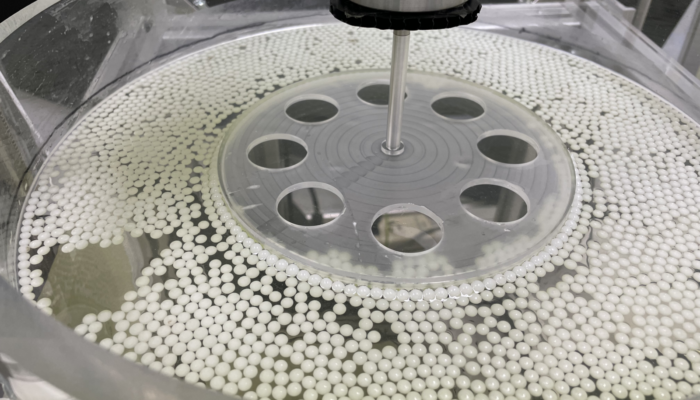
Building the Earth in a sandbox
Building the Earth in a sandbox The Main Ethiopian Rift stretches for hundreds of kilometers through Ethiopia, a massive fracture where Africa is slowly tearing apart to birth a new ocean. However, the processes driving this continental breakup remain hidden deep beneath layers of volcanic rock and millions of years of geological history. Today, in a laboratory in the heart of the be ...[Read More]
Hydrological Sciences
Comparing Apples to Apples: Filtering Water Storage Compartments for GRACE
Have you ever heard that we can “weigh” water on Earth from space? Since 2002, the GRACE and GRACE-FO satellite missions have been mapping month-to-month variations of the Earth’s gravity field. Because gravity responds to mass, these data can reveal how water is redistributed at the surface and in the subsurface. The result is a global time series of terrestrial water storage anomalies (TWSA)—h ...[Read More]
Natural Hazards
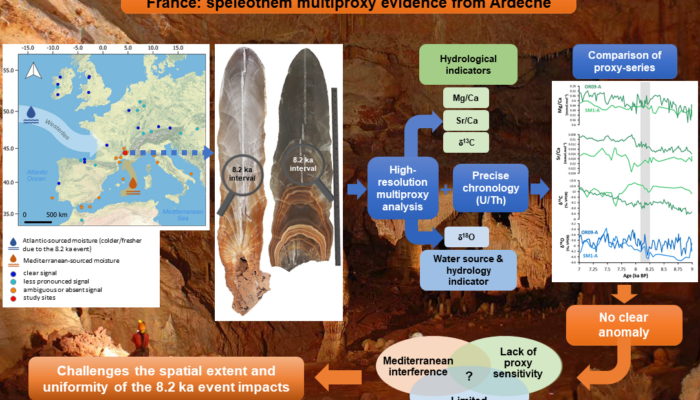
Hunting for historical Adriatic meteotsunamis
Before modern instruments, our only clues about past sea events came from written records and folklore. Along the eastern Adriatic coast, stories of sudden floods and “tidal waves” (locally called šćiga) have been passed down for generations. These waves, described as rapid rises and falls of the sea that could flood or empty harbours within minutes, were carved into Adriatic coastal life as rare ...[Read More]
Atmospheric Sciences
From Particles to the Air We Breathe: Dominik Stolzenburg’s Journey into the Hidden Life of Aerosols
Dr. Dominik Stolzenburg is a chemist in atmospheric physics at TU Wien, specializing in aerosol science and air quality. His work focuses on how ultrafine particles form, transform, and affect both climate systems and human health — especially in cities. Through field measurements, modeling, and data analysis, he explores how human and natural emissions interact, helping policymakers shape cleaner ...[Read More]
Geomorphology
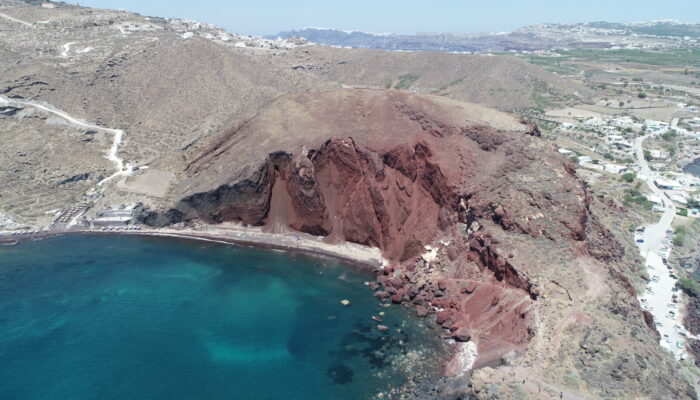
Highlighting: Puerto Rico, Part 2!
This blog post is part of our series: “Highlights” for which we’re accepting contributions! Please contact Emma Lodes (GM blog editor, elodes@asu.edu), if you’d like to contribute on this topic or others. Interview with Kate Drobnich, PhD student, Department of Geosciences, Colorado State University. Email: kate.drobnich@colostate.edu. Questions by Emma Lodes. Can you briefly describe the main ob ...[Read More]
Atmospheric Sciences
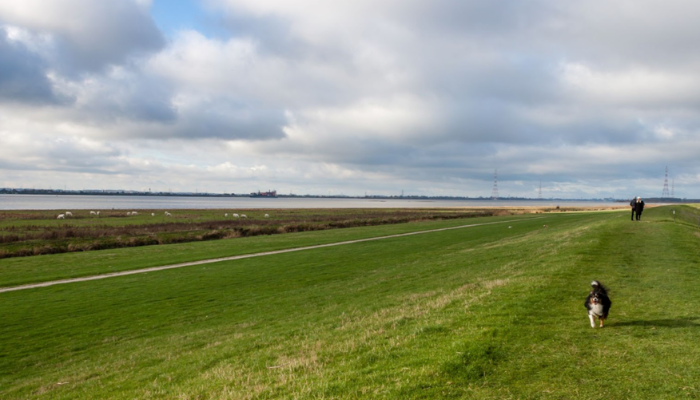
Have you ever seen a weather forecast map that looked like it was wearing a striped sweater?
This isn’t a new fashion trend in meteorology. For model developers, these unexpected stripes are a sign that something has gone wrong in the complex digital engine that powers our forecasts. Recently, our team at CMA Earth System Modeling and Prediction Centre (CEMC) encountered these very stripes in wind forecasts produced by an operational global model. We played the role of scientific de ...[Read More]
Geomorphology
Highlighting: Puerto Rico, Part 1!
This blog post is part of our series: “Highlights” for which we’re accepting contributions! Please contact Emma Lodes (GM blog editor, elodes@asu.edu), if you’d like to contribute on this topic or others. Interview with Angus Moore, Researcher at the Czech Academy of Sciences, Prague, Czechia. Email: angus.moore@uclouvain.be Questions by Emma Lodes. Can you briefly describe the main objective of ...[Read More]
Geosciences Instrumentation and Data Systems
Google Earth Engine, a pionner tool for enviromental solutions
Since 2018, Google Earth Engine (GEE) has granted free access to various institutions for academic and non-profit scientific use. The goal of this initiative is to process large amounts of satellite imagery exclusively over the internet (cloud). This innovative option enabled thousands of users from around the world to investigate environmental phenomena at varying resolutions, including over time ...[Read More]