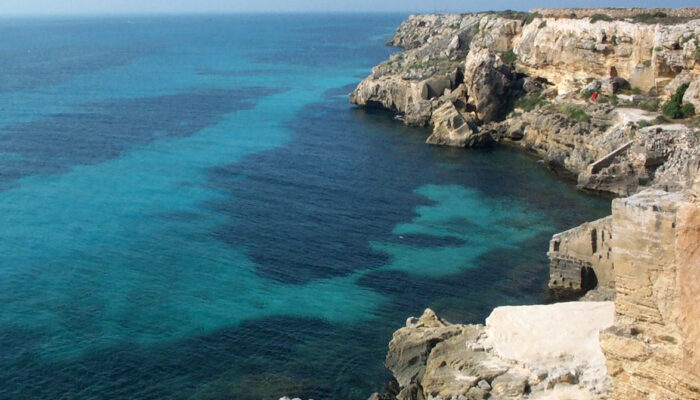
Algeria is often described as one of the great energy engines of Africa and the Mediterranean, and with good reason. Its proven oil and gas reserves are impressive, but what truly sets the country apart is the extraordinary complexity of its geological history. Over more than two billion years, tectonics, climate shifts and sedimentation created a series of basins that today host some of North Afr ...[Read More]
Geochemistry, Mineralogy, Petrology & Volcanology
GMPV ECS Campfires – Mineralogy Meets Soil Science: Remediation, Weathering Processes and Interactions
How do minerals shape the future of soils, and how do soils drive mineral transformations? This campfire highlights remediation strategies, contamination hazards, and mineral–soil interactions that control water quality, carbon storage, and ecosystem health. Join us on Wednesday, December 17th @ 11 am CET to explore how weathering, organo-mineral processes, and innovative approaches help tackle po ...[Read More]
Geomorphology
Highlighting: Volcanic Islands! (Interview with Kim Huppert)
This blog post is part of our series: “Highlights” for which we’re accepting contributions! Please contact Emma Lodes (GM blog editor, elodes@asu.edu), if you’d like to contribute on this topic or others. Interview with Kim Huppert, Assistant Professor of Earth and Atmospheric Sciences, City College of New York and Graduate Center CUNY. Email: khuppert@ccny.cuny.edu, website: https://sites.google ...[Read More]
Nonlinear Processes in Geosciences
ECS Spotlight: Evolution of the Dynamics of Centennial Hot Summers in Western Europe With Climate Change
Extreme meteorological and climatological events can be immensely damaging and disruptive to society. Understanding the physical mechanisms driving these events, and how they will evolve with climate change is crucial for informing societal adaptation to our changing climate. However, extreme events are, by definition, rare. Our capacity to understand these events is, therefore, hindered by the sm ...[Read More]
Biogeosciences
Climate change mitigation and India’s road to net zero
Climate change poses a significant threat to humanity, prompting numerous countries, including India, to implement effective mitigation strategies to alleviate its impact. India is recognized as one of the 17 megadiverse countries, harboring approximately 10% of the world’s known floral and faunal species. This rich biodiversity is largely attributed to its geographical diversity, encompassi ...[Read More]
Geodesy
Beyond navigation: How GNSS reveals Earth’s hidden secrets
Part 1 – the global case When you check directions on your smartphone or track your morning run, you’re tapping into a global infrastructure that has revolutionized not just navigation, but our understanding of Earth itself. What began as military technology has evolved into powerful scientific tools that confirm longstanding theories and reveal previously unobservable phenomena. In th ...[Read More]
Ocean Sciences
A model to trace methane from the seafloor to the atmosphere
When people picture gas leaking from the seafloor, they often imagine plumes of bubbles that make up a direct path from the seabed to the sky. The reality, however, is far more complex and far more interesting. Between the seafloor and the atmosphere lies an entire ocean of physics, chemistry, and biology that controls the fate of the released gas. In fact, typically, most methane is dissolved int ...[Read More]
Tectonics and Structural Geology
Gifting geologist made easy – a guide to spoil your favorite persons
The end of the year is around the corner. For many of us, it will be a time of celebration, gathering, party, and GIFTS! And if you think spoiling a geologist is hard, then I’ve got your back. In this post I gather diverse gift ideas, the classics of course and some really unique treasures to get to your favorite geologist (who can be yourself of course). You’ll find ideas whatever you ...[Read More]
Hydrological Sciences
ROBIN: Tracking Climate Change Through the World’s Most Natural Rivers
Hydrological change is one of the clearest signals of climate variability and human impact on the environment. Yet detecting these changes reliably requires robust, long-term data from river basins that are as close to “natural” as possible, with little influence from dams, abstractions, land use change or any other human influences. That’s where the ROBIN project comes in. ROBIN, or the Referenc ...[Read More]
Solar-Terrestrial Sciences
A talk with scientists across Europe: building the future of European heliophysics together
“Heliophysics studies the Sun, its sphere of influence, and how it affects the bodies in the solar system.” – this holistic approach to understanding our space environment is at the heart of the European Heliophysics Community (EHC), an open and inclusive network of researchers across Europe (https://www.heliophysics.eu/). The EHC promotes collaborative, curiosity-driven science that explore ...[Read More]