EGU Blogs

Division blogs

BG
Biogeosciences

Meet Corinne Le Quéré – Vladimir Ivanovich Vernadsky medal winner 2025
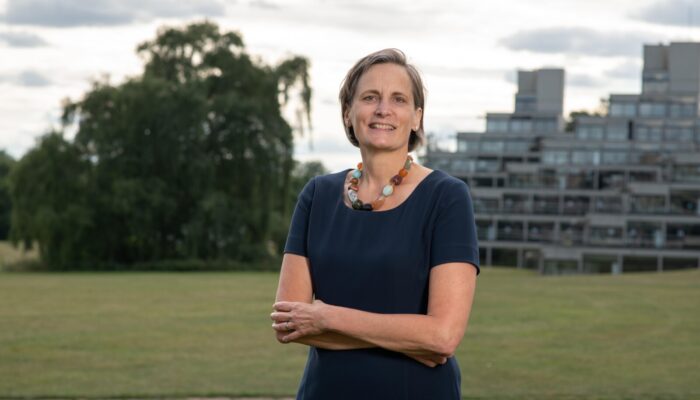
Meet Corinne Le Quéré – Vladimir Ivanovich Vernadsky medal winner 2025
We spoke to Corinne Le Quéré, a Royal Society Research Professor of Climate Change Science at the University of East Anglia (UK). She is the recipient of the 2025 Vladimir Ivanovich Vernadsky medal of the EGU, awarded annually by the Biogeosciences division to those who make an exceptional contribution to biogeosciences. Can you tell us a bit about your background and how your career progressed to ...[Read More]

G
Geodesy

EGU Campfire Geodesy – Share Your Research – 18th Edition

EGU Campfire Geodesy – Share Your Research – 18th Edition

We are excited to announce the 18th edition of Geodesy Campfire – Share Your Research in April. The Geodesy EGU Campfire Events “Share Your Research” give (early career) researchers the chance to talk about their work. We have two exciting talks by our guest speakers, David Rodríguez Collantes and Klara Middendorf. Below, you can find the details of the topics awaiting us. We will have time to net ...[Read More]

GD
Geodynamics

Interview ECS GD Awardee 2026 – Sia Ghelichkhan

Interview ECS GD Awardee 2026 – Sia Ghelichkhan

The Division Outstanding Early Career Scientist Awards highlight exceptional scientific contributions made by an Early Career Scientist in the fields of Earth Sciences associated with each division. This year, the prestigious recognition for the Geodynamics Division has been awarded to Dr. Sia Gelichkhan, from the Australian National University. Today we have the pleasure of interviewing him on hi ...[Read More]

AS
Atmospheric Sciences

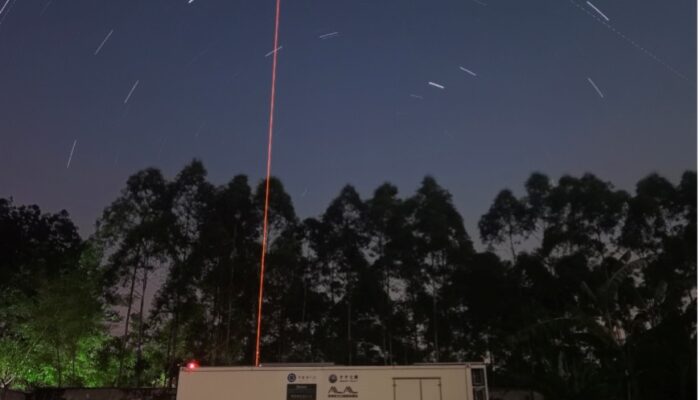
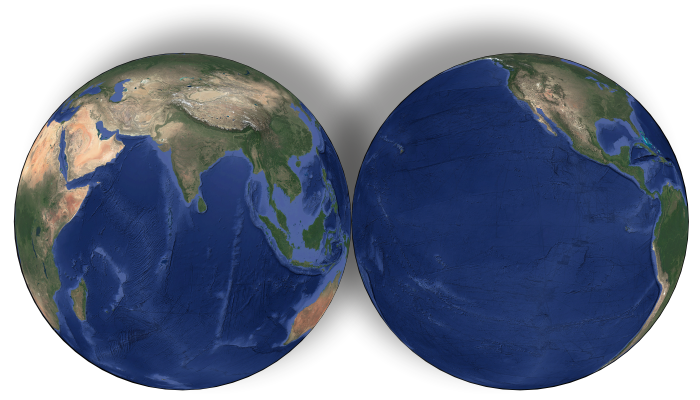
China’s Hainan Unlocks Mysteries of Heat and Sodium Transport 80–100 km Above Earth

China’s Hainan Unlocks Mysteries of Heat and Sodium Transport 80–100 km Above Earth

When we gaze at the sky, our eyes often linger on blue horizons, floating clouds, or twinkling stars—rarely do we think about the critical processes unfolding 80 to 100 km above ground. This region, known as the mesopause, acts as a vital transition zone for aviation and aerospace activities (not vital for routine commercial aviation, but it is indispensable for high-altitude aerospace, experiment ...[Read More]

BG
Biogeosciences

Recent highlights in Biogeosciences

Recent highlights in Biogeosciences

Want to know more about the latest breakthroughs in biogeochemistry? Then you’ve come to the right place. Across marine biogeochemistry, fisheries science, and environmental health, new research is mapping the unintended consequences of a warming and increasingly exploited planet. By tracing carbon and contaminants through water, sediments, and food systems, these studies offer a portrait of Earth ...[Read More]

CL
Climate: Past, Present & Future

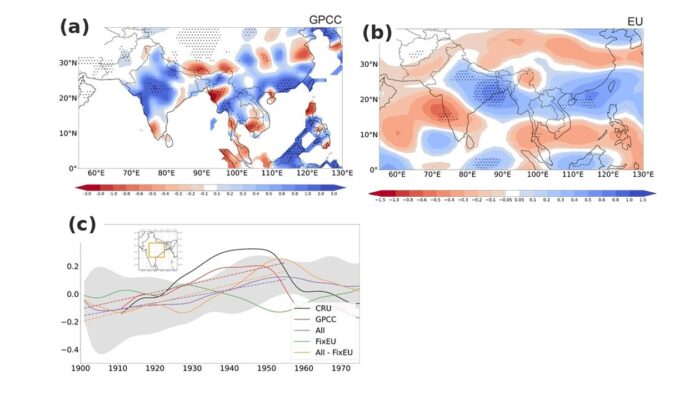
When European pollution reshaped the Asian summer monsoon

When European pollution reshaped the Asian summer monsoon

  The Asian summer monsoon is one of the most powerful climate phenomena on Earth. Each year, it brings life-giving rainfall to billions of people across South and East Asia. Its arrival determines harvests, water supply, food security, and economic stability. We often think of the monsoon as something driven locally: by the heating of the Indian subcontinent, by ocean temperatures, or by reg ...[Read More]

TS
Tectonics and Structural Geology

Geomythology and Science: a long lasting yet hidden relationship

Geomythology and Science: a long lasting yet hidden relationship

The links between geomythology and science are considerable and officially began with the works of Vitaliano (EGU Blog – Geomythology. True science and/or strong communication medium ?!) and continues nowadays thanks to the Geoheritage Journal edited by Springer Nature, and evident in two proposed sessions to the EGU sessions, including one from the 2025 conference entitled “Geomythology: Bridging ...[Read More]

HS
Hydrological Sciences

Improve your chances in hiring processes and proposal evaluations: curate your ORCID

Improve your chances in hiring processes and proposal evaluations: curate your ORCID

Today – while preparing my latest Sience – CV (SciCV) version for a proposal submission – I noticed that I will soon celebrate my 20th net-academic-age birthday* (see below). No worries, my editorial is not about looking back on my career, but about offering some hints on how to keep up with evolving research evaluation practices. One of the things that is evolving quickly (for academi ...[Read More]

GD
Geodynamics

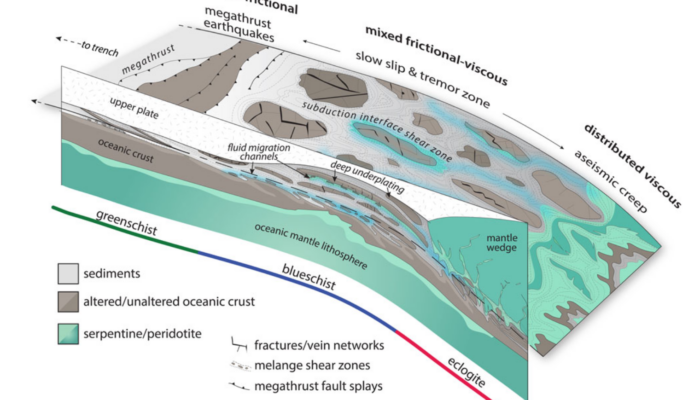
Subduction interfaces are complicated – and that’s their beauty!

Subduction interfaces are complicated – and that’s their beauty!

The dynamics of subduction zones are strongly influenced by the subduction interface. Understanding its rheology enables geodynamic modellers to better simulate these systems and unravel the fundamental processes that govern them. In today’s blog post, we explore subduction interface rheology and discuss effective approaches for modelling it. What is a subduction interface? I first met a subductio ...[Read More]

BG
Biogeosciences

Why did the Amazon forest become a CO2 source in 2023?

Why did the Amazon forest become a CO2 source in 2023?

When simulations help highlight an anomaly, scientists who are curious commit to dig deeper, and of course when resources but most importantly data is available, you get good science. In the third episode of the EGU Biogeosciences Division podcast series Bikem Ekberzade talks with Santiago Botia to look at the story behind a recent study that was published in AGU Advances. You can listen to the po ...[Read More]