
For some years now, Mary Schweitzer and her team have been researching the idea that organic molecules can be preserved for millions of years, specifically within dinosaurs. They have used a plethora of chemical and biotechnological techniques to demonstrate that, within animals like Tyrannosaurus rex, it is possible to find the residue of structures such …[Read More]
Retired blogs
Fires in South East Asia
Smoke from a number of agricultural fires is currently blanketing Thailand and Cambodia. This is shown below in the satellite image from the MODIS instrument on the TERRA satellite. The red dots are classed as ‘thermal anomalies’ by the satellite instrument and are usually indicative of fires burning in these locations. The majority of the …[Read More]
Small volcanic eruptions and the global warming ‘pause’
A new paper in Nature Geoscience by Santer and colleagues revisits the volcanic scenarios used in modern climate model simulations. The authors consider the effects of including a ‘more realistic’ model for the influence of small volcanic eruptions on the climate system over the past two decades. Of course, more realistic means more difficult.. and one …[Read More]
Where did all the mammoths go?
Let’s go meta. Recently, ecologist extraordinaire Dr. Jacquelyn Gill (or is it Professor cos of that weird American system?) wrote a wonderful review article on the extinctions that affected many large mammal species during the last 50-10,000 years. This period is known as the Quaternary, and was a time when ice ages were running rife …[Read More]
Towards better quantifying human impacts: Looking back on the PAGES Workshop in Leuven
Firstly, I’d like to express my sincere thanks to Dr Jennifer Clear (Czech University of Life Sciences, Prague) for her input to this blog article. The first week of February saw dozens of scientists arrive at the Katholieke Universiteit Leuven for the PAGES Focus 4 Workshop. This event brought together geomorphologists, soil scientists, palaeoecologists, archaeologists …[Read More]
Guest Blog: The Influence of Himalayan Geology
Amber Madden-Nadeau is studying Geology at Imperial College London. Amber recently wrote a report on the geology of the Himalayas, with a focus on the Ladakh region, as part of our hazards education project. Here, Amber summarises the important aspects of Himalayan geology and the influence they have on people’s lives. The Himalaya mountain …[Read More]
Friday Photo (116) – Eruption at Santiaguito (Guatemala)
Eruption at Santiaguito Volcano (Guatemala) on Tuesday 18th February 2014, taken from the top of Santa Maria (Credit: Joel Gill)
Update on the eruption of Gunung Kelud
The dramatic eruption of Gunung Kelud, or Kelut, led to a flurry of images of ash appearing on many social media platforms, including Flickr, Instagram and Twitter. As an experiment in a volcanology class, we sought out images that we could locate on a map, and by classifying the ash deposits as ‘light’, ‘moderate’ or …[Read More]
The Most Epic Unboxing Ever
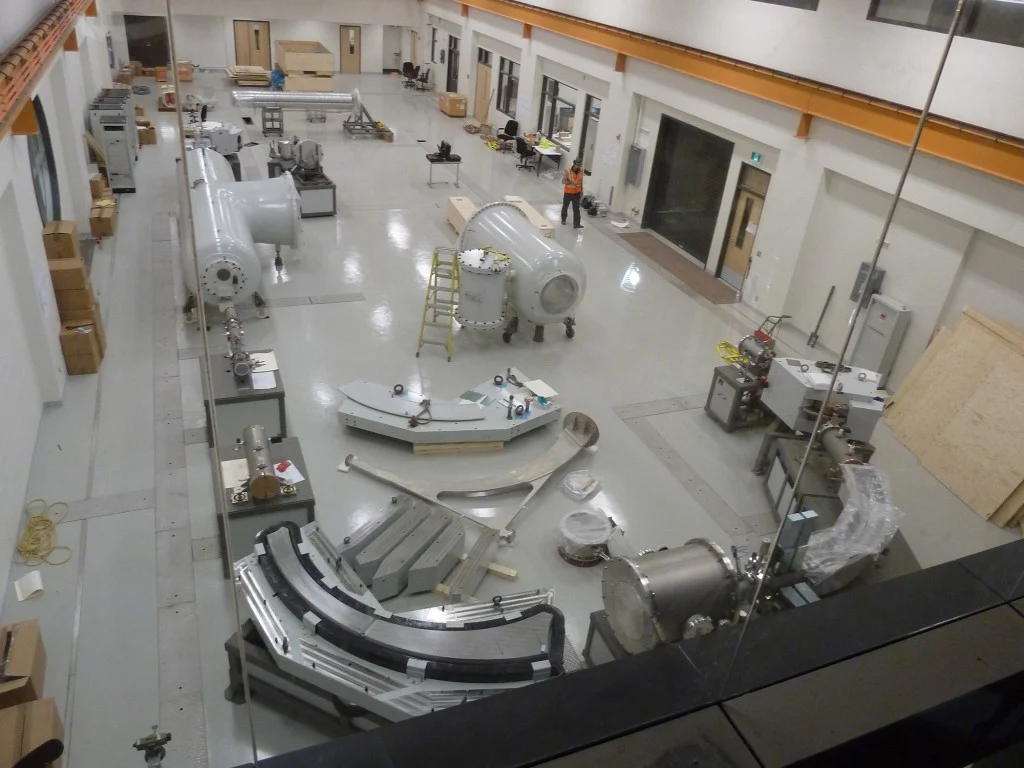
There is a strange phenomenon on the internet called unboxing. Unboxing is when a person receives a new package of something and takes a video or pictures of the process of opening it for the first time and posts it online. Mostly, from what I can see, people “unbox” electronics or hockey cards or things …[Read More]
Citizen science in ecology and evolution? Sounds apps-olutely fantastic.. *tumbleweed*
There’s a lot of talk these days about science communication. Some people spend their lives debating the differences between outreach, public engagement, and science communication, and how they all mean different things. As a scientist, and I’m quite sure I can speak on behalf of the entire community, we don’t give a toss what you …[Read More]