
Macmillan have released an interesting press release, announcing that all research papers published in their 49 Nature Publishing Group (NPG) journals, including Nature, will be made free to read online, via one of Digital Science’s pet projects, ReadCube (note that Digital Science is also owned by Macmillan). These articles can be annotated in ReadCube, but not …[Read More]
Retired blogs
Looking to the past to see into the future
The Earth’s surface temperatures can have a profound effect on the Earth’s ice sheets, the huge layers of ice thousands of metres thick that cover Greenland and Antarctica. Over the past few decades, satellites have monitored the changes of these icy landscapes, revealing that parts of Greenland and West Antarctica are melting. This is important …[Read More]
What is the best journal to submit groundwater research this year?
We all know about the flaws of impact factors, including how they lead to citing recent research, self-citing etc. But I thought it would be handy to compile a list of journals where well-cited groundwater articles are most often published. Like it or not, I sometimes look up this information and I assume other people …[Read More]
“Open access wins all of the arguments all of the time.”
One is rather inspired. OpenCon 2014 was a wonderful time bringing together the best minds in early career research and the ‘world of open’ to discuss how we make access to knowledge, data, and educational resources better for everyone. It wasn’t so much an event*, as a milestone. Here’s the story of its success. I …[Read More]
Images of Guatemala (6) – Some Impacts of Agriculture
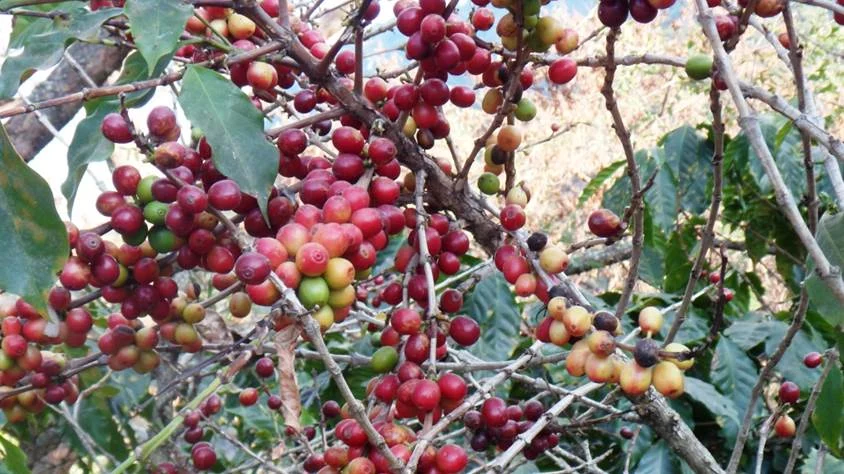
(Credit: Geology for Global Development, 2014) This truck load of sugar cane was one of many observed on this stretch of road from Antigua leading to a volcanic observatory around the volcano Fuego. Agriculture – notably sugar and coffee – in Guatemala is highly significant in many respects, bringing benefits such as exports and jobs. There …[Read More]
Some handy tips towards stress-free PhD completion…
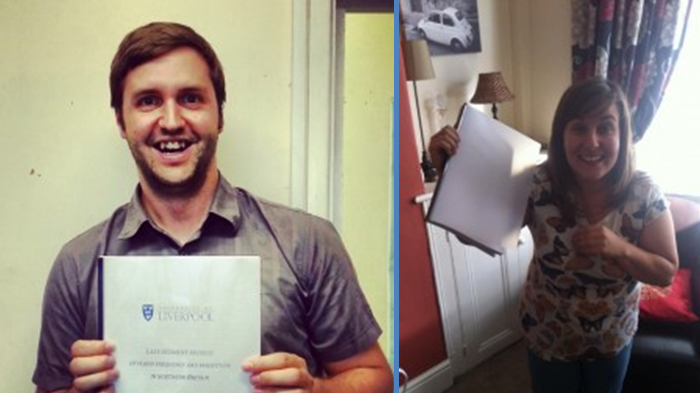
Laura and I both submitted our theses at the end of September after four years of intense work. We felt there’d be some value (nostalgic to ourselves, hopefully useful to others) in putting together some tips of our own now that we can look back on our achievements. There are loads of brilliantly-written and extremely …[Read More]
Let’s have a discussion about live-tweeting academic conferences
Tl,dr version: I think we need more appropriate guidelines for live-tweeting conferences, specifically regarding the broadcasting of sensitive research. This should be at the discretion of the author, and ideally stated at the beginning of each talk. Suzie Maidment, a colleague and friend of mine, recently started a major discussion on and off the internet …[Read More]
Science Snap (#34) – Kick ’em Jenny
Kick ’em Jenny is a submarine volcano located 8km to the north of the Caribbean island of Grenada. It lies close to the small, uninhabited volcanic islands of Ronde, Diamond, Ill Caille and Les Tantes, though no physical evidence of the volcano is evident from land. At least twelve recorded eruptions have occurred since Kick …[Read More]
Doctoral Training in Environmental Research in the UK
It is now a year since the Natural Environment Research Council (NERC) announced the results of its first competition for ‘Doctoral Training Partnerships (DTP)’, and just a few weeks since each of the 15 funded DTPs welcomed their first cohorts of doctoral students. In this time, the training landscape for PhD (or DPhil) students across the environmental …[Read More]
William Dampier and the Burning Islands of Melanesia
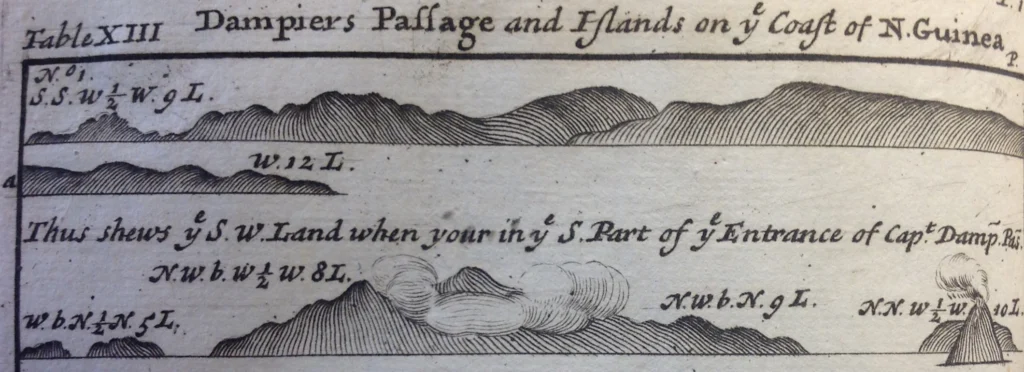
A tweet from Jenni Barclay about a Pirate Scientist gave me an excuse to visit the newly opened reading rooms in the Bodleian’s Weston Library.. William Dampier was a seventeenth century pirate, and later maritime adventurer, whose several books of ‘Voyages and Discoveries’ make for fascinating reading. In 1699, he set sail in HMS Roebuck …[Read More]