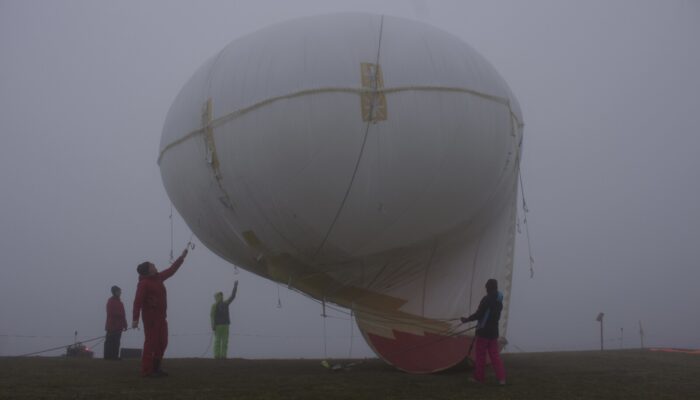
It’s murky grey, windy, and freezing when we head out into the countryside of the Swiss pre-Alps. We are looking for low hanging clouds to serve as our natural laboratory. Wintertime low stratus clouds can cover Switzerland for days. This type of cloud is stable with temperatures below 0 ºC and it contains plenty of liquid cloud droplets, but no ice crystals. These are the perfect background condi ...[Read More]
Seismology
Art, science, and seismic memory
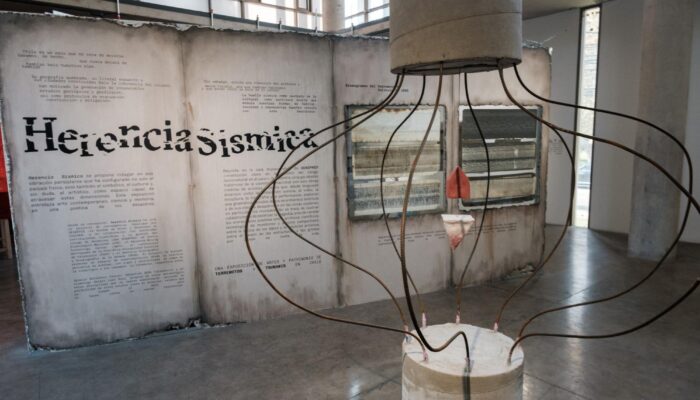
The contribution from Sergio León-Ríos, Associate Researcher at the Advanced Mining Technology Center (AMTC) at the University of Chile, where he does seismology research. Introduction Earthquakes and tsunamis are not only purely scientific geophysical phenomena. They are also deeply embedded in social memory, cultural narratives, and everyday life – especially in countries like Chile, where ...[Read More]
Solar-Terrestrial Sciences
Don’t Miss the EGU-ST Early-Career Scientist Events during EGU26!
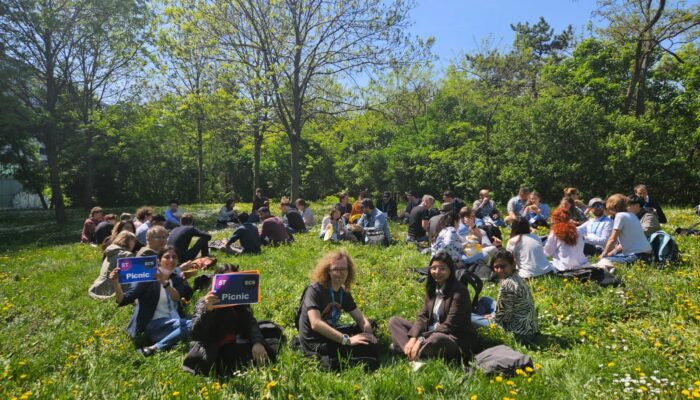
As the EGU General Assembly (GA) 2026 approaches, the Solar-Terrestrial (ST) Division Early-Career Scientist (ECS) team is organizing various events to give researchers a platform to network with their peers, and strengthen our community! What is ECS? Students (BSc, MSc), PhD candidates and researchers who obtained their highest academic degree in the last seven years are Early-Career Scientists a ...[Read More]
Geodesy
Geodesists on Tour: Circumnavigating Greenland by Helicopter
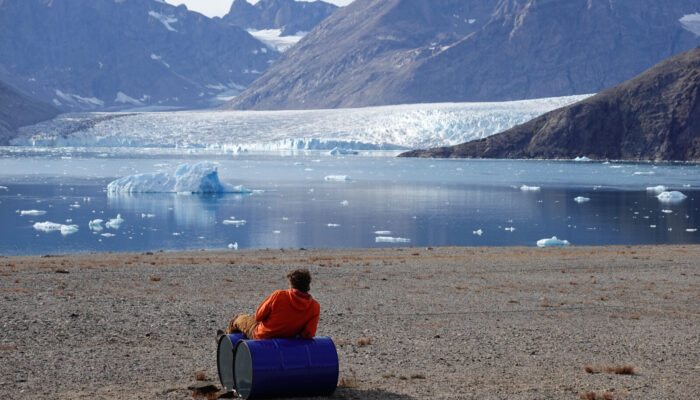
Greenland, the world’s largest island, has one of the most challenging environments for geodetic measurements. Maintaining GNSS (Global Navigation Satellite Systems) stations here isn’t just about precision – it’s about ensuring data continuity in an area that’s constantly moving. This is the behind-the-scenes story of a 15,000 km journey around Greenland: five weeks of helicopter-bas ...[Read More]
Cryospheric Sciences
Classroom on Ice: The Patagonian Icefield Research Program
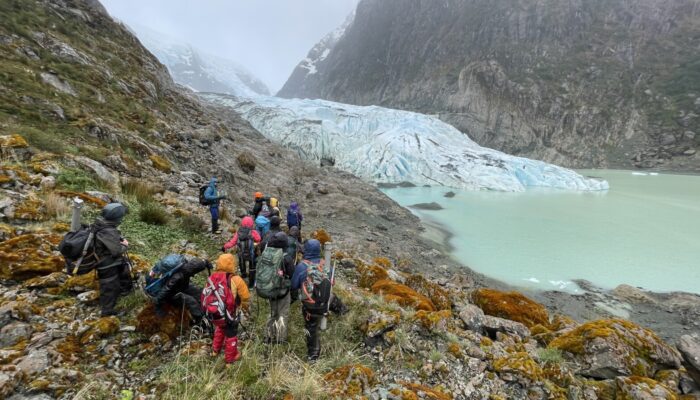
An isolated fjord at the edge of the Southern Patagonia Icefield. A small cluster of tents pitched beside Bernal Glacier. Fourteen days without roads, cell reception, or routine – only creaking ice fronts, restless wind, the constant murmur of meltwater, unrelenting rain, and a team of fellow adventurers as companions. The Patagonia Icefield Research Program (PIRP) is an immersive classroom where ...[Read More]
Ocean Sciences
How atmospheric circulation patterns high above the Southern Ocean influence the deepest layers of the global ocean
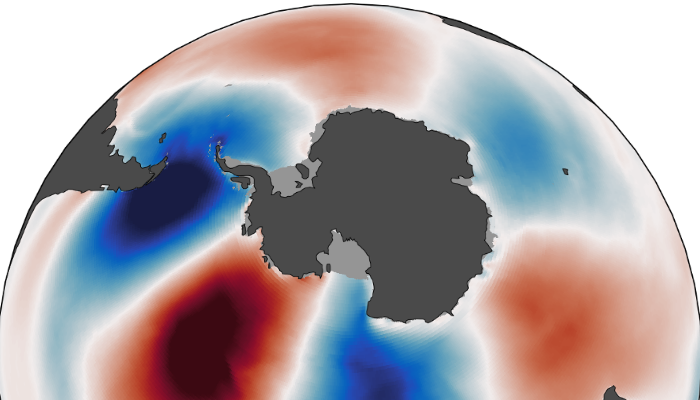
The ocean surrounding Antarctica plays a crucial role in the climate system. Along parts of the Antarctic coast, very cold and salty water becomes dense enough to sink all the way to the ocean floor. This process forms Antarctic Bottom Water: the deepest water mass in the global ocean, representing about 40% of its total volume. As this dense water sinks into the abyss, it helps trap heat and carb ...[Read More]
Hydrological Sciences
Communicating and Managing Residual Risk with Perfect Storms and Other Counterfactual Stories
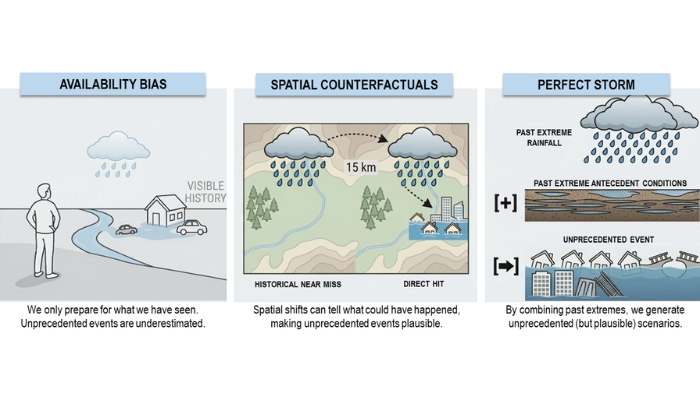
The aim of risk management is to prepare society in order to limit loss and damage when an extreme event occurs and to restore the functioning of society afterwards . While current risk management practices are helpful in many regards, they fall short when it comes to unprecedented events. An analysis of event pairs and recent disasters show that societies often fail to cope with events that are l ...[Read More]
Biogeosciences
Meet Corinne Le Quéré – Vladimir Ivanovich Vernadsky medal winner 2025
We spoke to Corinne Le Quéré, a Royal Society Research Professor of Climate Change Science at the University of East Anglia (UK). She is the recipient of the 2025 Vladimir Ivanovich Vernadsky medal of the EGU, awarded annually by the Biogeosciences division to those who make an exceptional contribution to biogeosciences. Can you tell us a bit about your background and how your career progressed to ...[Read More]
Geodesy
EGU Campfire Geodesy – Share Your Research – 18th Edition
We are excited to announce the 18th edition of Geodesy Campfire – Share Your Research in April. The Geodesy EGU Campfire Events “Share Your Research” give (early career) researchers the chance to talk about their work. We have two exciting talks by our guest speakers, David Rodríguez Collantes and Klara Middendorf. Below, you can find the details of the topics awaiting us. We will have time to net ...[Read More]
Geodynamics
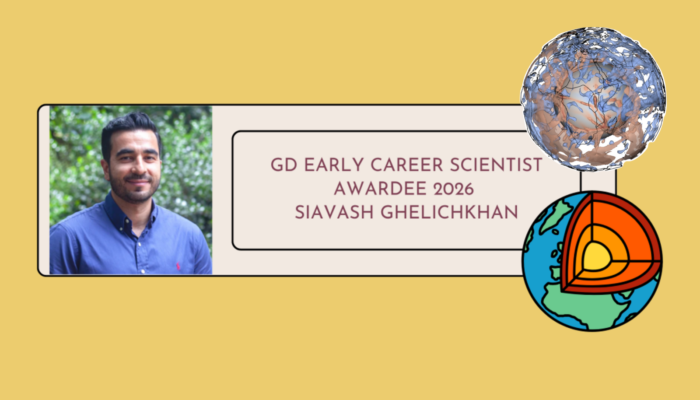
Interview ECS GD Awardee 2026 – Sia Ghelichkhan
The Division Outstanding Early Career Scientist Awards highlight exceptional scientific contributions made by an Early Career Scientist in the fields of Earth Sciences associated with each division. This year, the prestigious recognition for the Geodynamics Division has been awarded to Dr. Sia Gelichkhan, from the Australian National University. Today we have the pleasure of interviewing him on hi ...[Read More]