
Radiocarbon dating is probably the most well-known chronological technique regularly employed by archaeologists, geomorphologists and researchers analysing sediment cores. Palaeolimnologists (those who study lake sediments) hoping to determine the age of a sample extracted from a long sediment core traditionally seek terrestrial plant macrofossils (fragments of organic matter visible without a mic ...[Read More]
A much shorter review of flood stratigraphies in lake sediments
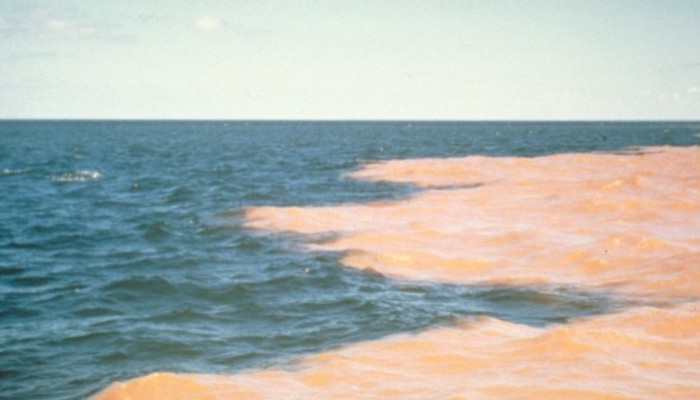
Earlier this year my PhD supervisors and I (Daniel) had a paper accepted for publication in Earth-Science Reviews entitled ‘Flood stratigraphies in lake sediments: A review’ (Schillereff et al., 2014). It’s been fairly popular in terms of downloads but it occurred to me the other day that many of those prospective readers may be put off somewhat by its hefty word count. Thus, putting together a sh ...[Read More]
Moraines in Costa Rica? Really?
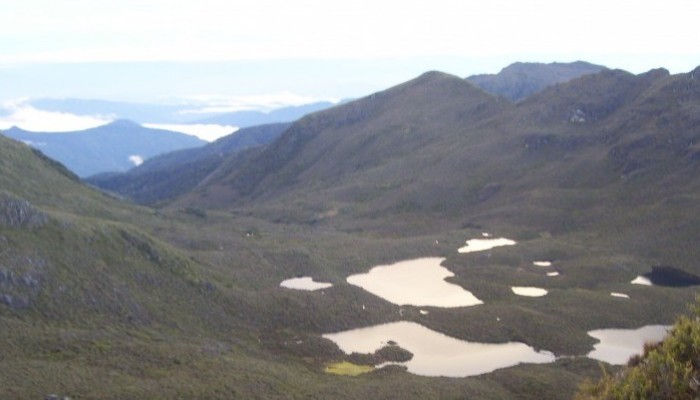
During a recent trip to Costa Rica in May, I had a conversation with some family and friends in which I uttered those words: “Moraines in Costa Rica? Really?” as they were describing a trek they’d undertaken earlier this year to the summit of Cerro Chirripó. This is the highest peak in the country (3819 m a.s.l.), part of the Cordillera de Talamanca (9°30′ N, 83°30′ W) in southern central Costa Ri ...[Read More]
From mud to moai statue: lake sediments reveal new insights into Easter Island colonization
The small landmass of Easter Island (164 km2), the southeasterly point of Polynesia in the Pacific Ocean, has achieved iconic status in the world today as people wonder how its colonisation was physically possible by settlers journeying through the vast ocean in tiny boats, how and why the enormous moai s were constructed and, most infamously, to what extent they contributed to their own downfall ...[Read More]
Reporting on a recent visit to the NERC Radiocarbon Facility (East Kilbride, Scotland)
I (Daniel) recently had the opportunity to visit the Natural Environment Research Council (NERC) Radiocarbon Facility – Environment (NRCF-EK), hosted at the Scottish Universities Environmental Research Centre (SUERC), a collaborative facility between the Universities of Glasgow and Edinburgh. The lab is located in East Kilbride, a 30-minute train ride south of Glasgow city centre. The opportunity ...[Read More]