Geology Jenga

Environmental Change

Lake mud can offer a crucial long-term perspective on flooding
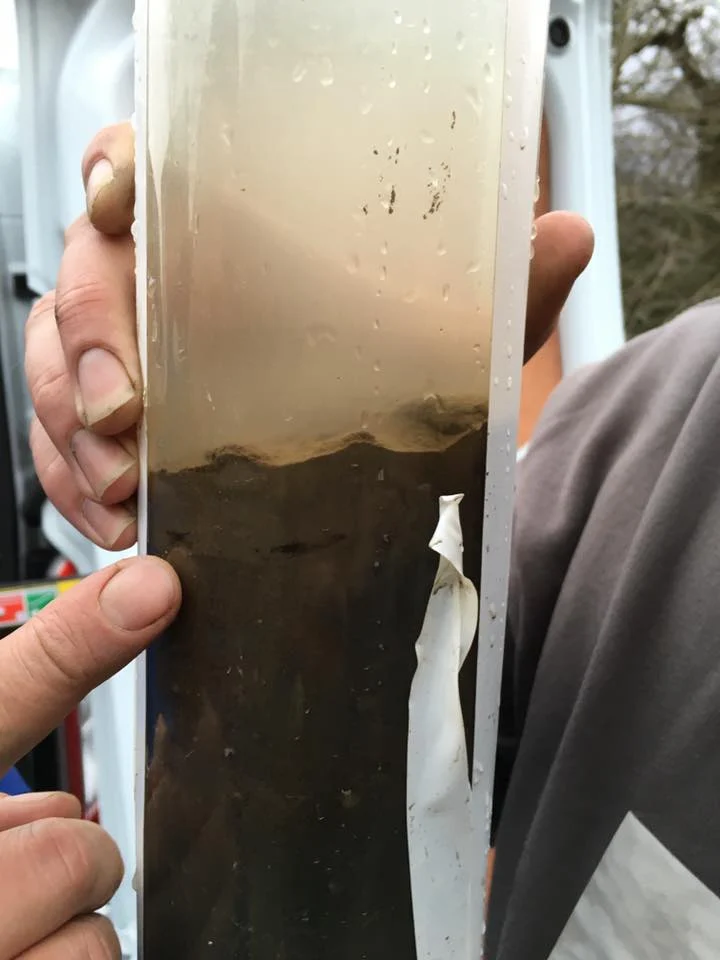
Lake mud can offer a crucial long-term perspective on flooding
The severe flooding that has hit much of northern England during the last few weeks (and northeastern Scotland right now) has generated significant discussion and debate about why floods happen, how often they occur and what we can do about it. The fact is there’s no simple answer to any of these questions: the hydrometeorological cycle is a complex beast and our actions have altered it in m ...[Read More]

Outreach on the slopes.

Outreach on the slopes.

One of the beauties of living in Munich is that the Alps are, practically, on your door step. As I mentioned in one of our more recent posts, now that I am here, I’m looking forward to exploring the city, its surroundings and further afield! Making it to the top That is exactly what I did a few weekends ago. After a little research, I chose to visit the town of Garmisch-Partenkirchen, at the footh ...[Read More]

A much shorter review of flood stratigraphies in lake sediments

A much shorter review of flood stratigraphies in lake sediments

Earlier this year my PhD supervisors and I (Daniel) had a paper accepted for publication in Earth-Science Reviews entitled ‘Flood stratigraphies in lake sediments: A review’ (Schillereff et al., 2014). It’s been fairly popular in terms of downloads but it occurred to me the other day that many of those prospective readers may be put off somewhat by its hefty word count. Thus, putting together a sh ...[Read More]

Moraines in Costa Rica? Really?

Moraines in Costa Rica? Really?

During a recent trip to Costa Rica in May, I had a conversation with some family and friends in which I uttered those words: “Moraines in Costa Rica? Really?” as they were describing a trek they’d undertaken earlier this year to the summit of Cerro Chirripó. This is the highest peak in the country (3819 m a.s.l.), part of the Cordillera de Talamanca (9°30′ N, 83°30′ W) in southern central Costa Ri ...[Read More]

Anthropocene featuring heavily at the EGU

Among other sessions on Tuesday (Day 2 at EGU2014), I (Daniel) ventured to the EGU Press Conference featuring four experts from different scientific disciplines debating the Anthropocene concept. This term is fast becoming well-known in the popular media, politics and a vast spectrum of scientific disciplines and refers to the possibility that we, humanity, are living in a new geological time peri ...[Read More]

Geology makes a difference to Society

The Geological Society of London have just today released a great report highlighting how geology contributes to our society. All too often the impression is that all geologists do is study rocks. Whilst in essence, this is what we do, the implications of geological research are far reaching and not always understood by the wider public. I think this report is a fantastic piece of science communic ...[Read More]

From mud to moai statue: lake sediments reveal new insights into Easter Island colonization

The small landmass of Easter Island (164 km2), the southeasterly point of Polynesia in the Pacific Ocean, has achieved iconic status in the world today as people wonder how its colonisation was physically possible by settlers journeying through the vast ocean in tiny boats, how and why the enormous moai s were constructed and, most infamously, to what extent they contributed to their own downfall ...[Read More]