In 2010 EGU held our first annual Photo Competition at the General Assembly in Vienna. Since then hundreds of photos have been shared on imaggeo by geoscientists and researchers just like you, with a lucky few being selected each year to be highlighted during the meeting and voted on by our members. These images …[Read More]
thin section
Imaggeo On Monday: the EGU Photo Competition – colourful thin-sections.
In 2010 EGU held our first annual Photo Competition at the General Assembly in Vienna. Since then hundreds of photos have been shared on imaggeo by geoscientists and researchers just like you, with a lucky few being selected each year to be highlighted during the meeting and voted on by our members. These images …[Read More]
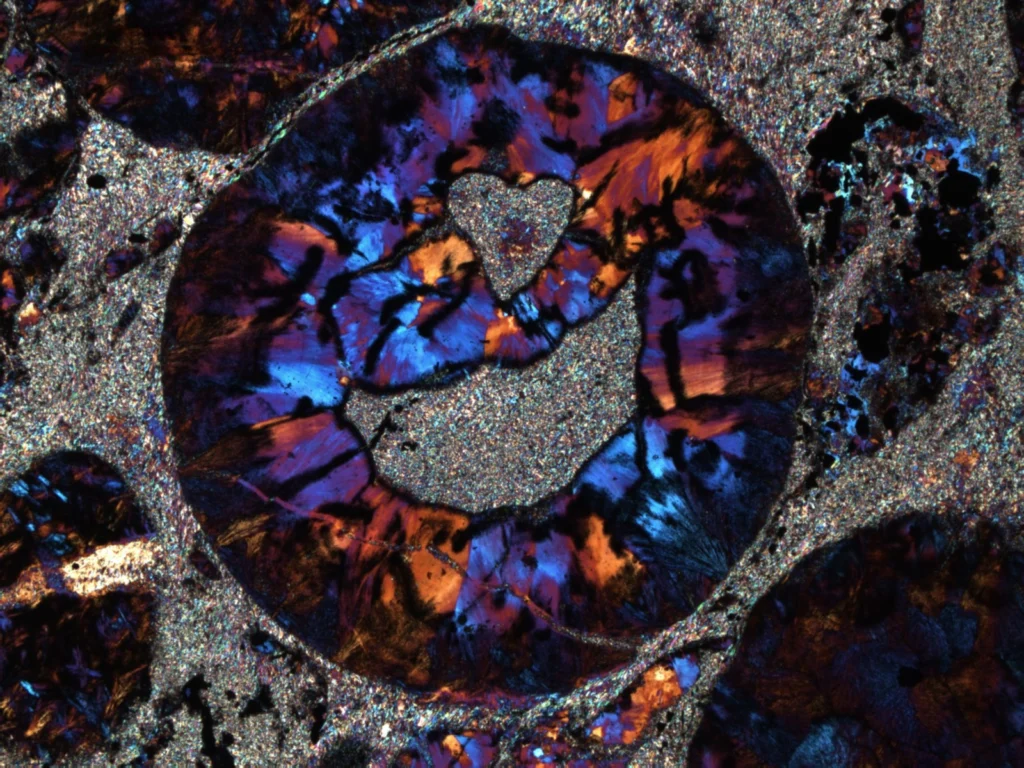
Imaggeo On Monday: The Heart of a Stone
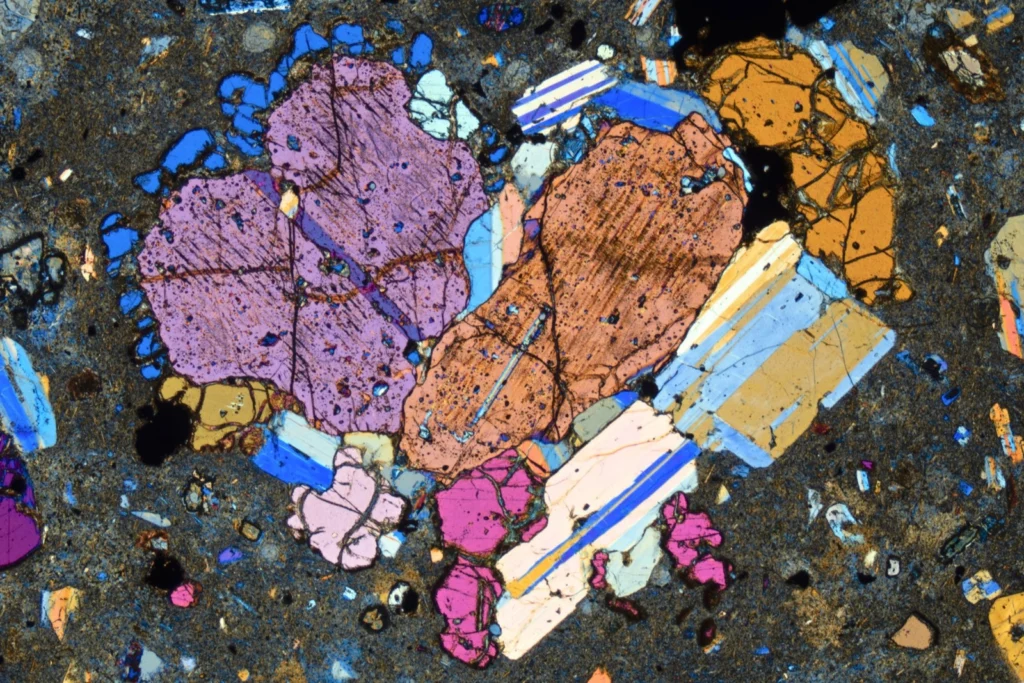
Heart-shaped glomerocryst (aggregate of phenocrysts) made of plagioclase and pyroxene in a cordierite-bearing dacitic lava from Lipari (Eolie Islands). I study the crustal xenoliths of these lavas to understand the processes accompanying high-temperature metamorphism and crustal melting. But I came across this spectacular glomerocryst and couldn’t help but take a picture! Polarized light photomicrograph. Crossed …[Read More]
Imaggeo On Monday: Quartz – sericite mylonite, Calamita, Elba
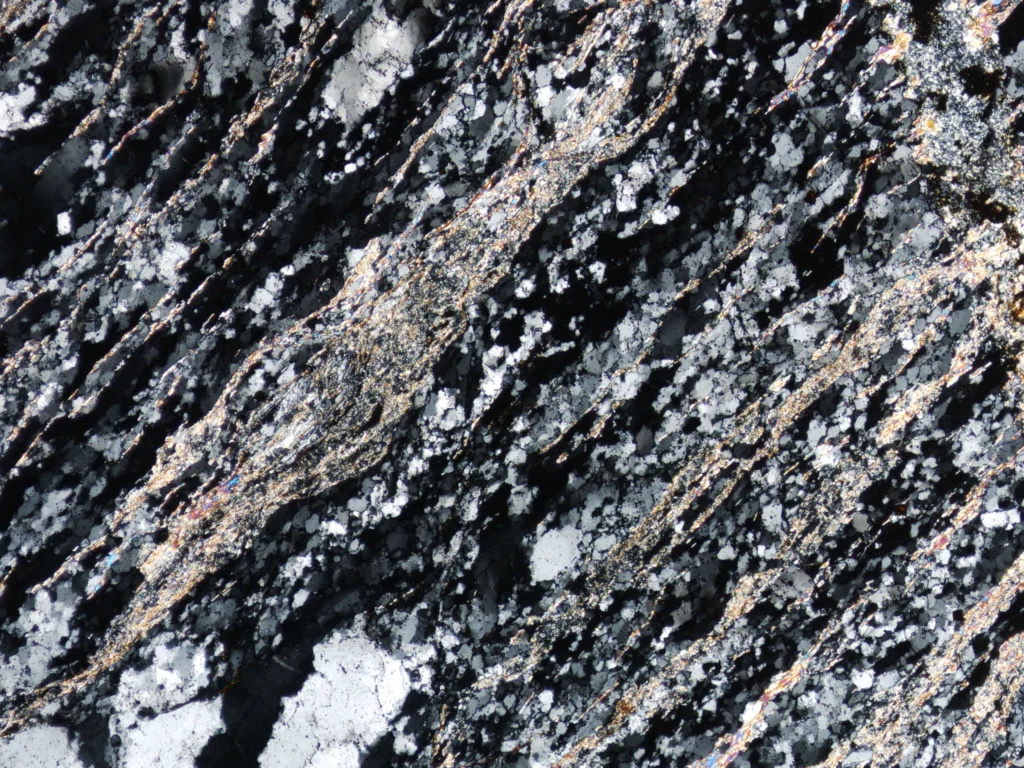
Concomitant thrusting and magmatism resulted in the development of ductile mylonites in the Calamita Schists, part of the contact aureole of the Late Miocene Porto Azzurro pluton. This mylonite is made up of stretched and recrystallized quartz layers, interlayered with thin sericite-rich levels. Sericite resulted from the crushing of contact-metamorphic minerals such as andalusite, cordierite, …[Read More]
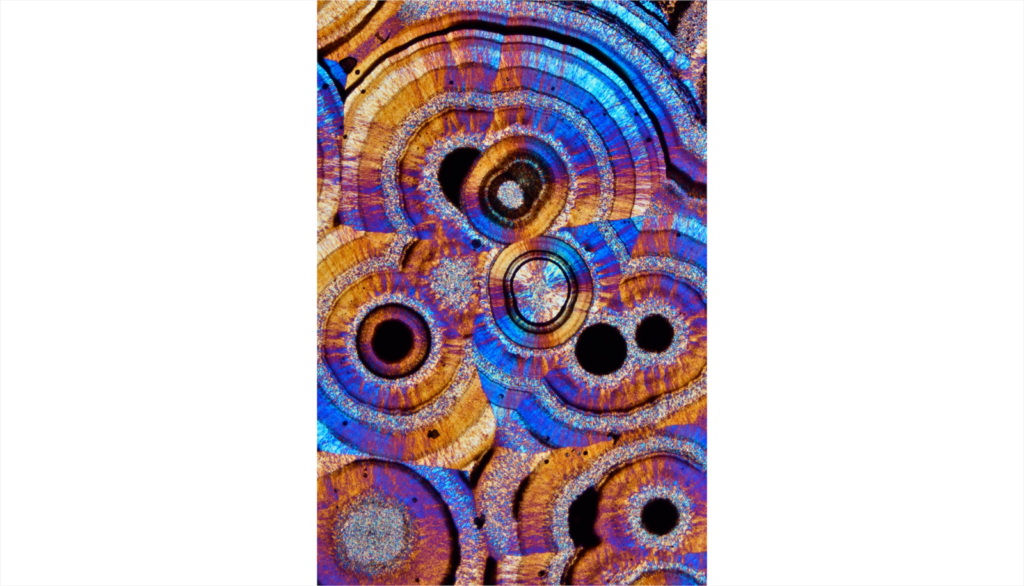
Imaggeo On Monday: Geometric Microscape of Agate
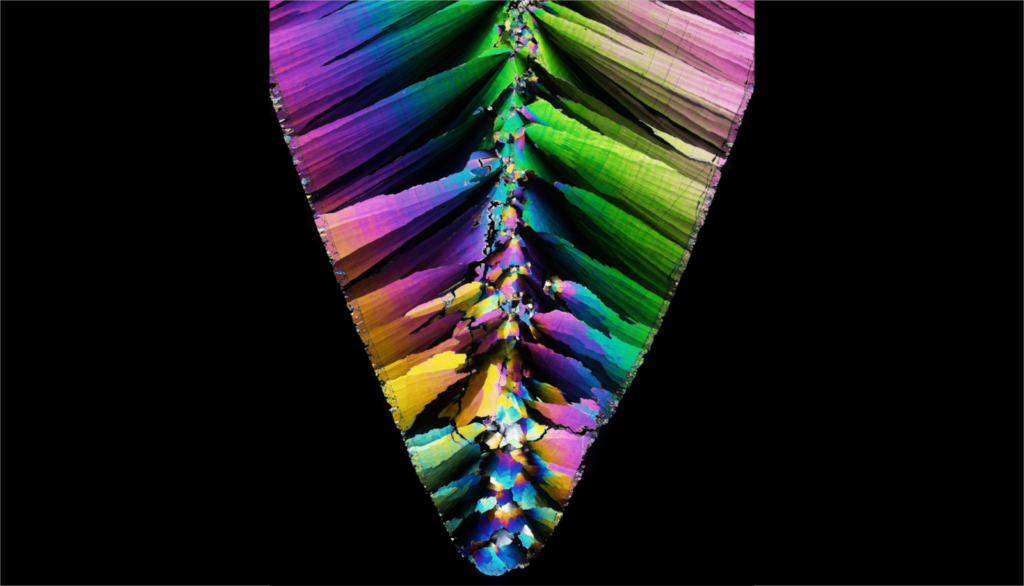
“Crazy Lace” is an agate collected in Mexico, which offers great opportunities for aesthetic photomicrography. Here we see the common arrangement of fibers of chalcedony (microcrystalline quartz) in parallel bands alternating with black thin layers of Fe oxides. Polarized light photomicrograph, crossed polarizers and red tint plate. width 5.4 mm. Sample kindly provided by Denise …[Read More]
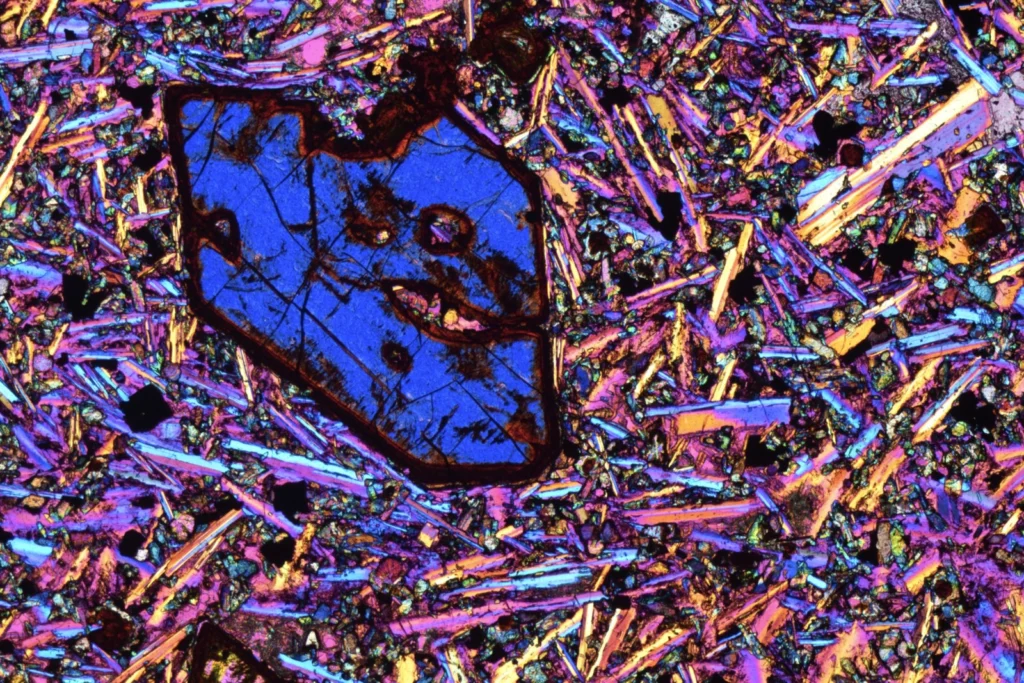
Imaggeo On Monday: Blue Olivine in an unusual basalt
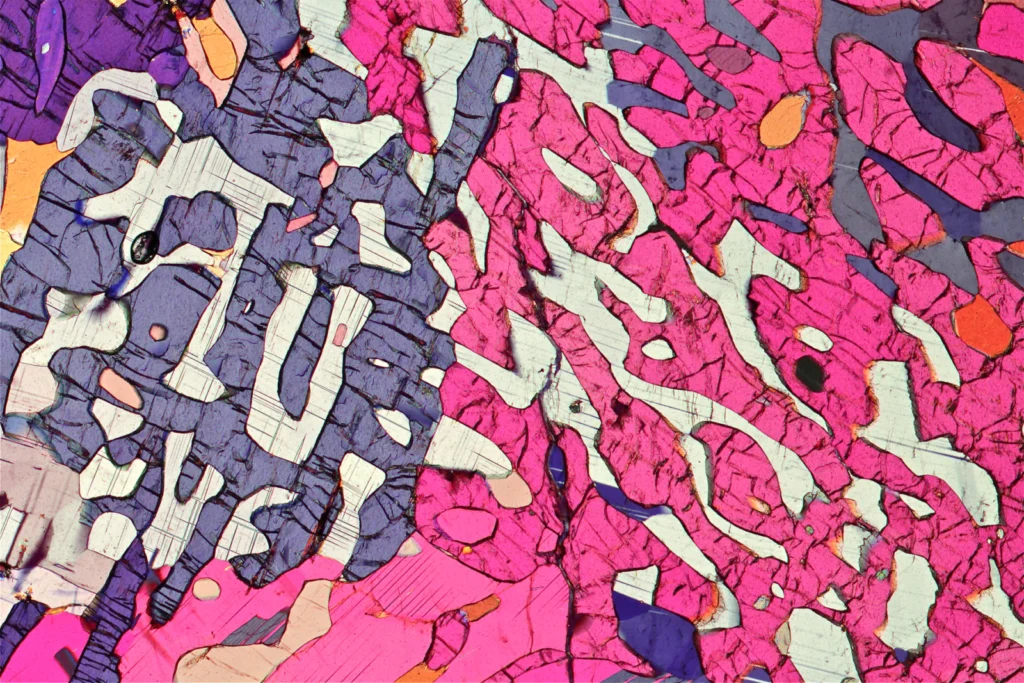
Blue Olivine set in a matrix of pyroxene, magnetite and plagioclase in a basalt collected by the photographer, Bernardo Cesare, on the shore of the Sea of Galilee, Israel. Polarized light photomicrograph. Crossed polarizers and red tint plate. Width c. 2.7 mm. Who may have been throwing this stone a couple millennia ago? Description …[Read More]
Colour deficient vision and the geosciences; just another way of looking at things
Like a reasonably large proportion of the population, I have colour vision deficiency (also known as colour deficient vision or colourblindness). I’m not going to get into the technical aspects of what this is like as they are covered well here and here, and you can do an Ishihara test, and other tests here, to …[Read More]
Imaggeo On Monday: Emoji from meteorites; impact spherule
This is a crossed polarized light photomicrograph of an impact spherule; a small mineralisation made when a meteorite hits the Earth and melts the rock at the point of impact, from Barberton Greenstone Belt, in South Africa. These spherules are the only remnants of Early Earth’s meteorite impact history, from between of 3.2 and 3.5 …[Read More]
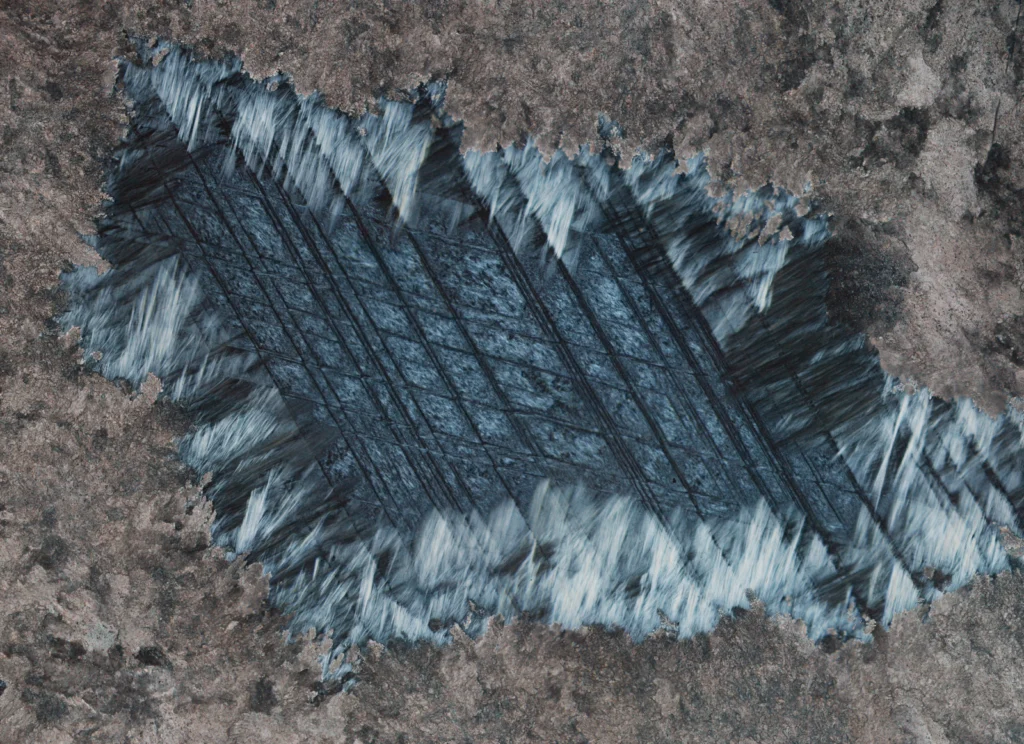
Imaggeo on Mondays: The Grid – A serpentine pseudomorph after carbonate
The structures in this photo might look three-dimensional, but they are completely flat. It is a photo of a polished thinsection of a rock, taken through a petrographic microscope under cross-polarized light. The width of the image is just 2 mm. The brownish mineral around the edges is carbonate, the white to grey mineral in …[Read More]
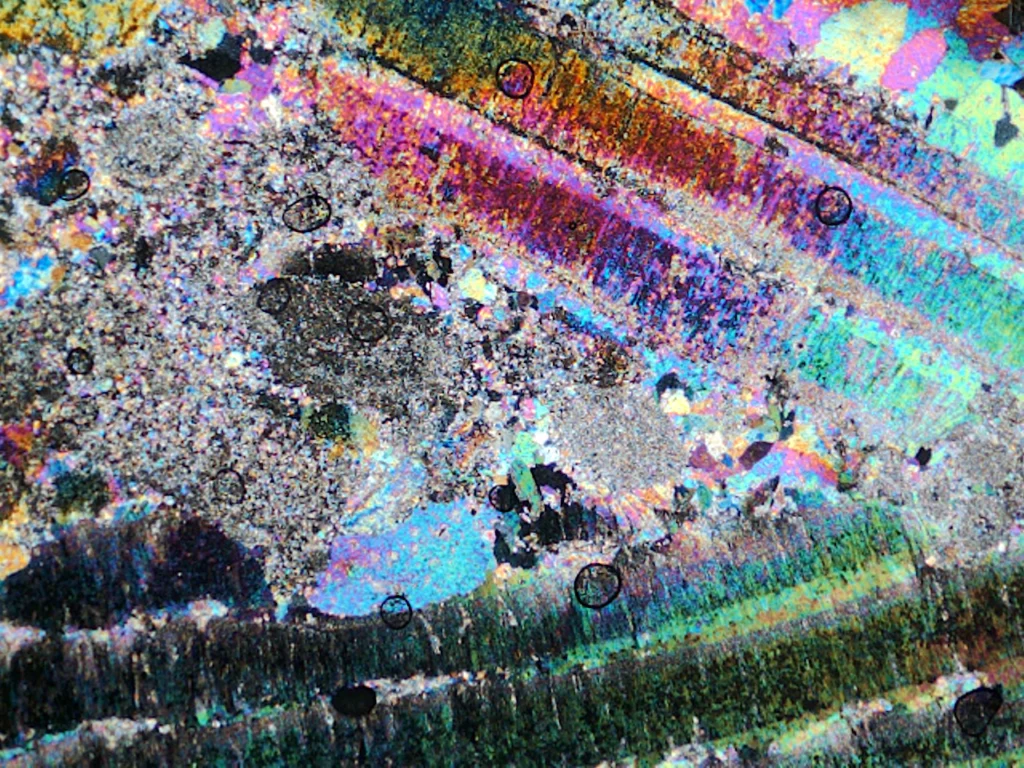
Imaggeo On Mondays: Psychedelic Foraminifera
This is a transmitted light microscope image of a thin section – a 50-micron thick sliver of rock. This sample was collected from Jebel Hafit, a mountain which straddles the United Arab Emirates and Oman border. Jebel Hafit is approximately 900 m high and is made up of Eocene to Miocene age carbonate rocks which …[Read More]