Did you know that yesterday, Sunday, January 4, 2026, marked 65 years since Erwin Schrödinger passed away? While the internet loves him for his cat in a box thought experiment, Geoscientists love him for something much more practical: the equation. Many of us have spent decades debating the health of a hypothetical feline in a box (I remember watching this episode of the Bing Bang Theory and think ...[Read More]
How can scientists see ice underground? Recent study reveals how!
When it comes to peering beneath the Earth’s surface, geophysicists have an arsenal of high-tech tools at their disposal. But what happens when you need to track something as elusive as underground ice forming and melting in real time? Enter borehole Ground-Penetrating Radar (GPR), the underground detective that helped Peter Jung and his colleagues image frozen subsurface volumes in an experimenta ...[Read More]
The theory of continental drift and how it changed the geosciences forever
German scientist Alfred Wegener spent most of his life defending a shocking theory: that all the world’s continents were once part of the same land mass before they drifted away. For many years after he passed, his theory continued to be shunned, ridiculed, and labelled as pseudoscience. And then, several decades later, geologists began to find more and more proof to support his continental drift ...[Read More]
Imaggeo on Mondays: Home Sweet Home
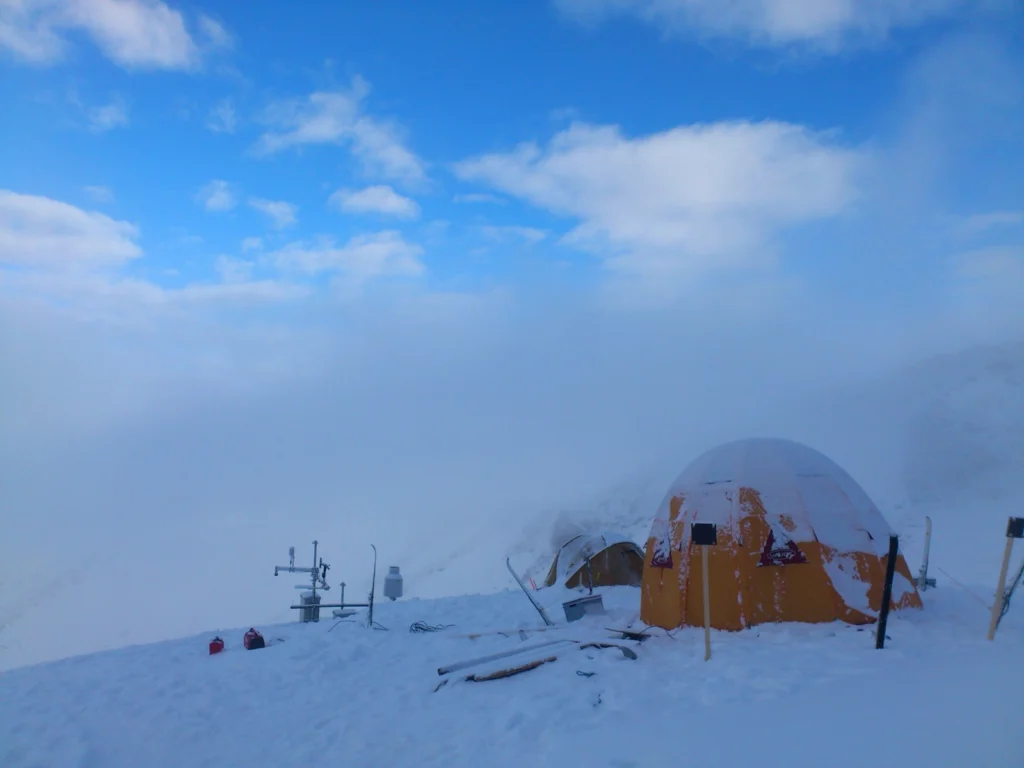
Can you imagine camping atop some of the highest mountains in Europe and waking up to a view of snowcapped peaks, deep valleys and endless blue skies? This paints an idyllic picture; field work definitely takes Earth scientists to some of the most beautiful corners of the planet. But, there often are two sides to one story. Kaspar Merz and André Nuber, researchers at ETH Zurich, who took today’s f ...[Read More]