GeoLog

Cryosphere

GeoTalk: Meet Marie Cavitte, policy officer for the Cryosphere Division, member of the EGU Climate Hazards Task Force, former Blue Book trainee
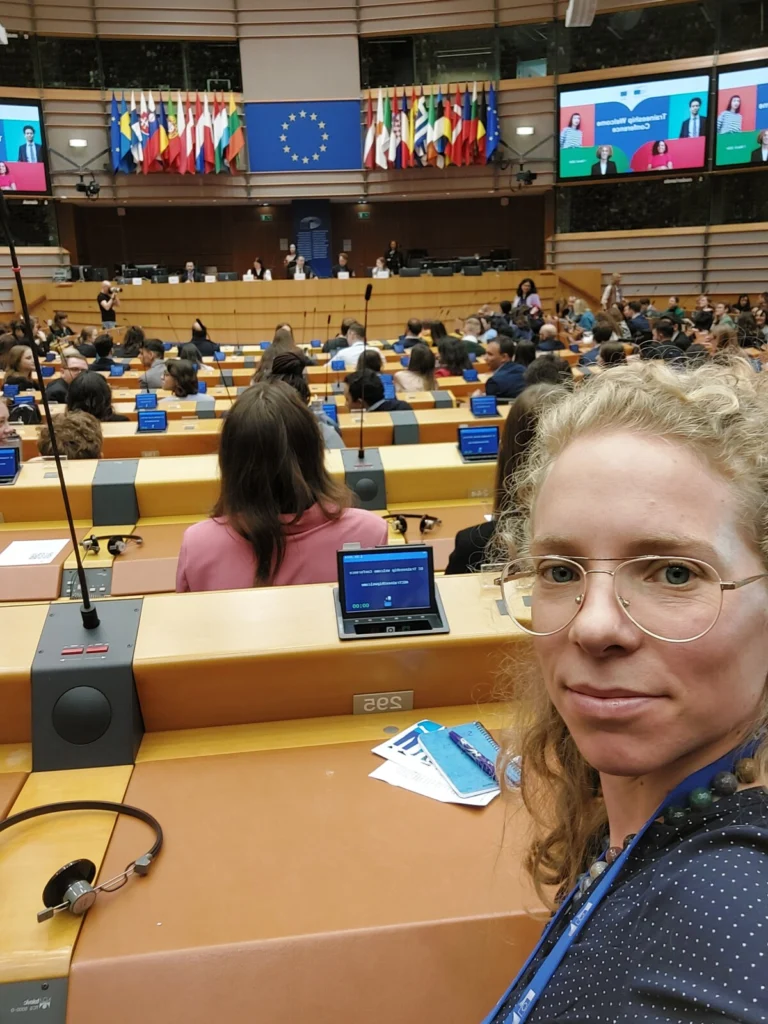
GeoTalk: Meet Marie Cavitte, policy officer for the Cryosphere Division, member of the EGU Climate Hazards Task Force, former Blue Book trainee

Welcome, Marie! Could you please introduce yourself to our readers? Hi, my name is Marie Cavitte. I’m a glaciologist and climatologist with a passion for the polar regions. I spent 10 years studying Antarctica. I started off during my Masters, then PhD, looking at the oldest ice on Earth, hunting for THE region of the …[Read More]

Meet Jenny Turton, incoming Union-level Representative!

Meet Jenny Turton, incoming Union-level Representative!

Hello Jenny. Thanks for agreeing to this interview! To break the ice, could you tell us a bit about yourself and your career? Hello! ‘Break the ice’ is a relevant saying for me, as I started being involved with EGU through the Cryosphere division. I am originally from Birmingham in the UK, and moved to …[Read More]

Artist in Residence – Kaleidoscopic ice

Artist in Residence – Kaleidoscopic ice

This one was a challenge to write, and a challenge to get my head around, but I was challenged to write it, so challenge accepted and challenge fulfilled! Kaleidoscope of ice Frozen water, mineral ice, a simple structure, orientation concise. A fabric is woven from many crystals intertwined, axes interlocked. C-axes, crystalline kaleidoscopes of greys, …[Read More]

Artist in Residence – Atmospheric rivers

Artist in Residence – Atmospheric rivers

With a name like “atmospheric rivers” this subject is an absolute gift to the poetically-inclined! Atmospheric rivers I float high in the sky, higher than the jagged, ice-hewn nunatak peaks I see below me as I peer over the side of my coracle made of clouds. Down there, beneath frayed candifloss, Greenland glows white in …[Read More]

Why is research in Antarctica so important?

Why is research in Antarctica so important?

On the 1st December 1959 the Antarctic Treaty was signed by 12 nations, setting aside nearly 10% of the Earth “forever to be used exclusively for peaceful purposes… in the interests of all mankind.” In the years that followed more and more countries signed the agreement, until today when the agreement has been signed by …[Read More]