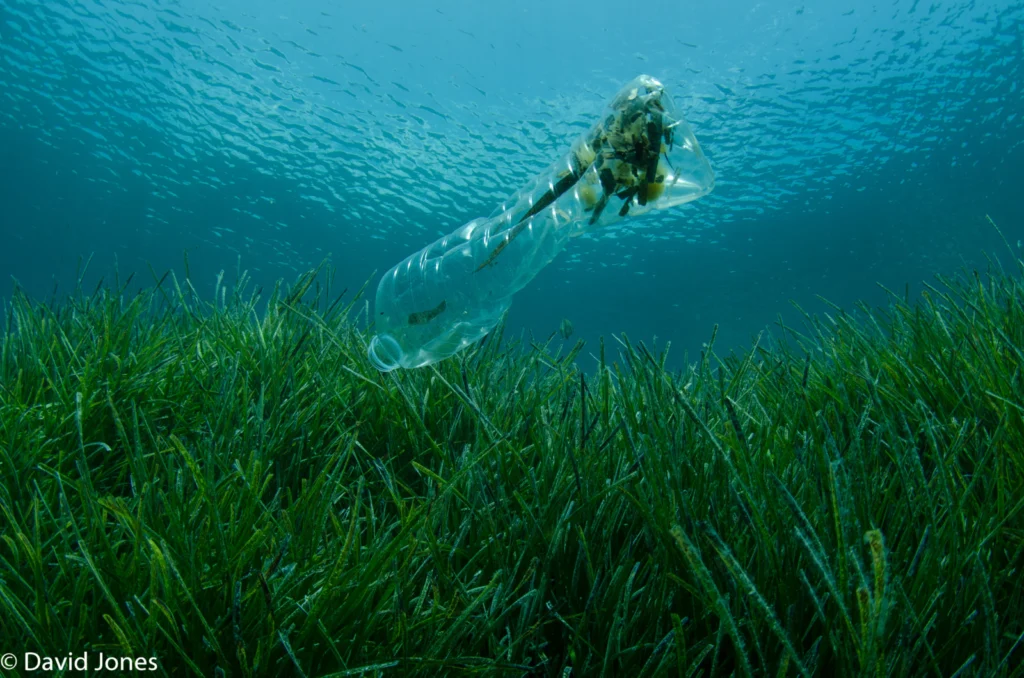
Marine plastic is just one of the many challenges facing the future of our oceans. For many years researchers have been attempting to understand this problem, but it can be surprising to learn how many things are still unknown, even in oceans we may think of as being familiar. The Mediterranean Sea is one such …[Read More]
GeoLog
Public Engagement Grant Winner – Crabby’s Reef
Ocean acidification could be described as climate change’s evil twin, not that it needs one. The world’s oceans are partly absorbing the carbon dioxide we are pumping into the planet’s atmosphere, which then reacts with seawater and forms carbonic acid. This process decreases the pH of the oceans, making them more acidic. If you …[Read More]
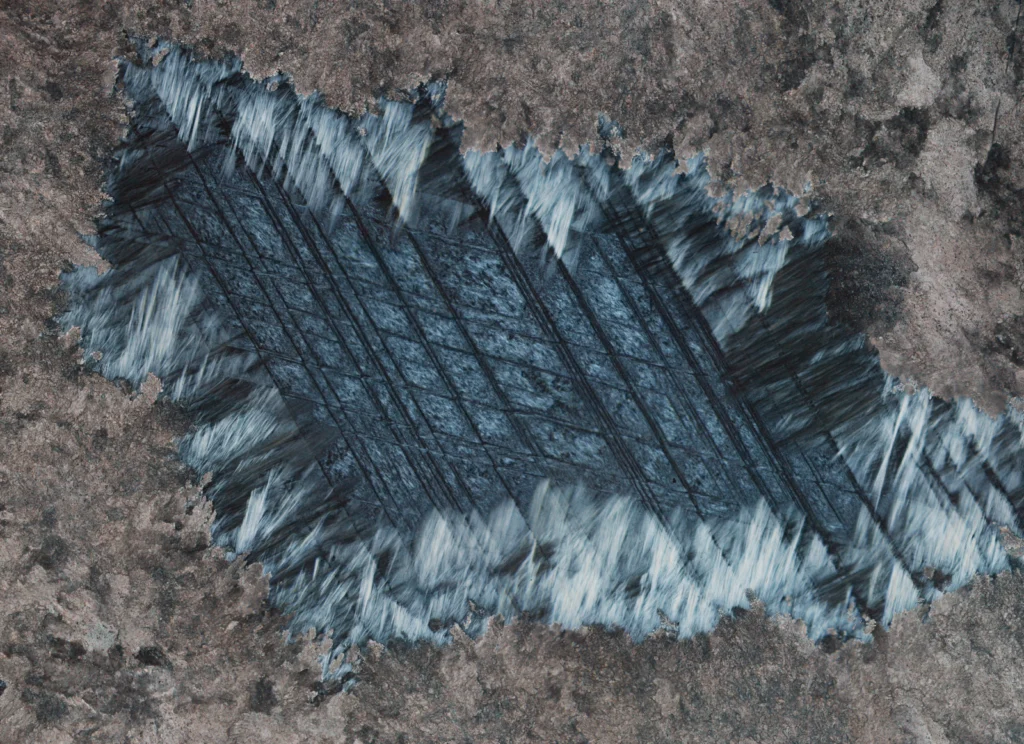
Imaggeo on Mondays: The Grid – A serpentine pseudomorph after carbonate
The structures in this photo might look three-dimensional, but they are completely flat. It is a photo of a polished thinsection of a rock, taken through a petrographic microscope under cross-polarized light. The width of the image is just 2 mm. The brownish mineral around the edges is carbonate, the white to grey mineral in …[Read More]
GeoTalk: Inaugural Katia and Maurice Krafft Award winner, Rhian Meara talks about the EGU award nominations.
Hi Rhian, thanks for talking with us today about the EGU’s Award nominations, please start by introducing yourself! I’m a physical geography and geology lecturer at Swansea University, with a particular focus on teaching through the medium of Welsh. I have been awarded the Katia and Maurice Krafft Award for my work on the British …[Read More]
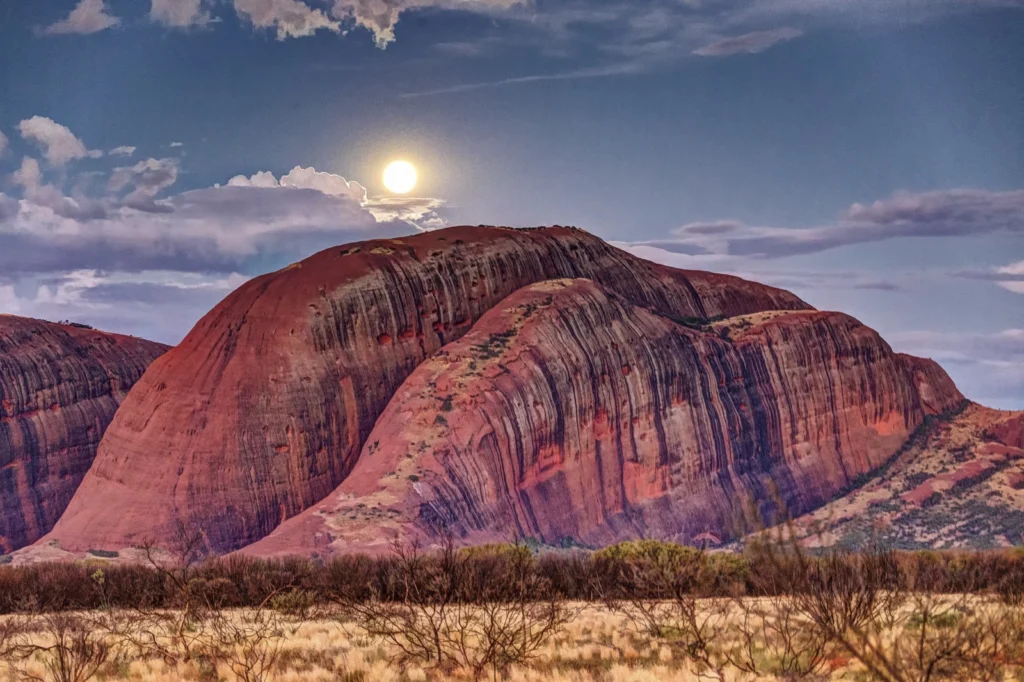
Imaggeo on Mondays: Moonrise at Kata Tjuta
This is a high-dynamic-range (HDR) photograph of moonrise over the hills of Kata Tjuta in central Australia. The HDR technique allows details to be seen in the deep shadows and well as in the brighter parts of the image. Kata Tjuta (formerly known as The Olgas) means ‘many heads’ in the Pitjantjatjara language, spoken by …[Read More]
#shareEGU20: commenting and what happens to your displays
Now that the week of #shareEGU20 is over, you may be wondering what happens to your display materials. As the materials have been uploaded to our new digital repository, EGUsphere, they will remain available online in their current format for the foreseeable future. Remember to check the copyright selected by the author if you want …[Read More]
Imaggeo on Mondays: Loowit – the lady of fire.
Today marks the 40th anniversary of the explosive eruption of volcano Mount St Helens, in western Washington State in the USA. So we wanted to feature this iconic volcano in this week, in our weekly feature, Imaggeo On Mondays. If you would like your imaggeo image featured in our blog, please contact the EGU Communications …[Read More]
Imaggeo on Mondays: Striking erosion in the Bardenas Reales
The Castil de Tierra has become the symbol of the Bardenas Reales region which is geographically located in the south-eastern margin of the Navarra Province in northern Spain. The Bardenas Reales is a semi-desert natural region situated in the middle-western sector of the Ebro depression. The geology is made up of Tertiary and Quaternary sediments. …[Read More]
#shareEGU20: Science through Lego photography!
During the week of #shareEGU20 we were very fortunate that both of our Artists in Residence, Stacy Phillips and Priyanka das Rajkakati agreed to participate virtually. We will feature some of Priyanka’s work in a later post, but in case you missed it during the week we wanted to share some of Stacy’s photography, to …[Read More]
Epic Journeys: New insights into wildlife and human migrations
Many wild animals make extraordinary long-distance journeys, whether by land, by air or even by sea. Ancestral, and even some modern, humans have likewise undertaken equally impressive odysseys across and between continents. In order to highlight these “epic journeys,” four different research projects were presented during an EGU press conference held on Wednesday. During the …[Read More]