
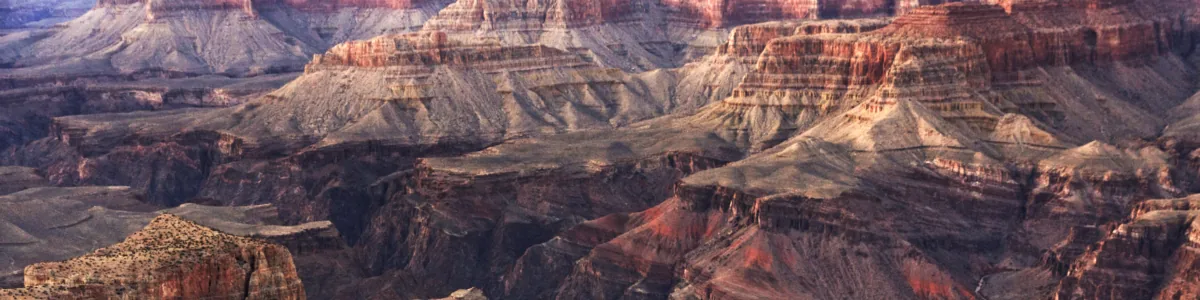
The Atacama desert in Chile is one of the driest regions in the world. Rain has never been recorded in parts of the desert and the average rainfall is typically one milimetre per year or less (for comparison, the average annual precipitation in Munich, where the EGU Executive Office is located, is over 960 millimetres). …[Read More]
GeoLog
Roundup of EGU Twitter discussion on L’Aquila
On Friday, the EGU hosted a prolific Twitter discussion on the “Consequences of the L’Aquila verdict on the dialogue between science and society” where dozens of participants shared and discussed their thoughts on the verdict, the scientific uncertainty surrounding earthquakes, and the outcomes of the decision for scientific research, communication, and education. You can now read …[Read More]
Roundup of EGU Twitter Journal Club 4
The EGU’s Twitter Journal Club had its fourth virtual meeting yesterday, this time focusing on a paper from the journal Atmospheric Environment. The work examines methods of assessing contributions of individual emissions to ozone and hence to climate change. Read a full transcript of the discussion on our Storify page!
Twitter Discussion: Consequences of the L’Aquila verdict on the dialogue between science and society
This Friday 26 October 2012 at 14:00 CEST we will host an online discussion about the consequences of the recent L’Aquila earthquake trial. Contribute by following the EGU’s Twitter account (@EuroGeosciences) and posting using the hashtag #eguAquila on your tweets. Please email the EGU’s Science Communications Fellow Edvard Glücksman if you have any further questions. …[Read More]
Job opportunity at the EGU Executive Office: Communications Assistant
The EGU is seeking to appoint a Communications Assistant to work with the EGU Media and Communications Officer in maintaining and further developing media-related and science information communications between the EGU and its membership, the working media, and the public at large. The position will be based at the EGU Executive Office in Munich, Germany. More information about this vacancy, including main …[Read More]
Imaggeo on Mondays: Arctic iceberg
The text of this week’s Imaggeo on Mondays comes from the photographer himself, Phillip Blaen (University of Birmingham), who took the picture while on fieldwork for his PhD studies. Phillip researches the impacts of climate change on the hydrology and ecology of Artic rivers. Last year, I was working in a small research village called …[Read More]
GIFT workshop: deadline approaching
Teachers and educators interested in taking part in the 2013 Geosciences Information for Teachers (GIFT) workshop should submit their symposium applications and requests for travel and accommodation support by 30 October 2012. As previously announced on the EGU website, the GIFT workshop will be taking place on April 8-10 2013 at the EGU General Assembly in Vienna, Austria. …[Read More]
EGU Twitter Journal Club: Article 4 — Ozone, nitrogen oxide emissions, and climate mitigation
It’s time for the fourth edition of the EGU’s Twitter Journal Club, our interactive online discussion about a timely scientific article. If you have not yet taken part in one of these discussions, read more about it in our introductory post and make sure to participate when we meet online next week! This time, we will …[Read More]
GeoTalk: Dr Aikaterini Radioti
GeoTalk, featuring short interviews with geoscientists about their research, continues this month with a Q&A with Dr Aikaterini Radioti (University of Liège) who tells us about her work on auroras in Jupiter and Saturn. If you’d like to suggest a scientist for an interview, please contact Bárbara Ferreira. First, could you introduce yourself and let us …[Read More]
Imaggeo on Mondays: Crater lake
At the border between the Pacific and Australian plates, crossed by the Pacific Ring of Fire, New Zealand is one of the most geologically active countries in the world. Volcanoes abound in this island-country, which contains the “world’s strongest concentration of youthful rhyolotic volcanoes“, and earthquakes are a frequent presence. Mount Ruapehu, a stratovolcano located …[Read More]