
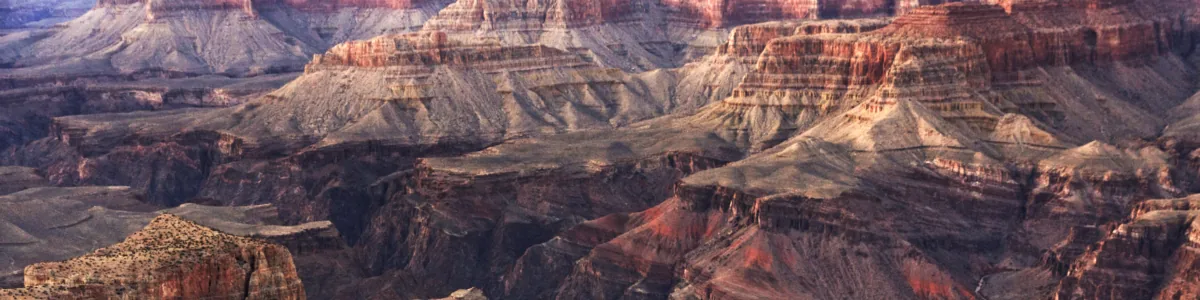
Today in GeoTalk, we’re talking to Simon Mudd, an exceptional and forward-thinking geomorphologist. First, could you introduce yourself and let us know a bit about what you are currently working on? I am lecturer in Landscape Dynamics at the University of Edinburgh, where I have been since 2007. Before that I was a post-doc at …[Read More]
GeoLog
Muon musings – how penetrating particles could let us peer beneath Mars’ surface
Muons are penetrating particles generated by cosmic rays. Muon radiography – or muography – is the large-scale equivalent of using x-rays to generate images. Except, instead of using x-rays to take a closer look at your broken arm, we can use showers of muons to take a look inside large geological structures – we’re talking …[Read More]
Imaggeo on Mondays: Aerosols over Hurricane Irene
This image – rather than our usual Imaggeo photo – is a simulation representation of Hurricane Irene, as it moved up the coast of the United States. The red-yellow areas in the image represent regions with high aerosol concentration that have been swept upwards in convective clouds and the blue areas are clean regions. The aerosols …[Read More]
GeoCinema Online: Making Measurements
Making measurements from the space and looking to the skies has hugely enhanced our understanding of the Earth, it’s surface processes and its movement in space. This short episode of GeoCinema Online takes you through some of the great technological developments in the Earth and planetary sciences! Looking Down a Well: A Brief History of …[Read More]
Geosciences Column: Tracing Toba
Large volcanic eruptions have a significant impact on the Earth’s climate as aerosols (including sulphur dioxide and water vapour), together with ash are released into the atmosphere and increase the amount of sunlight reflected back into space (the albedo). This increase in reflectance (or decrease in energy absorption) can cause widespread climatic cooling, known as …[Read More]
Imaggeo on Mondays: Vanishing Lakes and Dry Arctic Landscapes
The Koukdjuak Plains (south-west Baffin Island, Canada) form a vast postglacial marine plain that borders the Foxe Basin, an area that has been progressively uplifted due to glacio-isostatic rebound following the end of the last glaciation about 6600 years ago. The weight of glaciers on the Earth’s crust causes the ground to be depressed, which, …[Read More]
GeoCinema Online: Hazards
In this week’s GeoCinema Online, we’re taking you to regions of the world that have experienced large eruptions in both the recent and distant past. These films take you through what it’s like to live in an active volcanic area or fault zone, from dealing with disasters, to how scientists are working towards better methods …[Read More]
GeoTalk: Xavier Fettweis
Today in GeoTalk, we’re talking to Xavier Fettweis, an award-winning climate scientist from the University of Liège. He tells us about his work on the Greenland ice sheet. First, could you introduce yourself and let us know a bit about your current projects at the University of Liège? As a child, I was already interested …[Read More]
Imaggeo on Mondays: An Icy Illusion
This week’s Imaggeo on Mondays is brought to you by Robert Wills, a Caltech Ph.D. student studying how mountain ranges help set the global pattern of rainfall and how these rainfall patterns affect the erosional evolution of mountain ranges. Robert is also an avid photographer who particularly enjoys nature photography in the American Southwest. This …[Read More]
GeoCinema Online: Space & Planetary Science
If you were at our General Assembly, you probably spotted GeoCinema, or took a moment to catch your breath between sessions and relax with a geological film. But with all the science to be heard and discussions to join, watching the full programme would have been impossible. How do we get around this? By bringing …[Read More]