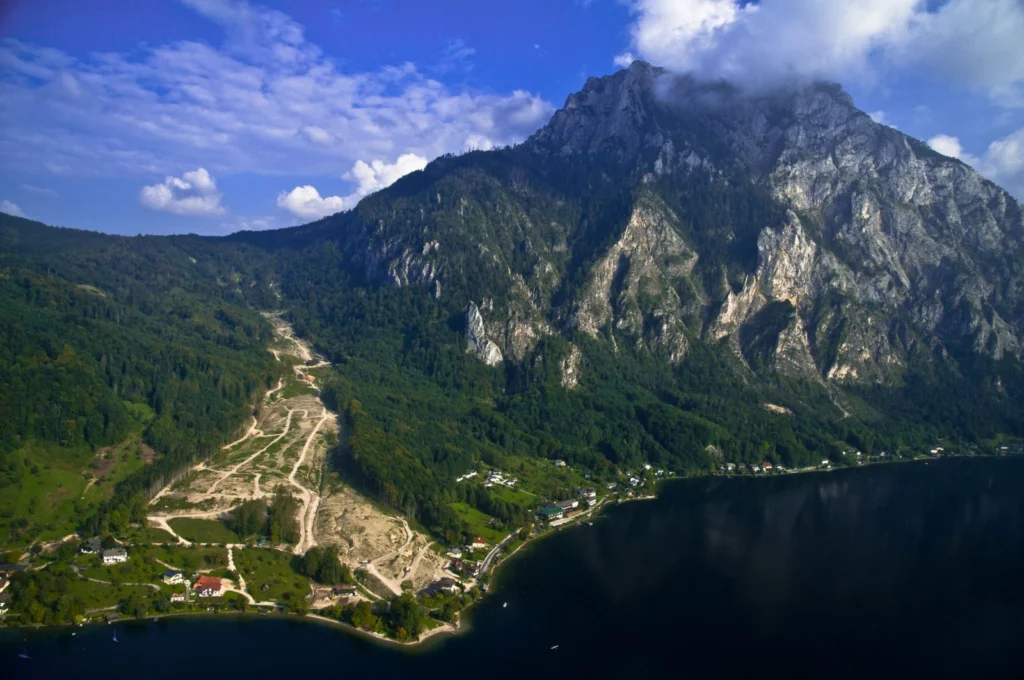
From the top of a small gully in the French Alps, a 472 kg block is launched into the chasm. Every detail of it’s trajectory down the slope is scrutinised by two cameras and a network of seismometers. They zealously record every bounce, scrape and tumble – precious data in the quest to better understand landslides. What makes landslides tick? In 2016, fatalities caused by landslides tipped 2 ...[Read More]
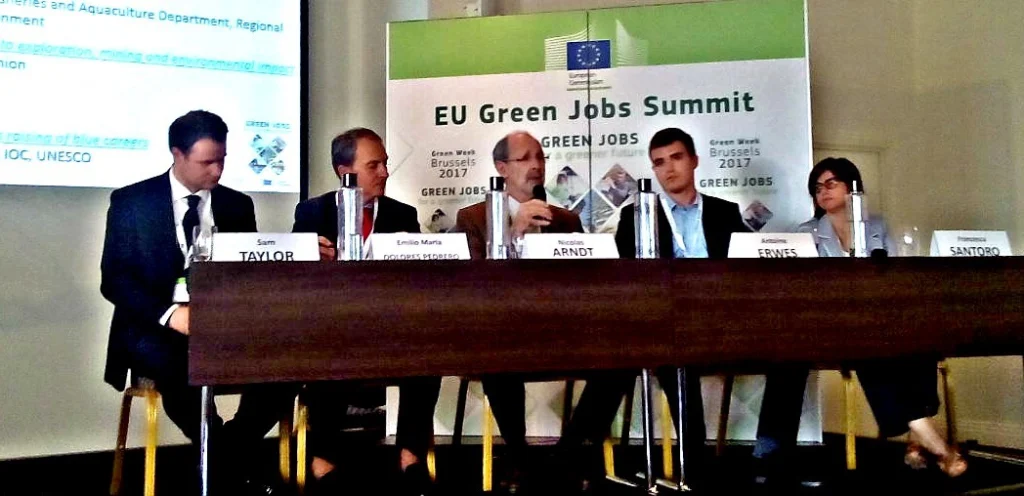
GeoPolicy: Conquering conferences – how scientists can make an impact at a policy driven event
Last week I was in Brussels for the EU Green Week, an annual event that discusses European environmental policy. The event was jam-packed with policy-makers, entrepreneurs, innovators and a handful of researchers. Green Week allowed me to network and gain a better understanding of upcoming political issues while enabling the EGU to show-off some specialist knowledge with Nick Arndt, the Chair of t ...[Read More]
May GeoRoundUp: the best of the Earth sciences from around the web
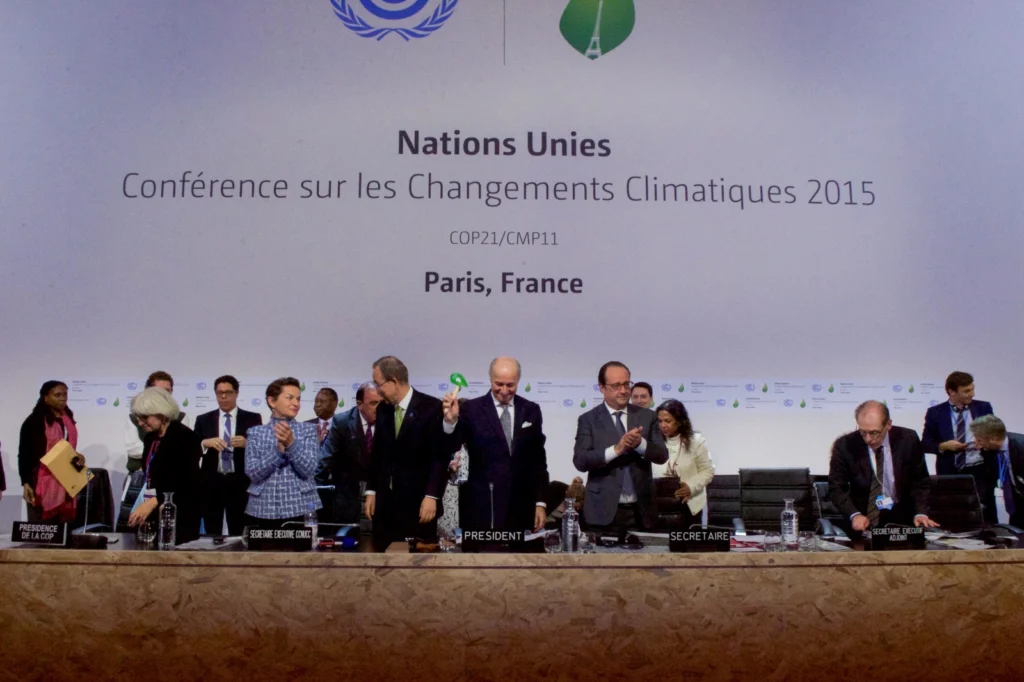
Drawing inspiration from popular stories on our social media channels, as well as unique and quirky research news, this monthly column aims to bring you the best of the Earth and planetary sciences from around the web. Major Story In the last couple of weeks of May, the news world was abuzz with the possibility of Donald Trump withdrawing from the Paris Agreement. Though the announcement actually ...[Read More]
Imaggeo on Mondays: Natural Bridges Monument, Utah, USA
Slowly but surely, the force of water has carved out a beautiful landscape in the sandstones of the Colorado Plateau. Suspended over canyons, naturally formed bridges and arches are the starts of Utah’s first national monument. The geological and modern history of the region is rich as Kimberly Galvez, a student of the University of Miami, describes below. This image shows an overview of a ...[Read More]
Artificial floods: Restoring the ecological integrity of rivers
“You can never step into the same river, for new waters are always flowing on to you.” —Heraclitus of Ephesus Rushing rivers, with their unremitting twists and turns and continuous renewal, are often used as a metaphor for life, but the analogy is just as appropriate for scientific research, I reflected as I walked along the banks of a sparkling, turquoise-blue river in the heart of th ...[Read More]
Imaggeo on Mondays: A lava layer cake
Brekkuselslækur, a small river, carves its way across Iceland’s ancient volcanic landscape. At Hengifoss, Iceland’s third-highest waterfall, it tumbles fiercely down thick, dark layers of lavas erupted from volcanoes some 18 to 2.58 million years ago, during a period of geological time known as the Tertiary. Eruptions are rarely continuous; during hiatuses in the extrusion of lavas, ash is able to ...[Read More]
Meet the EGU’s new Science Policy Officer
Hi there, my name is Chloe and I’m embarking on a new challenge. After participating in the EGU’s 2017 General Assembly 3 weeks ago as a warmup, I am starting in Munich as the EGU’s Policy Officer. While the title might sound a little ambiguous, it is an incredibly exciting position that allows me to facilitate the dissemination of the EGU members’ scientific knowledge to EU policy-makers while si ...[Read More]
A young person’s journey through the largest geoscience conference in Europe
Today we welcome, potentially one of the youngest participants of this year’s General Assembly, Pimnutcha Promduangsri: a 17-year-old science baccalaureate student at Auguste Renoir high school in Cagnes-sur-mer, France, as our guest blogger. With a deep interest in the environment and taking care of the environment, Pimnutcha was a keen participant at the conference and gave an oral presentation ...[Read More]
Imaggeo on Mondays: Sedimentary record of catastrophic floods in the Atacama desert
Despite being one of the driest regions on Earth, the Atacama desert is no stranger to catastrophic flood events. Today’s post highlights how the sands, clays and muds left behind once the flood waters recede can hold the key to understanding this natural hazard. During the severe rains that occurred between May 12 and 13, 2017 in the Atacama Region (Northern Chile) the usually dry Copiapó R ...[Read More]
Conversations on being a woman in Geoscience
While at this year’s General Assembly in Vienna, Keri McNamara, one of the EGU’s press assistants, spoke to a number of female geoscientists (at different career stages), to get their perspective on what being a female in geosciences is like. At this year’s EGU General Assembly I decided to construct a blog out of conversations I had with several women in geoscience, to learn about the ...[Read More]