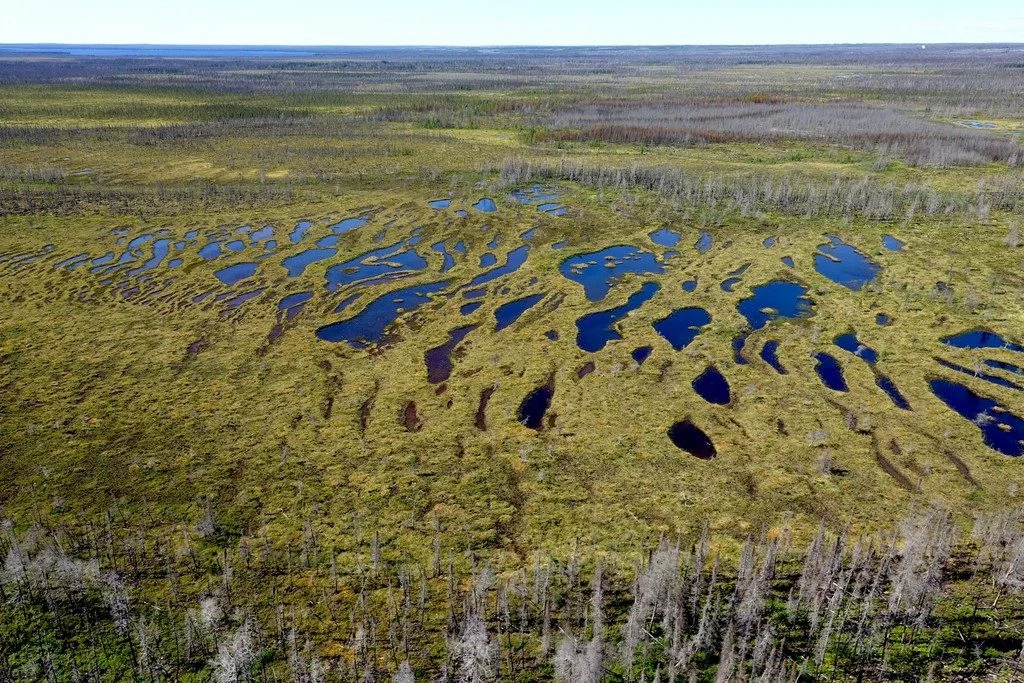
This magnificent pattern is the result of hundreds and hundreds of years of evolution. In this structured minerotrophic peatland in Northern Quebec (Canada), which can also be called a string fen or aapa mire, the green peat ridges (or strings) alternate with water-filled hollows (or flarks). Often flarks are replaced by ponds, which vary in number and size. This pattern of strings and flarks (or ...[Read More]
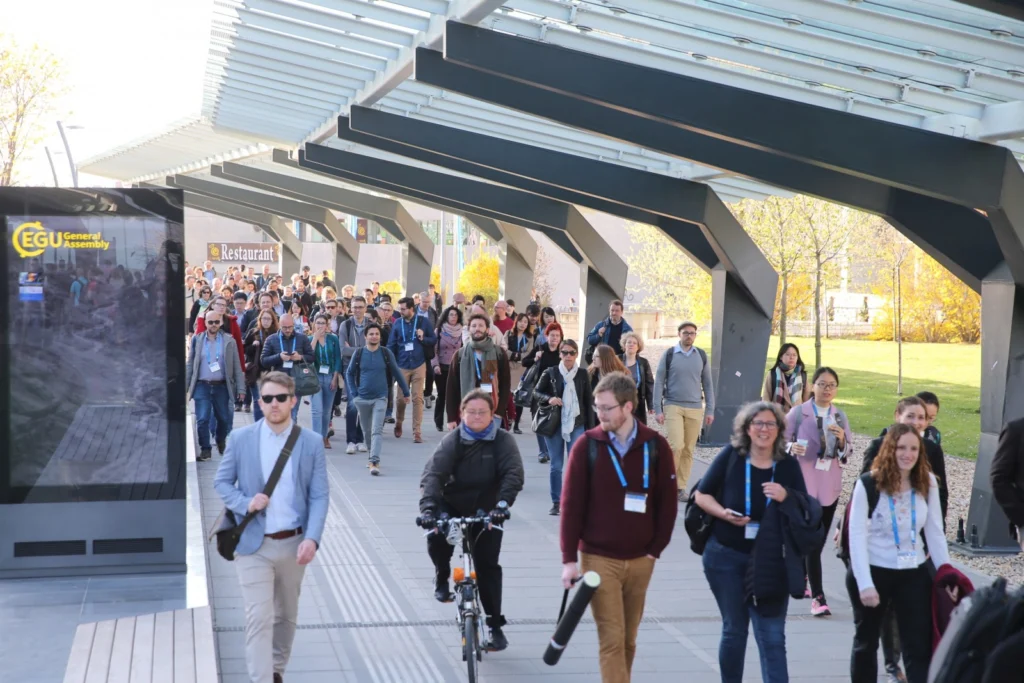
EGU 2019: Getting to Vienna, getting to sleep and getting to know the city
With the conference only a few weeks away here is a brief, and by no means comprehensive, introduction of how to get to Vienna and what to do when you’re there! Getting here Vienna’s International Airport is served by many of the major European airlines. If you would like to consider reaching Vienna by train or bus you’ll find more information on the General Assembly website. Since 2018, the EGU g ...[Read More]
GeoPolicy: The importance of communicating your research with the public
Science and innovation are a central priority for the European Union with the current research framework, Horizon 2020, allocating almost €80 billion to research and innovation over seven years, until 2021. It appears that policymakers are currently happy with this investment as they are looking to increase research and innovation spending to at least €100 billion in the next research funding fram ...[Read More]
Imaggeo on Mondays: Air samples from afar
I’ve taken many photos on fieldwork, everywhere from Malaysia to Antarctica but this particular photo was taken in my ‘home’ lab at the University of East Anglia (UEA) in Norwich, UK. Atmospheric scientists collect air samples canisters such as these from around the world: from high altitude research aircraft (such as the Geophysica), long-term measurement time series (such as Ca ...[Read More]
Geosciences Column: Scientists pinpoint where seawater could be leaking into Antarctic ice shelves
Over the last few decades, Antarctic ice shelves have been disintegrating at a rapid rate, likely due to warming atmospheric and ocean temperatures, according to scientists. New research reveals that one type of threat to ice shelf stability might be more widespread that previously thought. A study recently published in EGU’s open access journal The Cryosphere identified several regions in Antarct ...[Read More]
EGU 2019 General Assembly programme is now online!
The EGU General Assembly 2019 programme is available here. Take a look and – if you haven’t already – register for the conference by 28 February to make the early registration rates! This year’s scientific programme of the General Assemby includes Union-wide Sessions, such as the medal lectures, great debates, short courses, education and outreach sessions, as well as townhall and splinter meeting ...[Read More]
Imaggeo on Mondays: The changing landscape of Patagonia
Pictured here is a snapshot of an environment in transition. Today’s featured photo was taken at the foot of Monte Fitz Roy, a jagged Patagonia mountain located in Los Glaciares National Park on the border between Argentina and Chile. The Patagonia region in South America is the second biggest source of glaciers in the southern hemisphere, behind Antarctica, but the region is losing ice at a rapid ...[Read More]
Last chance to enter the EGU Photo Competition 2019!
If you are pre-registered for the 2019 General Assembly (Vienna, 7-12 April), you can take part in our annual photo competition! Winners receive a free registration to next year’s General Assembly! But hurry, there are only a few days left to enter! Every year we hold a photo competition and exhibit in association with our open access image repository, Imaggeo, and our annual General Assembly. The ...[Read More]
EGU’s response to potential changes to the European Research Council
A major re-organisation of the European Commission’s Research and Innovation Directorate General is scheduled to take place this year with a goal to revise staff reporting procedures and increased coordination between the agencies. While improved coordination may be of benefit in some areas, concerns have been raised about the potential impact these changes may have on the European Research Counci ...[Read More]
Imaggeo on Mondays: A slice of fossil life
I am a petrographer at the University of Padova, Italy, studying the metamorphic rocks that form the deep Earth’s crust beneath our feet, and what happens when they get so hot to start to melt. I’ve spent (enjoyed I should say) more than 30 years looking at rocks with an optical microscope. This simple, cheap tool, and more importantly, its skilled use, remain key ingredients for good research in ...[Read More]