GeoLog

Soil Sciences

GeoTalk: Meet Soil Microbiologist and Early Career Scientist Biogeosceinces Representative, Elsa Abs!

Elsa Abs
Hello Elsa & welcome to GeoTalk! Before we dig deeper, could you introduce yourself to our readers? Hi! I’m Elsa (they/them). I’m a microbiologist/biogeochemist, and I just started a permanent position at the French National Centre for Scientific Research (CNRS) one month ago. I work with one PhD student, Elisa Richard, and two postdocs, Mathilde Bourreau and Thomas Cortier, on my ERC Starting ...[Read More]

Why we need to put plants back in the soil carbon picture

Why we need to put plants back in the soil carbon picture

Happy International Soil Day (5 December)! Today, we’re celebrating the incredible capacity of soil organic carbon (SOC) to fight climate change. But hold the celebratory cake! A paper in the journal SOIL by Raza et al. (2025) has exposed an unexpected scientific blind spot, and it’s a bit surprising! The paper, titled “Missing the input: the underrepresentation of plant physiology in ...[Read More]

The living skin of our planet: Why a world soil health index is our next great global scorecard

The living skin of our planet: Why a world soil health index is our next great global scorecard

Next time you’re outdoors, in a park or anywhere where there is no pavement, look down at the patch of earth beneath your feet. To many people, it’s just mud, dirt, or maybe soil, something passive that things grow in. But to a soil scientist, that handful of soil represents a dynamic ecosystem that supports an incredible 95% of all the food we eat, filters every drop of our drinking water, ...[Read More]

Mangroves: Our coastal guardians of soil, biodiversity, and climate

Mangroves: Our coastal guardians of soil, biodiversity, and climate

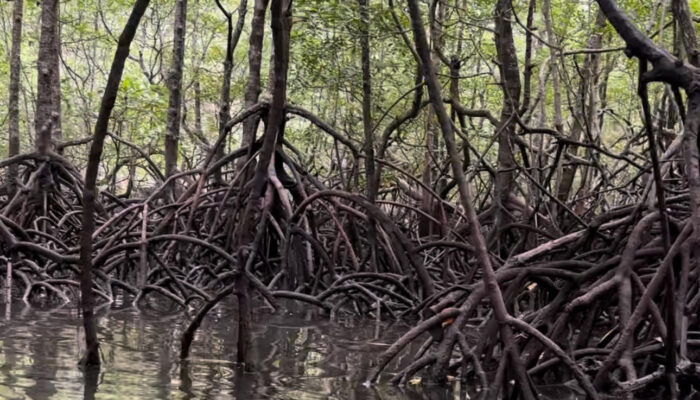
Mangrove forests, rare tidal woodlands at the interface of land and sea, are extraordinary ecosystems that bridge freshwater and marine environments. These forests support rich biodiversity and invaluable nursery habitat for fish and crustaceans, while also providing food, shelter, and cultural resources to millions of coastal communities. Think of mangroves as sea walls: their dense, prop-root ne ...[Read More]