GeoLog

Policy

GeoPolicy: Living in a post-factual society and why it’s more important than ever for scientists to engage

GeoPolicy: Living in a post-factual society and why it’s more important than ever for scientists to engage

Last week, the EGU Science Policy Fellow packed her bags and flew to Brussels. Now this wasn’t to sample some of the fine beers Belgium has to offer, but to attend the 2nd International Network on Government Science Advice (INGSA) Conference. This conference, co-organised by INGSA and the European Commission, aimed to discuss the major principles needed for effective science advice to governments, ...[Read More]

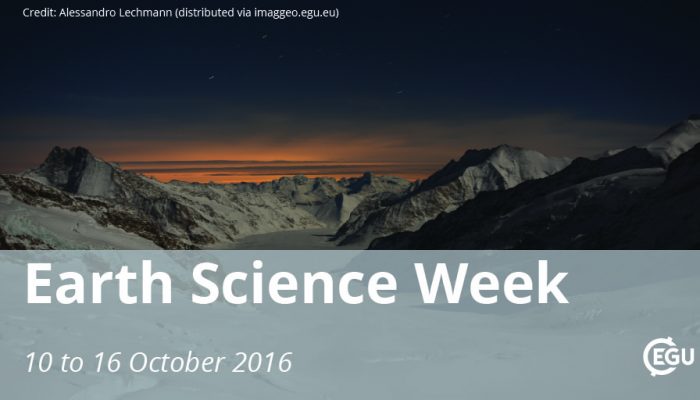
Celebrating Earth Science Week!

Celebrating Earth Science Week!

For those not so familiar with the Earth sciences, geosciences and all its subdisciplines might be shrouded in mystery:  boring, unfathomable, out of reach and with little relevance to everyday life. Nothing could be further from the truth! Earth Science Week, an international annual celebration founded by the American Geosciences Institute in 1998, aims to change the public’s perception of the ge ...[Read More]

GeoPolicy: Science and the policy cycle

One way to improve the impact of your scientific research is to engage with policy. Doing so can create new opportunities for yourself and your research. The main challenges are knowing when and how to effectively communicate scientific results to policy. If the wrong timing or communication method is chosen then results are less likely to be incorporated into the policy process. This month’s GeoP ...[Read More]

GeoPolicy: How do Members of European Parliament learn about science?

GeoPolicy: How do Members of European Parliament learn about science?

Only ~5% of Members of European Parliament, or MEPs, have a background in the physical sciences1, yet many political challenges require an understanding of the science surrounding these issues. Issues such as locating and extracting mineral resources, understanding climate change impacts, and developing new low-carbon technology. The European Commission (EC) and the European Parliament (EP) have s ...[Read More]