GeoLog

Planetary and Solar System Sciences

Imaggeo On Monday: Cassiopeia with Milky Way
Imaggeo On Monday: Cassiopeia with Milky Way
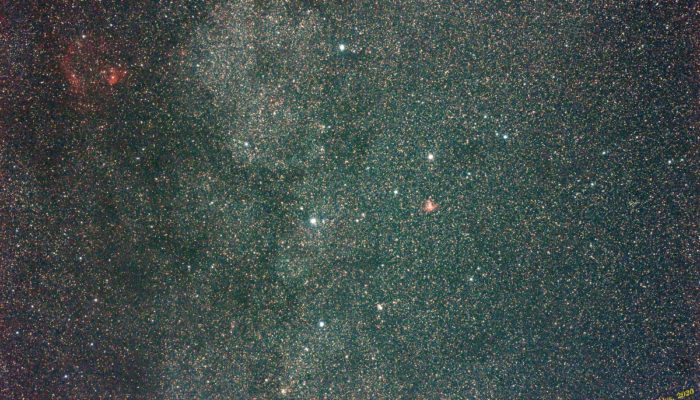
Cassiopeia with Milky Way in the background on September 9th, 2020. The image was taken in north-eastern state of Germany (Mecklenburg – Lower Pomerania) near the Town of Jarmen. The region has little light pollution and the evening had a clear sky (sky quality measure was 21.15). The image was taken at about 22:00 hrs local time. An EOS 1100D with a 50/1.6 lens was used. The exposure time w ...[Read More]

Imaggeo on Mondays: Magnetic interaction

Imaggeo on Mondays: Magnetic interaction

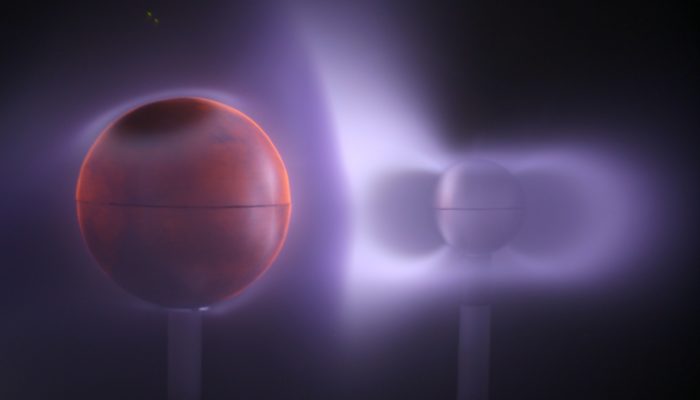
Space weather is a ubiquitous, but little known, natural hazard. Though not as tangible as a volcanic eruption, storm or tsunami wave, space weather has the potenital to cause huge economic losses across the globe. In Europe alone, the interaction of solar wind with our planet’s magnetosphere, ionosphere and thermosphere, could lead to disrutions to space-based telecommunications, broadcasti ...[Read More]

GeoTalk: Meet Joshua Dreyer, planetary scientist and the Planetary and Solar System Sciences Division’s Early Career Scientist Representative!

GeoTalk: Meet Joshua Dreyer, planetary scientist and the Planetary and Solar System Sciences Division’s Early Career Scientist Representative!

Hello Josh, thankyou for talking with us! Before we take off, could you tell us a little about yourself and your research? Hi Simon, thanks for inviting me! I’m a PhD student at the Swedish Institute of Space Physics (IRF) and Uppsala University, just started my third year. My research is focused on Saturn’s ionosphere (the region of the upper atmosphere with a significant amount of ch ...[Read More]

Imaggeo On Monday: International Space Station transiting the Sun

Imaggeo On Monday: International Space Station transiting the Sun

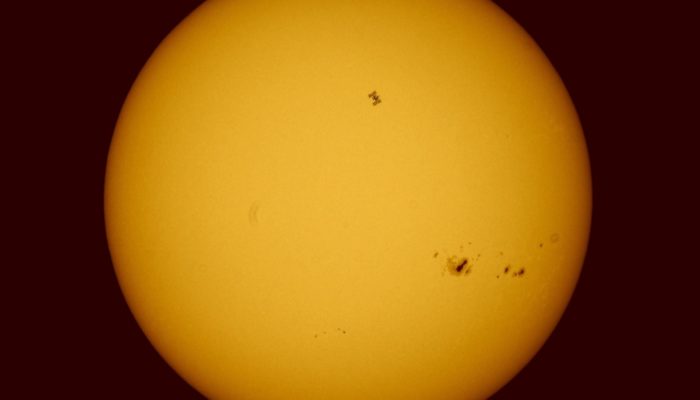
The International Space Station, a human-made, life-supporting habitat, and a most complex and unique scientific laboratory, orbits the Earth in only 90 minutes – that is 16 times a day! Even so, only occasionally, we earthlings have the privilege of seeing it’s dark outline against the much brighter surfaces of the Sun or Moon. Timing is of crucial importance if you want to see this, ...[Read More]

Imaggeo On Monday: Aurora Australis with Southern Cross and Pointer stars

Imaggeo On Monday: Aurora Australis with Southern Cross and Pointer stars

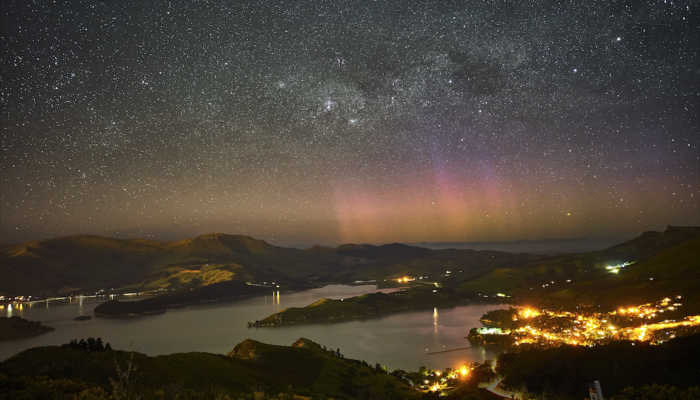
This view from the Port Hills of Christchurch in New Zealand glances South over Governors Bay into the distance, where an Aurora Australis is visible near the horizon. Almost in the center of the starry sky the Southern Cross with its 2 Pointer stars are showing prominently.   Description by Ulrich Schreiber, after the description on imaggeo.egu.eu.   Imaggeo is the EGU’s online open acc ...[Read More]

A Mission to Mars

A Mission to Mars

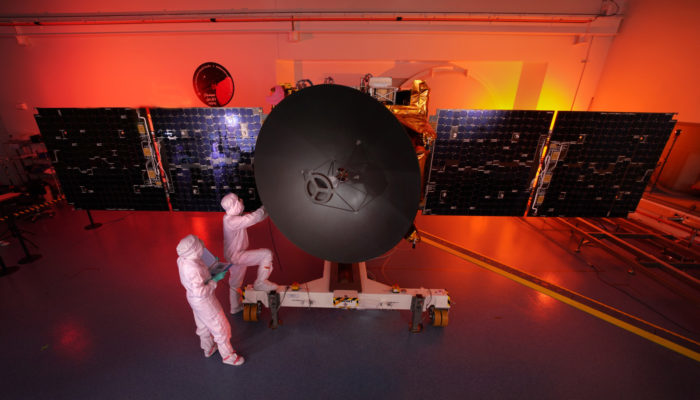
February 2021 is an important month for Martian missions, with three arriving at our planetary neighbour within 10 days. Many people have been following the USA’s NASA Perseverance mission, as they landed the new Perseverance rover, with it’s specially designed Ingenuity helicopter in the Jezero Crater in the last 24 hours. Earlier this month the Chinese mission Tianwen-1 also entered ...[Read More]

Imaggeo On Monday: Increasing Moon – seen from Hamburg

Imaggeo On Monday: Increasing Moon – seen from Hamburg

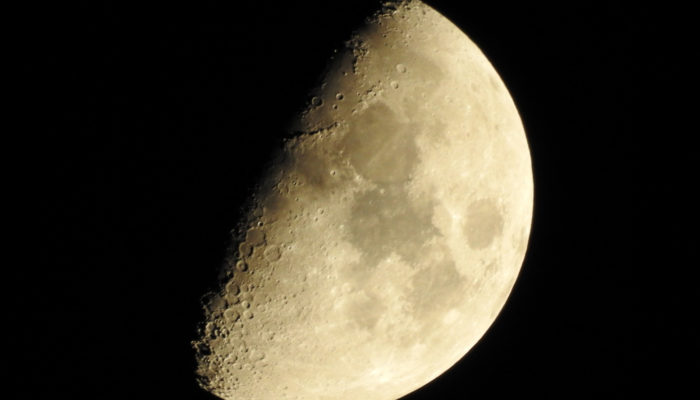
The image shows the increasing moon on March 16, 2016, seven days before the full moon. 53.3% of the lunar front are already illuminated. The moon does not glow on its own, but its surface reflects the sunlight. The sun always illuminates a complete half of the moon, which, in its orbit around the earth, always turns its face (which we see at full moon) toward the earth.   The reason for the ...[Read More]

Imaggeo On Monday: Transit of Venus over the Sun

Imaggeo On Monday: Transit of Venus over the Sun

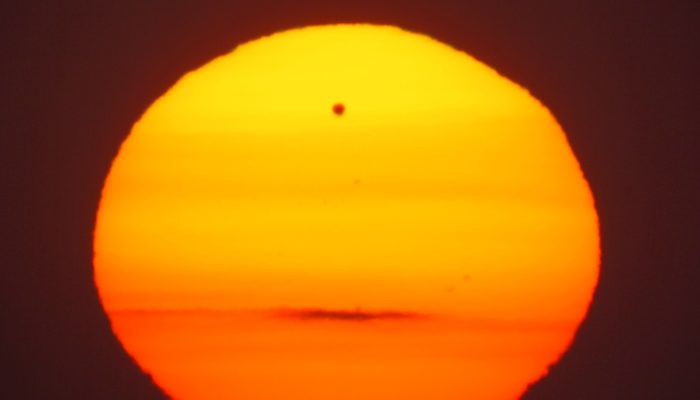
The object of this photo is the transit of planet Venus in front of the Sun which took place on June 6th 2012 and was the last event of this kind until 2117! This is a very rare event with respect to a human life span and the transit always happens in pairs, 8 years apart, with a repeatability of more than two centuries. The picture was captured on the shore of the Black Sea, in Vama Veche, Romani ...[Read More]

Winners of the EGU Best Blog Posts of 2020 Competition

Winners of the EGU Best Blog Posts of 2020 Competition

2020 was a brilliant year for our blogging network here at EGU. Across the EGU’s official blog, GeoLog, as well as the network and division blogs there were so many interesting, educational and just downright entertaining posts this year it was hard to get the blog editors to choose their favourites! Nevertheless at the beginning of January, to celebrate the excellent display of science writing ac ...[Read More]

Imaggeo On Monday: Space plasma in a jar

Imaggeo On Monday: Space plasma in a jar

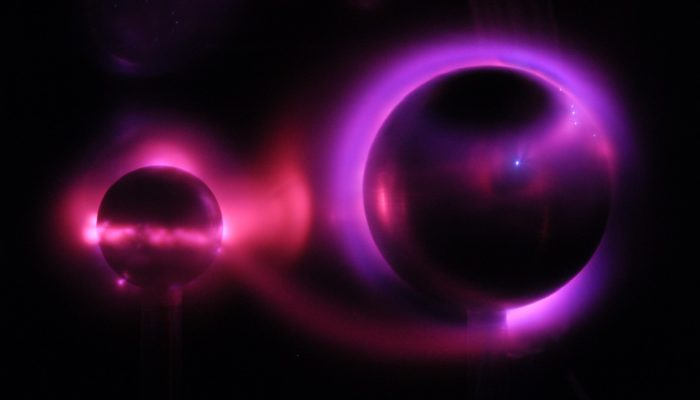
Laboratory visualisation of solar wind interaction with Earth’s magnetic field. The Van Allen radiation belt, Earth’s magnetosphere, “bow shock” and a solar coronal hole can all be seen, and are emphasized with the ‘Planeterrella experiment‘, a vacuum chamber in the shape of a bell jar with the ‘Sun’ on the left (in the form of a large metallic sphere) and the ‘Earth& ...[Read More]