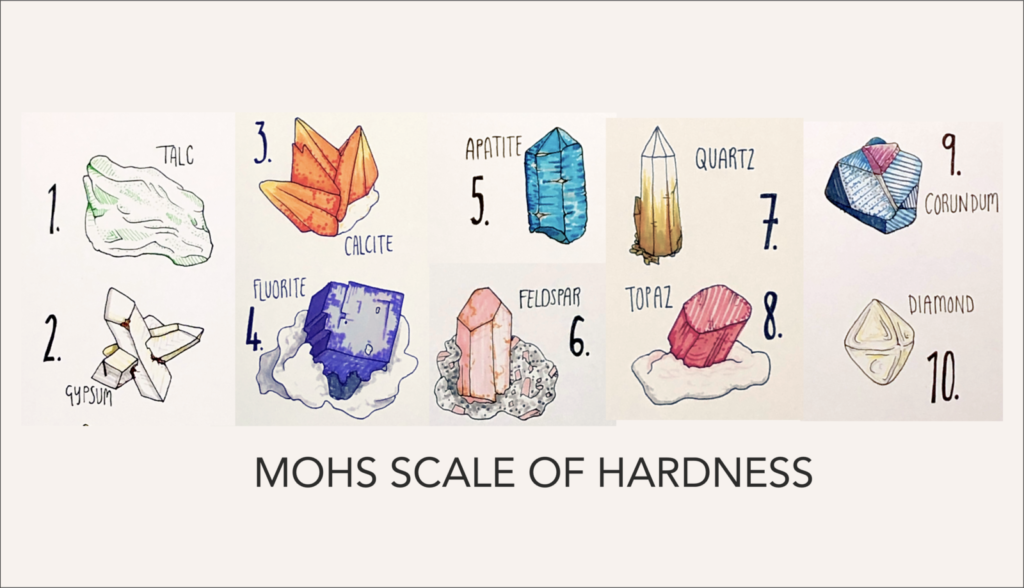
One of the most famous identification methods in the study of mineralogy is the Mohs Scale of Hardness. A comparative scale, based on the hardness of each mineral, it is a way geoscientists can compare minerals to each other and organise them based upon an easily testable physical characteristic. Each level of hardness has a …[Read More]
Outreach
GeoTalk: Nadine Gabriel, creator of #AreYouSiO2? and Assistant Curator of Fossil Mammals.
Hi Nadine, thanks for speaking with us today, can you tell us a little bit about your background and how you got to where you are now? Thank you for inviting me! I’m a geologist and the Assistant Curator of Fossil Mammals at the Natural History Museum, London. I studied MSci Geology at University College …[Read More]
Geotalk: Olga Vindušková, the Soil System Sciences Division’s co-blog and social media co-ordinator!
Hello Olga, thanks for speaking with us today, can you tell us a little about your background and how you got to where you are now? Thank you for inviting me for what might be my first interview! My background is in environmental science and I chose to study soils because of how useful they …[Read More]
The benefits of online writing retreats in these weird times
The world shut down due to COVID-19, but PhDs did not. During these unfamiliar times, most PhD students have found themselves working from home trying more than ever to write as much as possible. Over the past few of months, I have led several online writing retreats in collaboration with doctoral research schools and universities …[Read More]
GeoPolicy: How to use webinars to share your science with a wider audience!
Since the explosive spread of COVID19, the way most academics work has changed and it can sometimes feel like we’re all living on conference calls, Skype and online events. While this may not suit everyone’s preferred working style, it’s difficult to deny that people are now more willing to engage online and it’s worth thinking …[Read More]
Public Engagement Grant Winner – Crabby’s Reef
Ocean acidification could be described as climate change’s evil twin, not that it needs one. The world’s oceans are partly absorbing the carbon dioxide we are pumping into the planet’s atmosphere, which then reacts with seawater and forms carbonic acid. This process decreases the pH of the oceans, making them more acidic. If you …[Read More]
GeoTalk: Inaugural Katia and Maurice Krafft Award winner, Rhian Meara talks about the EGU award nominations.
Hi Rhian, thanks for talking with us today about the EGU’s Award nominations, please start by introducing yourself! I’m a physical geography and geology lecturer at Swansea University, with a particular focus on teaching through the medium of Welsh. I have been awarded the Katia and Maurice Krafft Award for my work on the British …[Read More]
#shareEGU20: Science through Lego photography!
During the week of #shareEGU20 we were very fortunate that both of our Artists in Residence, Stacy Phillips and Priyanka das Rajkakati agreed to participate virtually. We will feature some of Priyanka’s work in a later post, but in case you missed it during the week we wanted to share some of Stacy’s photography, to …[Read More]
#shareEGU20: #shareEGUartKIDS Hall of Fame – Volcanic Paint 2020!
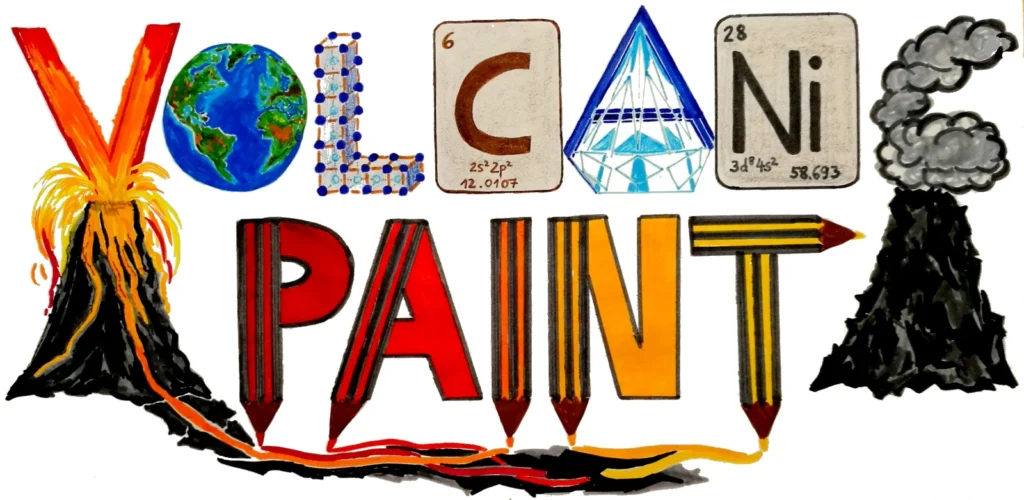
The EGU Kids Art activity normally happens in person in the creche at the conference centre during the general assembly (GA). We decided at the GA last year that the theme would be Volcanic Paint! Maike and I decided to move the activity online to hopefully bring a smile to a few of your faces …[Read More]
GEOtrivial Pursuit: a new way to teach, learn and share the Earth Sciences
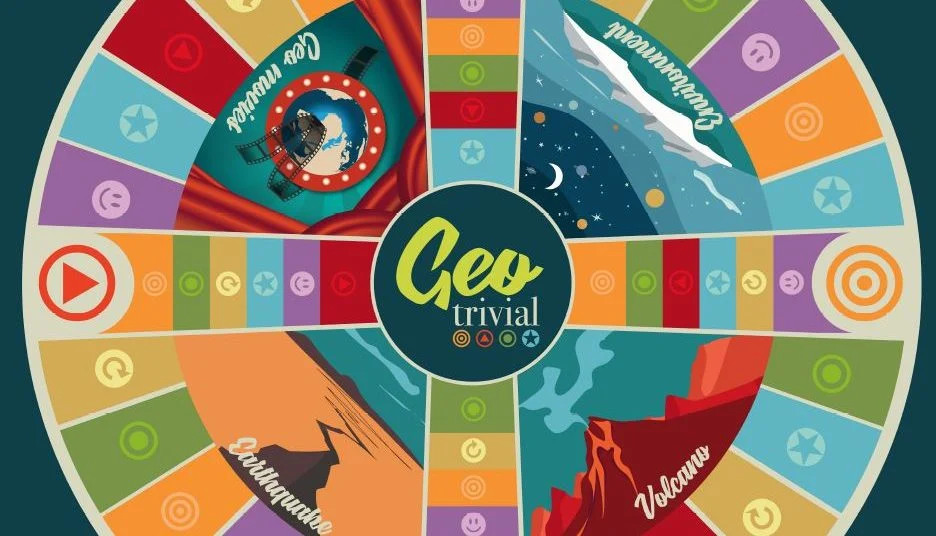
On Wednesday 6 May (6-8pm CEST), the now famous Geoscience Games Night is going to take place on YouTube as a live stream! So, this is the perfect moment to introduce a new scientific game which for many of you, is going to remind you of a game created in the late 70s in Quebec. …[Read More]