As we immerse ourselves in our 20th Viennese General Assembly EGU26, the volume of climate models and atmospheric projections can be quite overwhelming, to say the least. While our EGU geoscientific community is excellent at observing the planet, a persistent challenge remains in communicating that massive planetary data into tools that a local council, a commercial farmer, or an urban planner can ...[Read More]
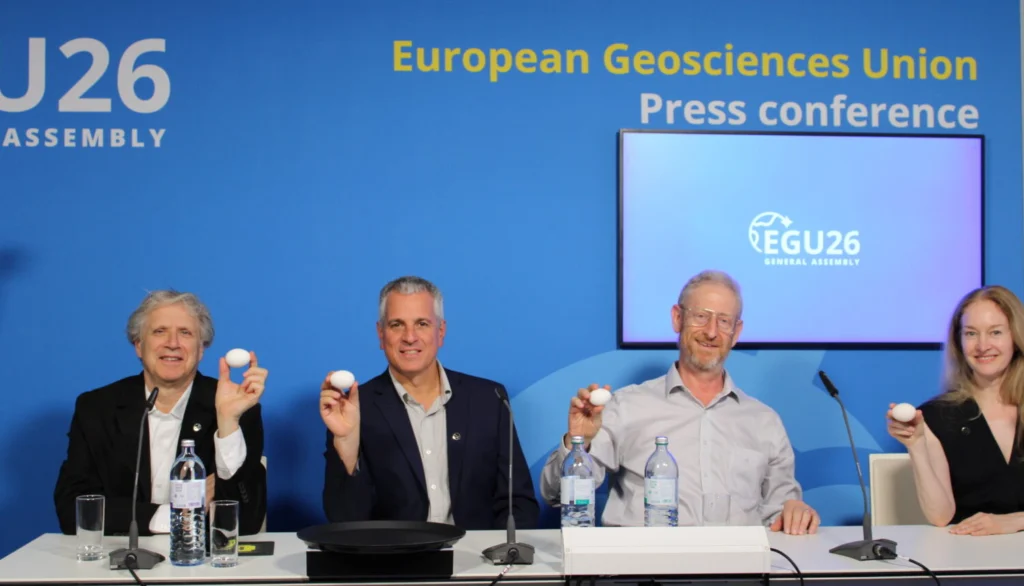
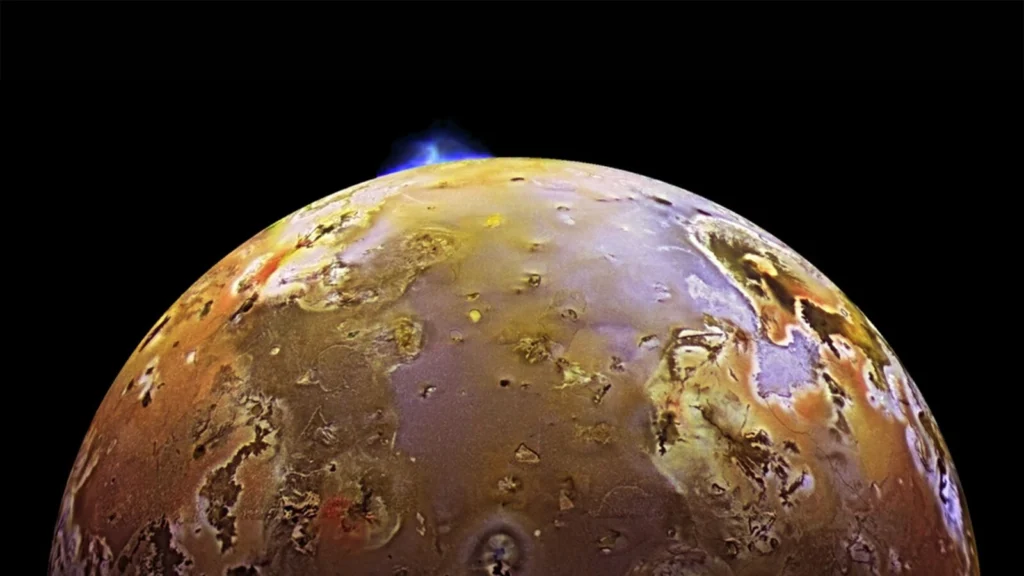
Why are NASA scientists holding eggs? The surprising new physics of Jupiter & the latest briefing on Juno’s mission
The latest NASA Juno briefing was presented at EGU26 yesterday. Speakers introduced unprecedented results that not only deepened our understanding of Jupiter but also invited us to reflect on the future of scientific methodology. Whether you’re a space geek or a tech enthusiast, hop in, as we’re about to take you on an exploratory journey to learn about how neural networks, serendipitous cameras, ...[Read More]
The prize that failed forward: How a 100,000-franc quest for aliens funded a century of astronomy
Today, 17 December, marks 125 years since the formal announcement of one of the most eccentric, ambitious, and ultimately consequential prizes in the history of science: the Prix Pierre Guzman. Announced by the French Académie des Sciences in December 1900, the award promised 100,000 francs, which is the equivalent of hundreds of thousands of dollars today, to the first person who could successful ...[Read More]
The existential modelling crisis – and how to overcome it
Recently, we had a big name in fire ecology visiting our institute. He had come, among other things, to look for records of a certain fire-adapted shrub in my university’s herbarium. While myself and a colleague helped him go through the stacks of pressed and archived specimens, I asked him why there were so little contributions to the herbarium in recent years. His response was: “People sto ...[Read More]