Pop-up networking returns for the #EGU24 General Assembly! Attendees can add their own events to the conference programme using the pop-up scheduling tool. Events can be virtual or in-person, and include a number of tagging options to communicate the event theme to other attendees. The pop-up networking scheduling tool is live right now! Anyone attending …[Read More]
Early Career Scientists
First time at an EGU General Assembly? We got you covered!
Europe’s biggest geoscience conference, EGU24, is only one month away! Each year, the EGU General Assembly brings together over 17,000 researchers, scientists, academics and journalists to discuss and share the latest developments in planetary exploration, Earth observation, polar science, climate change, natural hazards, and much more. And it is held at the Austria Centre Vienna …[Read More]
An end to the ‘manel’? 3 things you can do to help reduce the existence of all-male-panels.
I am pretty sure that everyone has had this experience at one time or another. You attend a meeting or conference and, despite the diversity of people in the audience, the people on the podium invited to speak are uniformly men. If you come from the same part of the world as I do (Western …[Read More]
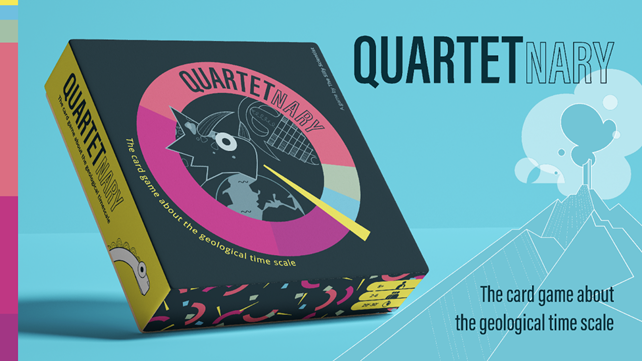
QUARTETnary – The card game about the geological time scale
Do you like games? Do you like the Earth? Then you will love QUARTETnary! QUARTETnary is a card game about the geological time scale, developed by long-term EGU members Iris van Zelst and Lucia Perez-Diaz and partly funded through the EGU Public Engagement Grant 2021. The game is finally ready to be manufactured, but in …[Read More]
AI-based tools in scientific publishing: to what extent can we rely on them?
Academic publishing has considerably evolved in response to technological developments. Current discussions revolve around the rise of generative Artificial Intelligence (AI) tools or Large Language Models (LLM). They exceed the capabilities of simple spelling and grammar checkers or translation software and their use in the publication process has several implications that need to be considered. …[Read More]
GeoTalk: meet Gino de Gelder, researcher of the link between tectonics, sea-level rise & coral reefs!
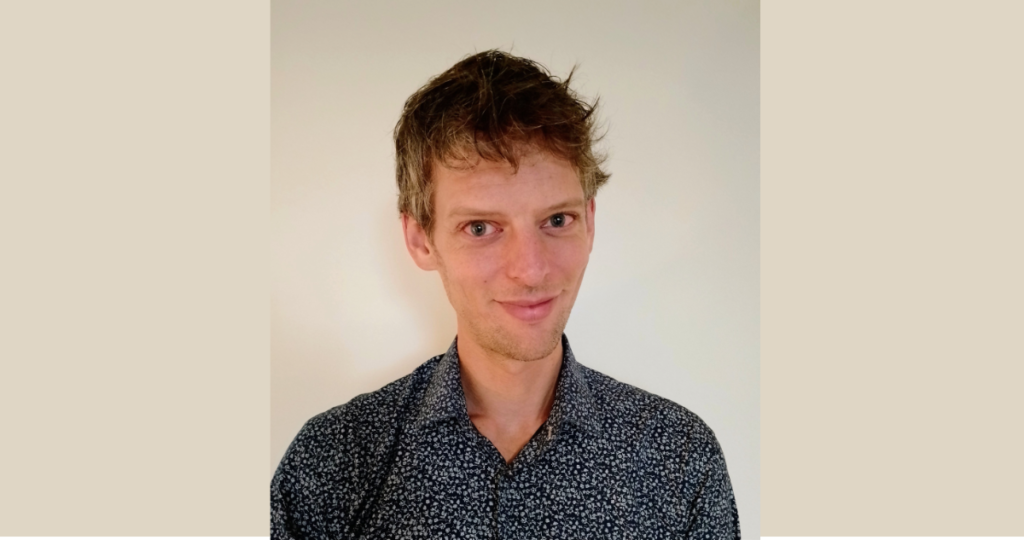
Hello Gino! Welcome to GeoTalk. Could you tell our readers a little bit about yourself and your background? Sure thing! My background is mostly in tectonics, geomorphology and the evolution of (active) fault systems, which I developed during my studies at Utrecht University and my PhD at the IPGP (Paris). Initially I focused on the …[Read More]
Are you ready to vote for your favourite Division blog of 2023?
Our EGU blogging team has had a fantastic 2023 posting across our official blog, GeoLog and the division blogs. With the Near Year now officially upon us, you may know that we like to pause and reflect on our blogging efforts of the year gone by! Much like previous years, we saw yet again an …[Read More]
Three peer review myths debunked by the First EGU Peer Review Training
In 2023, EGU offered Peer Review Training for the first time, over three virtual sessions in September and October 2023, with a little homework in between. With more than 100 applications, from which we chose 57, mostly Early Career Scientists (ECS) to fill the available places, the desire for this kind of training in the …[Read More]
Mind Your Head: How to have a mindful December and holiday season
It’s December and the Life-Work-Balance group is recalling the “Mind Your Head” blog posts, a blogpost series which started in May 2018. We invite you to join our journey through 11 inspiring blog posts and five simple activities to foster our life-work-balance, revive knowledge and find new inspiration during this holiday season. A word at …[Read More]
Learning from EGU’s first Peer Review Training: In conversation with Kifle Aregahegn
For the first time, EGU organized a Peer Review Training in September and October this year. It was attended by 50 participants, most of whom were early career scientists with little to no background in the peer review process. The training comprised three online sessions and an at-home exercise of reviewing real manuscripts. And of …[Read More]