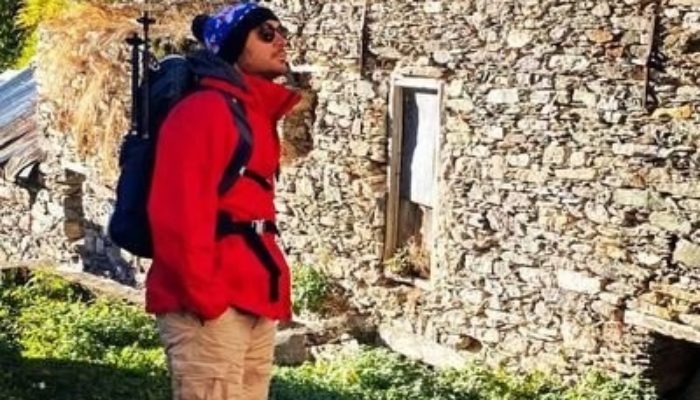
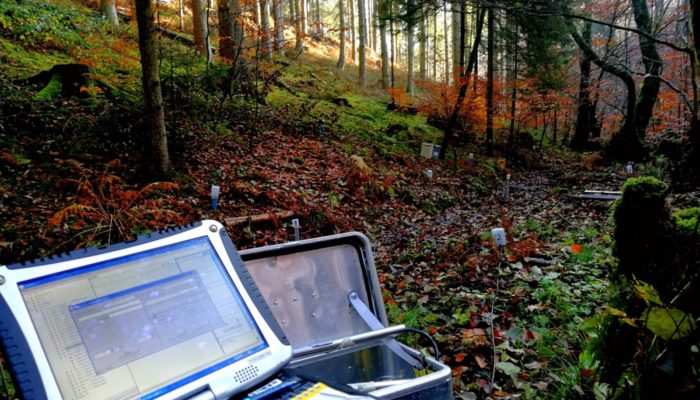
Hi Francesco. Thanks for agreeing to this interview! To break the ice, could you tell our readers a bit about yourself and your research? Hey Simon! I’m an Italian hydrologist and earned a PhD at Politecnico di Milano with a dissertation on how snowmelt contributes to seasonal runoff. I then did a postdoc at UC Berkeley, California, where I collaborated with a major US hydropower company to improv ...[Read More]
GeoPolicy: 5 ways for scientists to take the lead on evidence-informed policymaking
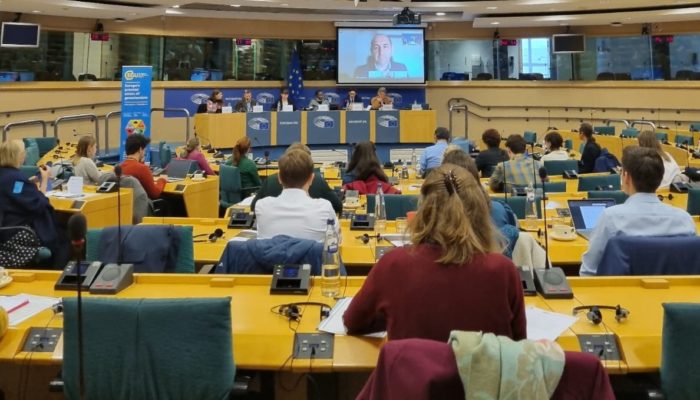
On 15 November 2022, the EGU and the European Parliament Intergroup on ‘Climate Change, Biodiversity and Sustainable Development’ jointly coordinated an event, ‘Supporting the EU’s Biodiversity Targets by Bridging the Science-Policy Divide’. The event highlighted how science could be used to support the ambitious targets outlined in the EU Biodiversity Strategy for 2030 and proposed EU Nature Rest ...[Read More]
Are you ready to vote for your favourite Division blog of 2022?
It’s that time of the year again! With the holiday season around the corner, many of us tend to reflect on the year gone by, with its ups and downs, and lessons and learnings. At EGU, reflection is a year-long process, but we like to end our year on a note of appreciation: for yet another year of impressive blog posts submitted and published across the EGU’s official blog, GeoLog, and our di ...[Read More]
GeoTalk: meet Blaise Nyandwi, researcher in public perceptions of volcanic hazards!
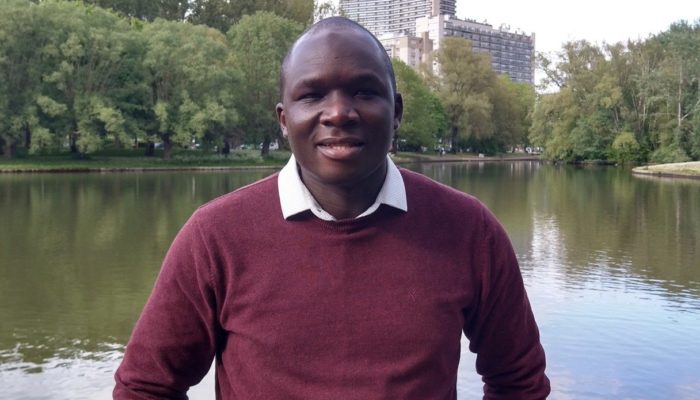
Thanks for joining us today Blaise! To begin, could you talk about your background and why you pursued research on people’s perceptions of natural hazards? I have a background in geology and environmental sciences. Goma is my hometown and I work as a lecturer at the University of Goma. Living and working in a city built on lava flows and permanently threatened by several hazards from Nyiragongo vo ...[Read More]
GeoPolicy: Building stronger and more diverse communities at the science-policy interface
There are numerous reasons why we should want to build stronger and more diverse scientific communities. Greater inclusivity leads to innovation, expands the pool of ideas, broadens perspectives, and encourages more people to engage. Strong and diverse scientific communities allow us to go beyond the information we can produce on our own and scale our research outcomes. But one reason not often ci ...[Read More]
To accept or not accept: what makes a good scientific editor
Researchers and those in academia sooner or later come across the scientific editor: the gatekeeper of scientific journals. The editor plays a key role in the publishing process, working closely with authors and reviewers to implement an unbiased peer-review process that upholds rigorous standards. They are often experienced scientists and experts in their field who ensure that the published resea ...[Read More]
Interactive peer review: The foundation of EGU’s open access journals
Some 20 years ago, a group of young atmospheric scientists united to shake up the scientific publishing world. Their novel idea was to make the peer review process transparent and allow the scientific community to participate in the discourse – in the truest sense of the word: “reviewed by the peers.” From day one, this has been the foundation that EGU’s open access journals were built on. Today, ...[Read More]
Who is an EGU Early Career Scientist Representative and what do they do?
Early Career Scientists (ECS) are students, PhD candidates and scientists who received their highest degree within the last seven years (with extensions for parenting, illness, disability and national service). We make up over 60% of the EGU membership and we are active in research, science communication, publishing, Equality Diversity and Inclusion (EDI) initiatives, networking, convening and mak ...[Read More]
A helping hand: what career support does EGU offer?
One of the biggest challenges anyone leaving their undergraduate degree faces is often what to do next? Do you pursue a career inside academia, or seek work in a different field, in industry or policy, or something completely different? What if you change your mind part way down one of those paths and want to change, either moving back into academic research at a later stage, or leaving academia a ...[Read More]
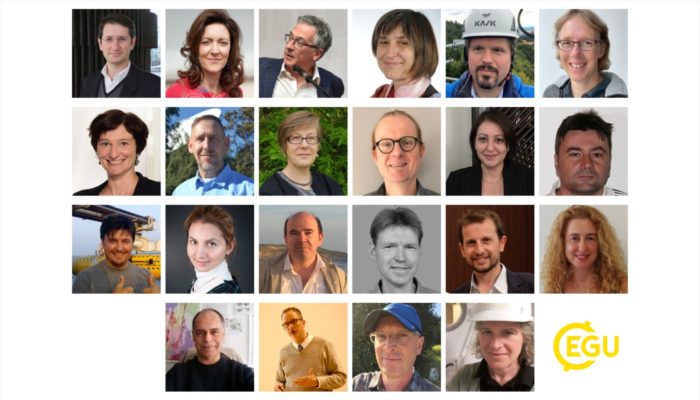
20 years and 22 Divisions: EGU Division Presidents share their stories
It’s official: Europe’s leading organisation for Earth, planetary and space research has now entered the third decade of its existence! This week, the European Geosciences Union (EGU) celebrated its 20th birthday. Since it was first founded, EGU has grown in strength and scale to include 22 scientific divisions, responsible for activities related to the Earth, planetary and space sciences. I spoke ...[Read More]