‘What I wish someone told me early in my career’ is a new Geolog series that aims to provide valuable insights and guidance to early-career professionals within the European Geosciences Union (EGU) community. Each month, I will interview a staff member of EGU to share their personal career journey, experiences, challenges faced, and the tips …[Read More]
Blogging
Lights, Camera, Abstract!: Your guide to creating a top-notch video abstract
Have you ever considered creating a video abstract but didn’t know where to begin or felt you lacked the skills to produce something of the quality you envisioned? Join me today as I welcome EGU’s editorial manager, Eduardo Queiroz Alves, who will address common questions and guide you through the process. Hello, Eduardo! Thank you …[Read More]
The EGU Science-Media Toolkit: your guide to overcoming science communication limbo!
Your research deserves recognition beyond your peer-reviewed paper. While academia is often considered the hallmark for knowledge generation, the dissemination of your work should take further steps so that your scientific research can reach the people it is meant to help. Because your audience may not always be experts in your field and may require …[Read More]
Congratulations to the winners of the best EGU blogs of 2023!
If you’re a regular reader of the EGU blogs, you may notice a certain annual tradition of ours: we like to celebrate the contribution of our science writers and bloggers over the year gone by. And 2023 was no exception of course; we had a number of inspiring and thought-provoking blog posts published across the …[Read More]
GeoPolicy: Fluvial geomorphology and its potential for policy impact
In this month’s GeoPolicy blog post, Dr Grace Skirrow outlines how researchers can share their expertise with environmental regulators to have policy impact and the role that fluvial geomorphology can play in policy decisions. Fluvial Geomorphology and why it is relevant for policymakers Fluvial Geomorphology (“fluvial”, derived from the Latin “fluvialis”, meaning “of the river”) …[Read More]
EGU Photo Competition 2024: Now open for submissions!
If you are registered for the EGU24 General Assembly (14 – 19 April), you can take part in our annual photo competition. Winners receive free registration to next year’s General Assembly! It’s that time of year again! Yes, today the fourteenth annual EGU photo competition opened for submissions!! Until 28 March, every participant registered for the …[Read More]
Are you ready to vote for your favourite Division blog of 2023?
Our EGU blogging team has had a fantastic 2023 posting across our official blog, GeoLog and the division blogs. With the Near Year now officially upon us, you may know that we like to pause and reflect on our blogging efforts of the year gone by! Much like previous years, we saw yet again an …[Read More]
Mind Your Head: How to have a mindful December and holiday season
It’s December and the Life-Work-Balance group is recalling the “Mind Your Head” blog posts, a blogpost series which started in May 2018. We invite you to join our journey through 11 inspiring blog posts and five simple activities to foster our life-work-balance, revive knowledge and find new inspiration during this holiday season. A word at …[Read More]
Dive into the depths: 90 Years of Loch Ness monster lore
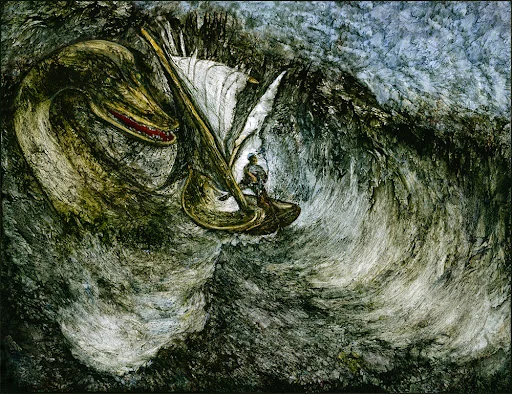
Folk tales and myths, they’ve lasted for a reason. We tell them over and over because we keep finding truths in them, and we keep finding life in them. ~ Patrick Ness, American-British author (*nae, this Ness isn’t related to Nessie) Is it an eel? Is it a snake? Is it a diplodocus with …[Read More]
International Archaeology Day: Challenging stereotypes about migration
Discoveries like excavations of prehistoric civilizations, shipwrecks with long-lost treasures, forgotten cities, and ancient tombs and temples, paint a vivid picture of archaeology and human history. Yet understanding how cultures evolved is often a more laborious process focused on prosaic finds; pottery shards, tools, implements, skeletal remains, art, inscriptions, pollen or soil samples, among other …[Read More]